Everywhere, the Body

Christine C. Rivero-Guisinga


Our stories are crawling, open-clawed,
in another country
where the ground is as soft as the beloved
taking bullets into every piece of them we know.

The mountain pass is an endless line of mourners in the rain.

Walk, at dusk, toward another forest burning,
make new homes in the fire, or
grow wings and soar into the blaze.

Our prayers are with us until they too must be left behind.


Christine C. Rivero-Guisinga works for a humanitarian organisation. A SEA Lit Circle member, she shares short haiku-like poems on Instagram (@storyseamstress). Her piece in the After Happy Hour Review earned a Pushcart Prize nomination.

Briefly Write Poetry Prize 2024 – Results

crawling, open-clawed, | in another country

The Briefly Write Poetry Prize is here, there and everywhere.

Everyone, whoever you are and wherever you are in the world, is invited to submit one short poem. This year, we received 1,315 unique entries. From elephants to elegies, heartache to haircuts, we were dazzled by the diversity and quality of themes, styles and ideas. We are grateful to have had the chance to read such a diverse array of short poetry. Inevitably, with so many outstanding short poems to consider, we had to pass on hundreds that we would have loved to acknowledge.

Then, there is a period of several months in which we read, read, re-read every poem (anonymously) and put together a longlist that is full of incredible words and images and ideas and we think how are we ever going to whittle this down to one winner, one runner-up and a handful of shortlisters? So, we take a break, breathe, let the poems rest. Weeks pass. Seasons change.

We dive back in when we feel the urge and can’t wait any longer. We re-read the longlist and fall in love with our favourites all over again. Here, we get a feeling for which poems feel as fresh, as brilliant, as ferociously urgent as they did when we first read them two months earlier.

At the end of this process, we’re excited to share our selection of the best short poetry for 2024. In our fourth year, the disclaimer we wrote for our inaugural competition is still as pertinent:

We hope you’ll agree with all our choices… but acknowledge you probably won’t. Personal taste is a wonderful thing. And poetry is a conversation. We would love to hear what you think – reflections on the poems, discussion of themes or styles, congratulations to the winning poets – in the comments below.

Thank you to everyone who shared their words, stories and little parts of themselves. Thank you to everyone who supported the competition. And thank you for taking the time to read new writing (however you came across this page). The Briefly Write Poetry Prize will be back in 2025. As ever, it will be FREE to enter and FREE to read.

Here are our choices for 2024.

Daniel & Elinor


FIRST

Christine C. Rivero-Guisinga, ‘Everywhere, the Body’


SECOND

Jesse Domenech, ‘It Was The Year’


THIRD

Isabella Waldron, ‘my father’s first apartment


SHORTLIST

Prosper C. Ìféányí, ‘The Nigerian Nightmare’

Nazaret Ranea, ‘Field’

Ian Farnes, ‘Local Wildness’

Debmalya Bandyopadhyay, ‘After the drowning’

Eileen Anderson, ‘Marram’


LONGLIST

Zoe Davis * Skye Robinson * Jacqueline Jules * Jeff Skinner * Luke Hankins * Claire Lynn * Otuaga Maria Ogheneruno * Creana Bosac * John Jeffire * Atar Hadari * Okafor Michael * Jowonder Woodward * Francesca La Nave * Gloria Sanders * Elena Zhang * Abigail Flint * Deborah Finding * Florence Grieve * Em Prendergast * Laure Sahuguet * Fatimah Bustani * Helen Ferris *


Read more:

Issue 12 – August 2024

One and two and before you know it, Briefly Zine is 12.

In Issue 1, we promised to ‘captivate, inspire and entertain’. Contributors in #2 were ‘united by their ability to tell a powerful tale in few words’. #3 centred on ‘a moment of connection’. With #4, we went ‘full circle’. #5 led to ‘a record number of coffees while we settled arguments about submissions’; #6 led us into new ‘worlds and wormholes’. #7, our first themed issue, urged action in response to the climate crisis. #8 offered ‘delicacies for your eyes and ears’ and ‘proof of the power of art, the transient permanence of a moment’. #9 (theme: EMPTY SPACES) was ‘full of gaps’ but also ‘full of creativity, originality and concision […] heartfelt cries and moments of silence’. In #10, we assembled ‘a melody fit for aching’. Our theme for #11 was WHAT NEXT?, which was answered and avoided in equal measure.

Now, with Issue 12, we have once again gone full circle.

Our little literary space has soared. Every issue brings more submissions and more readers. We have cycled through seasons, glimpsed thousands of lives and lands and literary styles.

As ever, we are proud to publish a mix of first timers and lit-mag old timers. Issue 12 has sharp imagery, evocative images and powerful imaginings. It features songs undanced, cold tiles, new births, mothers, heart-shaped crevices, lizards, apple trees, bones, mesh and Camden Bridge. It has poems, prose and photos. Above all, it packs millions of memories into the merest of moments. Each piece seeks to dazzle and distract, to entertain or enlighten. We are delighted that we can again pay all contributors thanks to the generosity of our supporters.

We’d love to hear what you think of Issue 12. Email contact@brieflywrite.com 💙

Daniel & Elinor

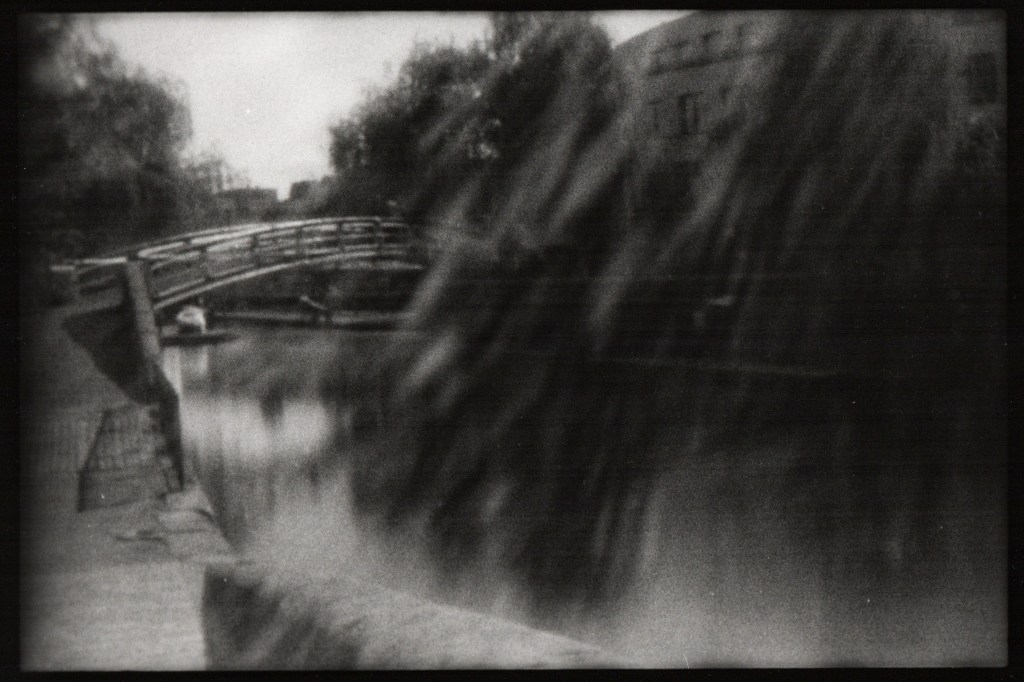
Camden Bridge (pinhole) - a photo by Sam des Fleurs

Cover art

Sam des Fleurs, ‘Camden Bridge (pinhole)’

1

Catherine Sleeman, ‘Why I won’t dance to the songs you sang in 2017’

Nazaret Ranea, Two Poems

Jack Wright, ‘Lizard’

Myra Stevens, ‘New Birth’

2

Elena Chamberlain, ‘Earth as Mother’

Dianna Morales, ‘indigo heart’

Suzanne van Leendert, ‘Crab Apple Blossoms’

AA Manza, ‘Beneath me the tiles are cold’


From the archive…

Rare Animals

by Ruth Callaghan do Valle

Rare animals fascinate me.
Night falls and I lie in wait.
Silence descends, the conditions are favourable,
there is every chance now that they will
make an appearance –
Would I still recognise them?
A sudden disturbance puts them to flight.
Shenanigans, shy creatures that they are,
make themselves scarce. 
They are unlikely to return now with the toddler so close, 
a dormant despot whose iron grip is inescapable. 
So we settle down in the hide and wait for another day
and pray for conditions to remain favourable.

(from Briefly Zine #4. See here: Two Poems by Ruth Callaghan do Valle)


We pay all contributors

We pay all contributors to Briefly Zine, as well as all writers published through our competitions. Thank you to everyone who has supported our little literary space for making this possible.

Issue 13 theme to be announced…

Submissions for Issue 13 will open on 27 October 2024. This will be a themed issue; we’ll be announcing the theme shortly.

Follow Briefly Write on LinkedIn

If you use LinkedIn, please give us a follow: Briefly Write – LinkedIn

‘Not All Together At Peace’

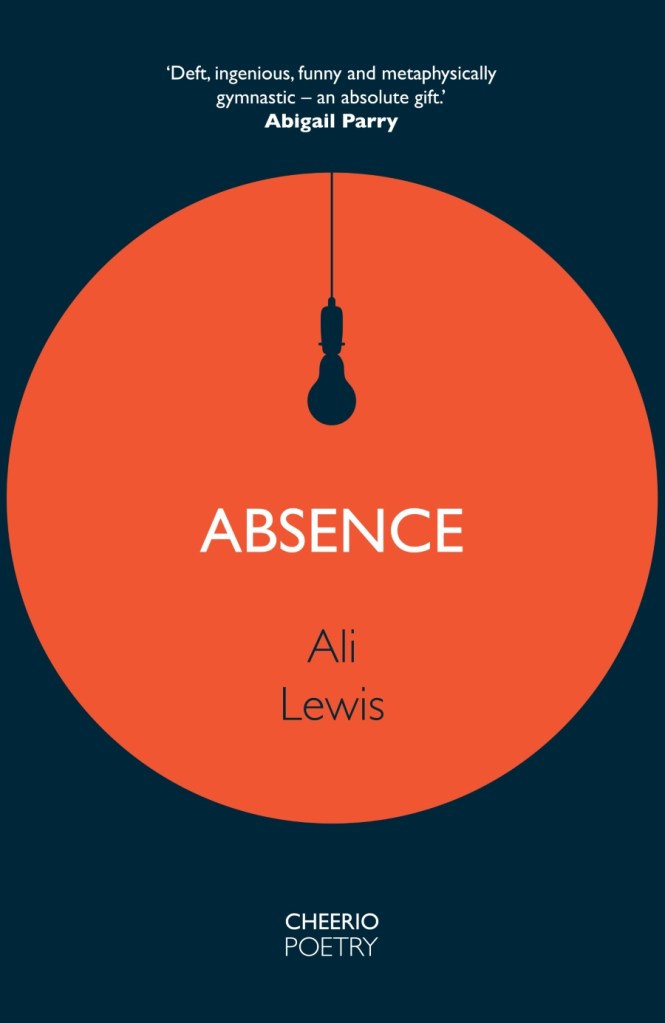
Cover of 'Absence' by Ali Lewis

Ali Lewis, Absence (CHEERIO, 2024)


Absence by Ali Lewis is ‘a book about nothing’. So, what is a book about nothing really about?

From the opening pages, nothing expands and explodes. Absence is about ‘nothings’, resolutely plural in all the contradictions of that word. Its main characters are ‘losses, vacua, gaps’.

Anchored (loosely) around the poem’s central rod – ‘Rules for Comedy’ – the collection dips and dives into these holes. It offers non-whole glimpses of something both bigger and smaller than itself; it teases and riddles and returns again and again to absence. Some of the poem’s rules are questions. ‘Did I tell you I found a body once?’ he asks. ‘Did I make that up, or is it true, or both?’

Comedy is certainly both. Something that is funny is humorous and strange, deceitful and somehow truer than any sermon or lecture. ‘In comedy, you’re judged if what you say didn’t happen,’ says the poet near the end of ‘Rules for Comedy’. How about in poetry?

In ‘The Body Politic’, upon seeing the frontispiece of Hobbes’ Leviathan in the British Library – ‘an etching of a king, | artfully restored’ – the poet remarks:

I’m reminded of what I know
but don’t often think about: that I am a host
as well as a host, that even within
me, there is no necessary unity between
the parasites, the fungi, the cells splitting
like sects, the bacteria on my finger that touches
the glass above the book, which tells me,
now I am not all together at peace with myself

Knowing and not knowing, thinking and forgetting, the poet is a contradictory bundle of mind, body and book. Like the king’s restored form, the poet is constantly re-creating and refining. He has the tools for scrubbing: ‘the diamond grit | of mud and metal sludge you need to hone | fine work’ (‘The Knife Sharpener’).

In the section above, the poet is reminded, in a roundabout way, that the body is not finished. Indeed, the body, with its invisible cells, fungi and parasites is never “one piece” but a profusion of absences: how could anyone be at peace in such a diverse vector, one that contains so many multitudes, one that tries to stitch such different pieces together?

As well as a lack of personal peace, the book (and body) opens out to greater suffering. This is where Absence excels. In a ‘book about nothing’, the poet does not retreat into himself and dwell on existential dread. Nor does the collection exist only in abstraction. Instead, it confronts (and challenges) some of the world’s many cruelties.

For example, in ‘The Chick Sexer’, he remarks upon the commercial egg industry’s appalling practice of killing male chicks within days of being born. Billions of day-old chicks are fed through a macerator because, by virtue of their sex, they have no worth to the humans who have bred them into existence. How could any body be at peace seeing the millions of tiny pieces these bodies are torn into?

As Absence attests, things that aren’t there can be the most haunting. The missing piece is compassion. In Lewis’ hands, absence is not a refuge from the world but a means of seeing the world more clearly.


Ali Lewis, Absence (CHEERIO, 2024)

Available here

Empty-handed

Lawrence Bradby


I left the house without my phone.
My daughter needed it
for me to leave her on her own.
So beyond these words
there’s no record of the view
I’m looking at:
the cram of orange, peach and white
buildings from far left to far right
the mega-crane, the freight wagons
labouring in their smallness
the swifts scything and scooping
the hot thick air above.


Lawrence Bradby writes poems, short prose texts and essays. He likes the gap between speech and writing. Since October 2020 he has lived in Portugal. He writes a blog about learning a new language and trying to find a way to belong

Next? A Dismal Destiny

Sambhu Nath Banerjee


'Next? A Dismal Destiny' by Sambhu Nath Banerjee.

Burgeoning population is the number one enemy for sustainability of life on this earth. It propels disharmony and complete bedlam in peaceful coexistence of man and environment. All these calamities and extremities that we are experiencing of late across continents are because of the thermodynamic disequilibrium brought about by human interference. More and more modernity and dependence on artificial intelligence are causing isolation from Nature. Days are not far when poets and authors would embark on a parched and barren land, starved of elements to pursue their creativity.


A teacher and a researcher, Sambhu Nath Banerjee (Ph.D. CU) from Kolkata, India is passionate about travelling, photography and writing. His works appear in Cafe Dissensus, Muse India, Borderless and 3 Elements. His photograph has found place in the exhibition 2023 Kolkata, organised by ‘Srijan’ SBI Officers’ Association.

Two Poems

Seán Street


Seasonal

I said to Summer,
you burn too hot for comfort.
Said Summer, your choice.

I said to the Spring,
how many leaves are there left?
Said Spring, ask Autumn.

I said to Winter,
you are just a duration.
Said Winter, you too.

Breaking News

It happens on ordinary days,
a bored pencil tapping a glass, 
but the morning post’s leaking in,
the desk light intent as a heron 
and downstream an angle-poise bird aims 
through indifferent reflections.


Seán Street’s recent prose includes Wild Track: Sound, Text and the Idea of Birdsong (Bloomsbury, 2023). His latest poetry collection is Journey Into Space (Shoestring Press, 2022). 

A breeze in the midst of rain—

Jayant Kashyap


takes the clouds to the water boats
in Venice / to the streets

in Mawsynram; the birds are gathered
into their nests / and the boys

are called to the rooftops;
the farmer holds in his hands

his bag of seeds— the breeze
takes him to the fields, scatters

them amidst the drops of rain—
the rain amidst which the breeze

is bittersweet / is ambiguous
like a sunflower that loves a day

in the sun and hates too much of it
yet /


The last time Jayant Kashyap’s work appeared in Briefly Zine, one of the poems was nominated for Sundress Publication’s Best of the Net. Since then, his work has appeared in POETRY, Magma and Poetry Wales, among others.

Late Spring in the Anthropocene

Rucha Virmani


She looks at her daughter sleeping on her lap
and smiles, her heart a hollow cave aching

with love. Outside, a fog settles in, reducing
the naked birch to the silhouette of a life once

lived, its invisible leaves rustling — the elegiac
echoes of a lost lullaby. Ravens sit still on branches, 

waiting for erasure, and the air ripens with the scent
of life turning to something else. The heat ruptures

the skin that had sewn them together. A fig falls
and bursts. — She lets her hands land on her empty

lap, while the wind traces the blurred body
of a daughter that has outgrown her mother’s arms.

Note: ‘…the air ripens with the scent | of life turning into something else’ is based on the last line of Aria Aber’s poem ‘Waiting for Your Call’


Rucha Virmani is the founder of The Climatopia Project (Twitter: @TheClimatopia) that aims to use the power of creative writing for climate activism. She has been published by The Teenager Today and longlisted by Young Poets Network. Her work is forthcoming in The White Cresset Arts Journal. She was selected to participate in Ellipsis Writing’s Summer 2022 workshops.

Two Poems

Lei Kim


Lost

I spotted something
during my morning walk
in the park
under the shadows of trees
black as the wondering night:
a wing
a single wing

I almost reached out
to hang it on a bush
just like someone did
the other day with a child’s cap
found on the grass

Cemetery Rules

No Flowers,
when the cemetery announced,
people were devastated, but a little girl
brought a pebble, flat and pretty,
with words written on it, for her grandmother.

Soon, pebbles with thoughtful words
piled upon the graves, some were tossed, displaced,
then, another came;
No Flowers and Pebbles,
Anything Decomposable within Three Days.

It’s longing that invents uncanny ways of love,
she placed an empty jar beside her lover’s gravestone,
removed the cap, waited a while, and left with it.
One asked about her ritual; speak into the empty jar,
whisper, joke, or simply my love, whatever,

then seal it and let it loose, lungfuls of longing.


Lei Kim is a poet and translator living in France. She translated Lee Jangwook’s poetry collection, Request Line at Noon (Codhill Press, 2016), and received the Modern Korean Literature Translation Award.