Issue 12 – August 2024

One and two and before you know it, Briefly Zine is 12.

In Issue 1, we promised to ‘captivate, inspire and entertain’. Contributors in #2 were ‘united by their ability to tell a powerful tale in few words’. #3 centred on ‘a moment of connection’. With #4, we went ‘full circle’. #5 led to ‘a record number of coffees while we settled arguments about submissions’; #6 led us into new ‘worlds and wormholes’. #7, our first themed issue, urged action in response to the climate crisis. #8 offered ‘delicacies for your eyes and ears’ and ‘proof of the power of art, the transient permanence of a moment’. #9 (theme: EMPTY SPACES) was ‘full of gaps’ but also ‘full of creativity, originality and concision […] heartfelt cries and moments of silence’. In #10, we assembled ‘a melody fit for aching’. Our theme for #11 was WHAT NEXT?, which was answered and avoided in equal measure.

Now, with Issue 12, we have once again gone full circle.

Our little literary space has soared. Every issue brings more submissions and more readers. We have cycled through seasons, glimpsed thousands of lives and lands and literary styles.

As ever, we are proud to publish a mix of first timers and lit-mag old timers. Issue 12 has sharp imagery, evocative images and powerful imaginings. It features songs undanced, cold tiles, new births, mothers, heart-shaped crevices, lizards, apple trees, bones, mesh and Camden Bridge. It has poems, prose and photos. Above all, it packs millions of memories into the merest of moments. Each piece seeks to dazzle and distract, to entertain or enlighten. We are delighted that we can again pay all contributors thanks to the generosity of our supporters.

We’d love to hear what you think of Issue 12. Email contact@brieflywrite.com 💙

Daniel & Elinor
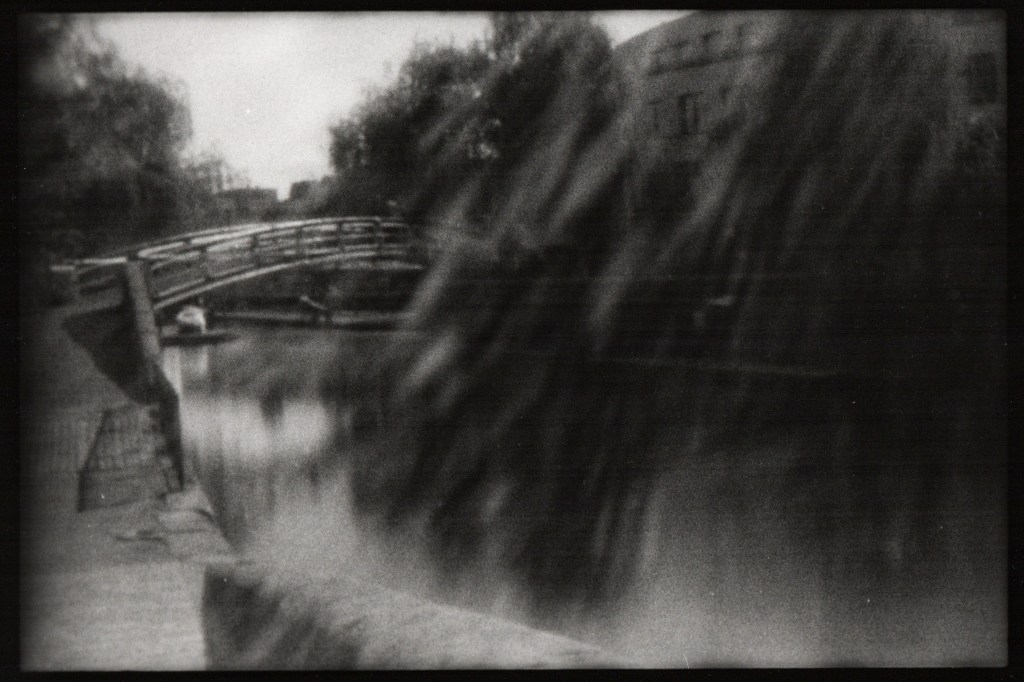
Camden Bridge (pinhole) - a photo by Sam des Fleurs

Cover art

Sam des Fleurs, ‘Camden Bridge (pinhole)’

1

Catherine Sleeman, ‘Why I won’t dance to the songs you sang in 2017’

Nazaret Ranea, Two Poems

Jack Wright, ‘Lizard’

Myra Stevens, ‘New Birth’

2

Elena Chamberlain, ‘Earth as Mother’

Dianna Morales, ‘indigo heart’

Suzanne van Leendert, ‘Crab Apple Blossoms’

AA Manza, ‘Beneath me the tiles are cold’


From the archive…

Rare Animals

by Ruth Callaghan do Valle

Rare animals fascinate me.
Night falls and I lie in wait.
Silence descends, the conditions are favourable,
there is every chance now that they will
make an appearance –
Would I still recognise them?
A sudden disturbance puts them to flight.
Shenanigans, shy creatures that they are,
make themselves scarce. 
They are unlikely to return now with the toddler so close, 
a dormant despot whose iron grip is inescapable. 
So we settle down in the hide and wait for another day
and pray for conditions to remain favourable.

(from Briefly Zine #4. See here: Two Poems by Ruth Callaghan do Valle)


We pay all contributors

We pay all contributors to Briefly Zine, as well as all writers published through our competitions. Thank you to everyone who has supported our little literary space for making this possible.

Issue 13 theme to be announced…

Submissions for Issue 13 will open on 27 October 2024. This will be a themed issue; we’ll be announcing the theme shortly.

Follow Briefly Write on LinkedIn

If you use LinkedIn, please give us a follow: Briefly Write – LinkedIn

Study notes and not-so-sturdy realities

Getting By In Tligolian is a travel guide, language course, diary, philosophical treatise and dream sequence all rolled into one. It is also a thoroughly entertaining novella in flash.

Through a patchwork of pithy stories, we follow Jennifer, an unreliable narrator, around a time-twisting dystopia. In Tligol, time is not linear, death is not the end… and getting out is close to impossible.

Serendipity sets the plot of Roppotucha Greenberg’s novella in motion. Specifically, ‘a mix up with the phone booking’. From this seemingly banal springboard, Jenny experiences a series of mind-bending, meta-narrative events in multiple layers of reality.

Everything is not at it seems. For a start, Tligol is home to giants, a fact of which the reader is periodically reminded. The presence of one in particular, who dwells on a bridge in the middle of the city, is deliberately mysterious: ‘I’d begun to think I’d made him up,’ the narrator admits at one point.

Like any traveller becoming accustomed to a new city’s traditions, mores and politics, Jennifer is a suitably eyes-wide-open guide to show us around Tligol. Amid the confusion, she finds comfort in controlling the controllable, for example by learning Old Tligolian, even though the language is no longer widely spoken.

Language learning is a clever device that Greenberg uses to develop certain plot and character points. For one, learning a foreign language allows us to see the world anew with a child-like curiosity, which adds to the mystery and mystique of Tligol. ‘There is a bird in the tree,’ Jenny says. For all the complexity of phrasal verbs and the conditional mode, language learning offers a simplicity that re-sets and refreshes priorities: which words do I really need to know to describe my surroundings, my feelings, my experiences? ‘I was practising my conjugations when the explosion happened,’ she says casually, a sentence that could be taken from a textbook on the imperfect and perfect tenses.

Second, the focus on language combines smartly with Tligol’s temporal tricks. The city is a spatial representation of time: the various ‘time layers’ allow past, present and future happenings to (co-)exist spatially. This challenge to chronology is at odds with the simplicity of much occidental thought with its obsessive linearity. In Tligol, as in other traditions more in tune with the Earth, death is not at end point. Meanwhile, grief for loss can precede the joy of discovery.

While the philosophical and psychology elements succeed at every turn, the characters sometimes feel under-developed. This is epitomised by Tom, who is thrice likened to a cartoon character in the handful of interactions we have with him. First introduced as ‘more of a cartoon character than a person’, he then somehow later proceeds to ‘fossil[ise] into a cartoon version of himself’ before finally we learn that ‘he cartoonised himself’. The repetition, perhaps, is cartoonishly fitting.

For all the mystery and rootlessness, certain elements do seem overly familiar. The religion described at various points seems suspiciously Christian, with ‘candles’, ‘prayer’ and an ‘altar’. And a description of Tligolian patriotism is uncomfortably real worldly in its hostility to outsiders. ‘Nobody asked you to come here, Jenny,’ Tom retorts when she questions some of Tligol’s customs.

It is also depressing that, in a time-bending world, the reality of needless animal abuse is unchanged. In a tense scene near the end of the book, Jenny and her friend Martha discuss deep existential questions while roasting a chicken. The impact of their angsty exchange is significantly lessened by comparison with the dead bird: it is hard to take seriously their grumbles while an individual who never had a chance at life is being merrily stuffed and cooked in the background.

‘Tligol was unstable, and its streets moved when you weren’t looking,’ the narrator muses towards the end of the novella. Sometimes the familiar is the strangest of all. Sometimes, the longer we look, the stranger things we previously thought were normal start to seem.


Roppotucha Greenberg, Getting by in Tligolian (Arachne Press, 2023).

Available here.

Future Fire Grew inside Her

Patricia Flaherty Pagan


Ultrasound in hand, she scattered lupin-seed hopes on the wind.


Patricia Flaherty Pagan is a Second Prize Winner of Briefly ‘Write 10’ 2024. She lives in a brown house on Boston’s north shore with her family and three mischievous rescue cats. She is the award-winning author of Enduring Spirit: Stories and Trail Ways Pilgrims. Her flash fiction has been published in journals such as Cleaver MagazineThe Ocotillo Review, and The Sirens Call. See more on her website.


Briefly ‘Write 10’ 2024 asked writers for ten-word stories on the theme of DESTINY / HISTORY. It took us many many many re-reads to choose our winners. The selected stories stood out for innovative use of language, for making us feel and think, as well as careful engagement with the theme.

Briefly Write is a little literary space with big ideas. We publish a twice-yearly Zine of bold and brief micro poetry, prose and photography. We host two annual competitions – Write 10 and the Briefly Write Poetry Prize – and other occasional collections, including Briefly Think, a themed call for thoughtful short essays. We publish succinct, meaningful reviews of poetry and fiction, with a focus on debut collections and environmental themes. We also provide writing inspiration and personalised feedback in the Briefly Zone.

One moment to end – or save – our marriage

Helen MacDonald


One form, signatures required. Leave the pen. Take my hand.


Helen MacDonald is a Second Prize Winner of Briefly ‘Write 10’ 2024. She is a Welsh crime fiction novelist who also dabbles in flash fiction and poetry, but not as often as she should. You can find her on X and Instagram (@helenmacwrites).


Briefly ‘Write 10’ 2024 asked writers for ten-word stories on the theme of DESTINY / HISTORY. It took us many many many re-reads to choose our winners. The selected stories stood out for innovative use of language, for making us feel and think, as well as careful engagement with the theme.

Briefly Write is a little literary space with big ideas. We publish a twice-yearly Zine of bold and brief micro poetry, prose and photography. We host two annual competitions – Write 10 and the Briefly Write Poetry Prize – and other occasional collections, including Briefly Think, a themed call for thoughtful short essays. We publish succinct, meaningful reviews of poetry and fiction, with a focus on debut collections and environmental themes. We also provide writing inspiration and personalised feedback in the Briefly Zone.

A Myth

Heain Joung


My parents never hugged each other, but I was born.


Heain Joung is a Second Prize Winner of Briefly ‘Write 10’ 2024. Originally from South Korea, she holds an MA in Creative and Critical Writing from Sussex University. She now lives in the UK. Her short fiction can be found in Full House Literary, Flashback Fiction, FlashFlood Journal, SugarSugarSalt Magazine, Tiny Molecules, among others. Find her on Twitter (@heainhaven).


Briefly ‘Write 10’ 2024 asked writers for ten-word stories on the theme of DESTINY / HISTORY. It took us many many many re-reads to choose our winners. The selected stories stood out for innovative use of language, for making us feel and think, as well as careful engagement with the theme.

Briefly Write is a little literary space with big ideas. We publish a twice-yearly Zine of bold and brief micro poetry, prose and photography. We host two annual competitions – Write 10 and the Briefly Write Poetry Prize – and other occasional collections, including Briefly Think, a themed call for thoughtful short essays. We publish succinct, meaningful reviews of poetry and fiction, with a focus on debut collections and environmental themes. We also provide writing inspiration and personalised feedback in the Briefly Zone.

Notice

Emily Munro


Home for sale. Secure door. Own flood defences. Low price.


Emily Munro is a Second Prize Winner of Briefly ‘Write 10’ 2024. She is a writer and filmmaker based in Glasgow. See more on her website.


Briefly ‘Write 10’ 2024 asked writers for ten-word stories on the theme of DESTINY / HISTORY. It took us many many many re-reads to choose our winners. The selected stories stood out for innovative use of language, for making us feel and think, as well as careful engagement with the theme.

Briefly Write is a little literary space with big ideas. We publish a twice-yearly Zine of bold and brief micro poetry, prose and photography. We host two annual competitions – Write 10 and the Briefly Write Poetry Prize – and other occasional collections, including Briefly Think, a themed call for thoughtful short essays. We publish succinct, meaningful reviews of poetry and fiction, with a focus on debut collections and environmental themes. We also provide writing inspiration and personalised feedback in the Briefly Zone.

Ruins

Ilias Tsagas


Kids are playing in the temple, rearranging blocks of history.


Ilias Tsagas is a Second Prize Winner of Briefly ‘Write 10’ 2024. He is a Greek poet writing in English as a second language. His poems have appeared in journals like Apogee, AMBIT, Under the Radar, Poetry Wales, streetcake, SAND, FU Review, Tokyo Poetry, Plumwood Mountain and elsewhere. Ilias will be an Artist in Residence at the European Geosciences Union (EGU) General Assembly 2024.


Briefly ‘Write 10’ 2024 asked writers for ten-word stories on the theme of DESTINY / HISTORY. It took us many many many re-reads to choose our winners. The selected stories stood out for innovative use of language, for making us feel and think, as well as careful engagement with the theme.

Briefly Write is a little literary space with big ideas. We publish a twice-yearly Zine of bold and brief micro poetry, prose and photography. We host two annual competitions – Write 10 and the Briefly Write Poetry Prize – and other occasional collections, including Briefly Think, a themed call for thoughtful short essays. We publish succinct, meaningful reviews of poetry and fiction, with a focus on debut collections and environmental themes. We also provide writing inspiration and personalised feedback in the Briefly Zone.

1847

Clodagh O Connor


Crops failed. People departed. Only birds harvest blackberries this year.


Clodagh O Connor is First Prize Winner of Briefly ‘Write 10’ 2024. She loves to read and is working on becoming a writer. She particularly enjoys the challenges of tiny fiction.


Briefly ‘Write 10’ 2024 asked writers for ten-word stories on the theme of DESTINY / HISTORY. It took us many many many re-reads to choose our winners. The selected stories stood out for innovative use of language, for making us feel and think, as well as careful engagement with the theme.

Briefly Write is a little literary space with big ideas. We publish a twice-yearly Zine of bold and brief micro poetry, prose and photography. We host two annual competitions – Write 10 and the Briefly Write Poetry Prize – and other occasional collections, including Briefly Think, a themed call for thoughtful short essays. We publish succinct, meaningful reviews of poetry and fiction, with a focus on debut collections and environmental themes. We also provide writing inspiration and personalised feedback in the Briefly Zone.

Write 10 – The Published Stories 2024

Tiny stories have power.

This year we asked you to write destiny / history in exactly ten words. And that is exactly what you did (except two entrants who submitted 11 👀).

What can you convey in ten words?

We had stories about mood swings, witch hunts and homecomings. From ravens to dinosaurs, biographies to pizza parties, we travelled across time, space and shadows, through small choices and momentous decisions, into time loops and repeating mistakes, into the pages of newspapers, ruins and happily ever afters…

Judging so many wonderful tiny stories was a joy and a challenge. It took us many many many re-reads to narrow our choices down to the handful we are sharing below.

As usual, we read all entries anonymously. Our chosen stories were the ones that did the most with their ten words (plus title), used language innovatively, made us feel, made us think, and best responded to the theme.

The stories we chose to share are moving and in motion, shape-shifting, shift-shaping and sure to demand re-re-reading all the way home.

Share the words, share the love, share the joy of language. Let us know what you think! And please do write – and share – many more tiny stories.

Daniel & Elinor


First Prize

Clodagh O Connor, ‘1847’


Second Prize

Ilias Tsagas, ‘Ruins’

Emily Munro, ‘Notice’

Heain Joung, ‘A Myth’

Helen MacDonald, ‘One moment to end – or save – our marriage’

Patricia Flaherty Pagan, ‘Future Fire Grew inside Her’


In 2024, we will pay more writers than ever before. We are fully funded by donations on Ko-fi and don’t take anything for ourselves as editors. Find out more here.

Briefly Write is a little literary space with big ideas. We publish a twice-yearly Zine of bold and brief micro poetry, prose and photography. We host two annual competitions – Write 10 and the Briefly Write Poetry Prize – and other occasional collections, including Briefly Think, a themed call for thoughtful short essays. We publish succinct, meaningful reviews of poetry and fiction, with a focus on debut collections and environmental themes. We also provide writing inspiration and personalised feedback in the Briefly Zone.

‘Not All Together At Peace’

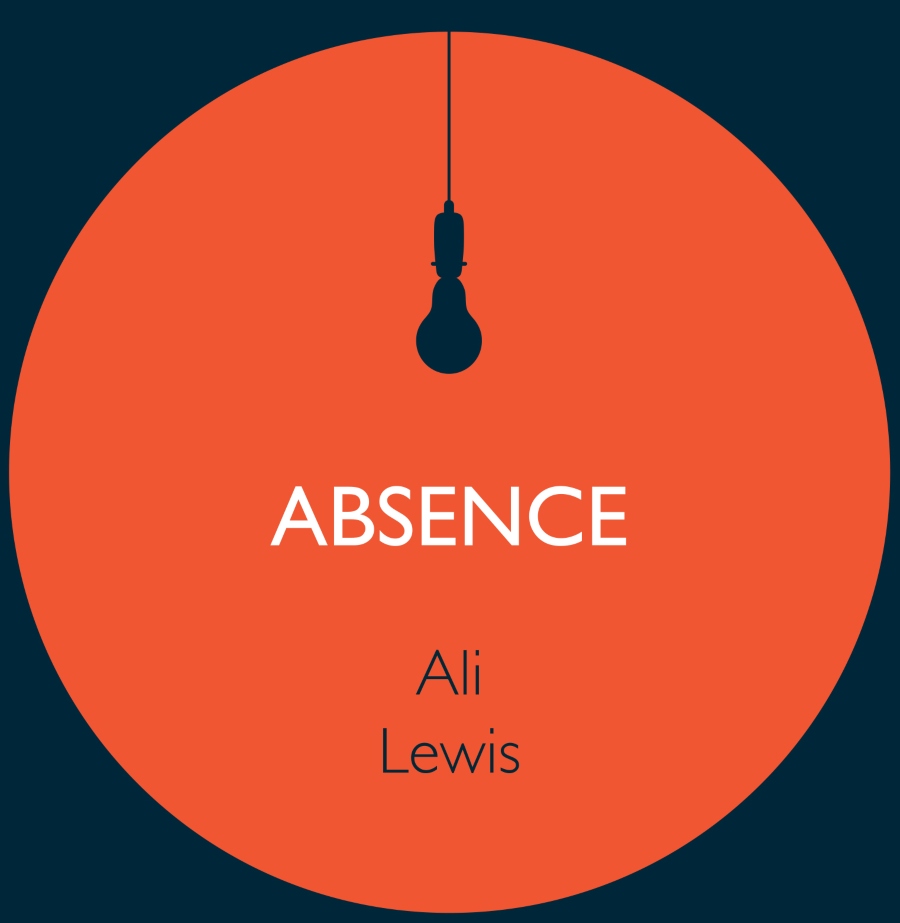
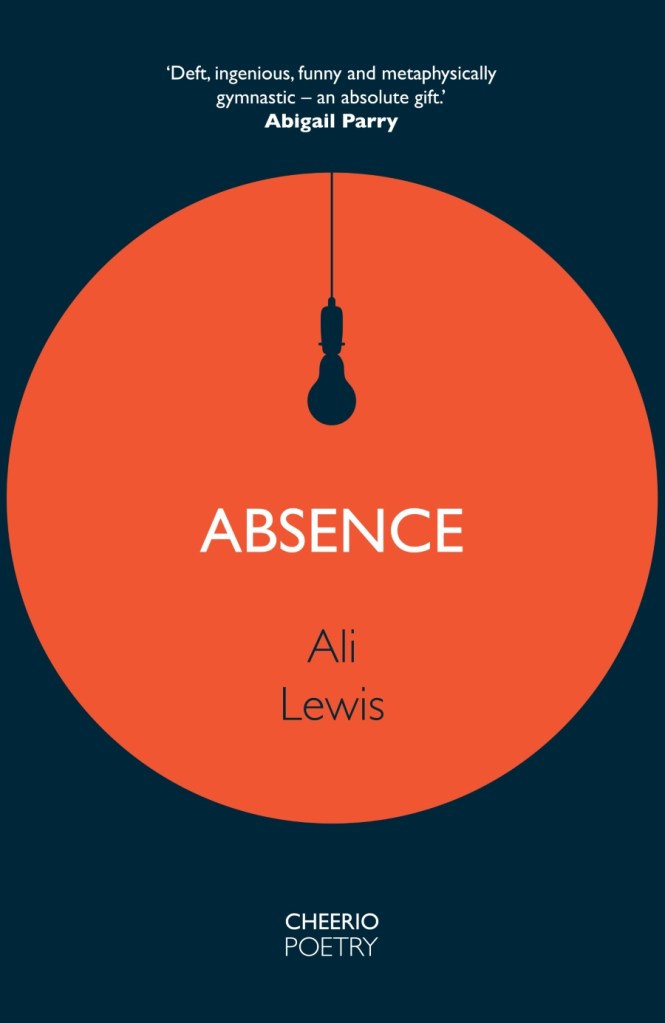
Cover of 'Absence' by Ali Lewis

Ali Lewis, Absence (CHEERIO, 2024)


Absence by Ali Lewis is ‘a book about nothing’. So, what is a book about nothing really about?

From the opening pages, nothing expands and explodes. Absence is about ‘nothings’, resolutely plural in all the contradictions of that word. Its main characters are ‘losses, vacua, gaps’.

Anchored (loosely) around the poem’s central rod – ‘Rules for Comedy’ – the collection dips and dives into these holes. It offers non-whole glimpses of something both bigger and smaller than itself; it teases and riddles and returns again and again to absence. Some of the poem’s rules are questions. ‘Did I tell you I found a body once?’ he asks. ‘Did I make that up, or is it true, or both?’

Comedy is certainly both. Something that is funny is humorous and strange, deceitful and somehow truer than any sermon or lecture. ‘In comedy, you’re judged if what you say didn’t happen,’ says the poet near the end of ‘Rules for Comedy’. How about in poetry?

In ‘The Body Politic’, upon seeing the frontispiece of Hobbes’ Leviathan in the British Library – ‘an etching of a king, | artfully restored’ – the poet remarks:

I’m reminded of what I know
but don’t often think about: that I am a host
as well as a host, that even within
me, there is no necessary unity between
the parasites, the fungi, the cells splitting
like sects, the bacteria on my finger that touches
the glass above the book, which tells me,
now I am not all together at peace with myself

Knowing and not knowing, thinking and forgetting, the poet is a contradictory bundle of mind, body and book. Like the king’s restored form, the poet is constantly re-creating and refining. He has the tools for scrubbing: ‘the diamond grit | of mud and metal sludge you need to hone | fine work’ (‘The Knife Sharpener’).

In the section above, the poet is reminded, in a roundabout way, that the body is not finished. Indeed, the body, with its invisible cells, fungi and parasites is never “one piece” but a profusion of absences: how could anyone be at peace in such a diverse vector, one that contains so many multitudes, one that tries to stitch such different pieces together?

As well as a lack of personal peace, the book (and body) opens out to greater suffering. This is where Absence excels. In a ‘book about nothing’, the poet does not retreat into himself and dwell on existential dread. Nor does the collection exist only in abstraction. Instead, it confronts (and challenges) some of the world’s many cruelties.

For example, in ‘The Chick Sexer’, he remarks upon the commercial egg industry’s appalling practice of killing male chicks within days of being born. Billions of day-old chicks are fed through a macerator because, by virtue of their sex, they have no worth to the humans who have bred them into existence. How could any body be at peace seeing the millions of tiny pieces these bodies are torn into?

As Absence attests, things that aren’t there can be the most haunting. The missing piece is compassion. In Lewis’ hands, absence is not a refuge from the world but a means of seeing the world more clearly.


Ali Lewis, Absence (CHEERIO, 2024)

Available here