When You Speak

Adeleke Deborah


and when you speak to the woman
who weaved a basket of history
with the strands of her ancestor’s hair,
she will tell you about the masquerades
with bleeding gums who found science
in their ritual of burning flesh
with woods thralled by strange fires
she will tell you about the virulent gods
who spoke and made gestures with magma,
ashes, chaos, yoked in the sprout of winds.


Adeleke Deborah is a Nigerian writer and teacher. She is passionate about using her artistic skill as a tool for change and impact. Her work has appeared in Okada books. Find her on Instagram (@debbyhife).

Steel City

Creana Bosac


Son of an immigrant,
my grandfather worked in
the steelworks of Sheffield,
white heat paring his frame
to sparseness, sharp angles.

A proud man, foreign-tall,
hallmarked with honesty
and shining with kindness,
day by day he forged the
steel of my heritage.


Creana Bosac hails from the UK, where she has worked as an Open University Associate Lecturer and now edits and writes creative writing critiques. Since joining a writing group last year, she has had a number of pieces published and has authored a guide to giving and receiving feedback.

Oranges

Khushi Bajaj


My family tree sprawls over the forest 
Where the fruit grows pre-segmented
Clinging to the branches with a tight grip
Split from the centre, hoping
That the tree which grew it this way
Will make up for the empty core
By clinging back to it.
Suspended mid-air, it hasn’t yet decided
That it would rather let go than stay sour.


Khushi Bajaj is a multilingual poet and writer from Lucknow, India. Her work has previously been featured in two anthologies published by Penguin Random House (India) and on the platforms of Gaysi Family and Feminism in India

Briefly Write Poetry Prize 2021 – Results

Wow.

The inaugural Briefly Write Poetry Prize has been a joy to judge. We read amazing poems about love, despair and confusion; books, bridges and bones; treasure, tears and trees; grapes, onions and… oranges.

We were honoured to receive 1,412 entries and thoroughly enjoyed reading all of them. We had to make agonising decisions to draw up the longlist – we let go of some amazing poems well worthy of recognition and reward.

We are therefore immensely proud to share below our selection of winning and commended poems, along with the names of our longlisted poets. The best entries were subtly powerful and powerfully subtle.

Poems, like moments, are transitional and ephemeral; they are both self-contained houses and doors leading to the unknown. Each winning, commended or longlisted poem is a snapshot of a moment or a moment of a snapshot. Each line is an invitation to a new word or world, as well as the ending of an old one.

We hope you’ll agree with all our choices… but acknowledge you probably won’t. Personal taste is a wonderful thing. And poetry is a conversation. We would love to hear what you think – reflections on the poems, discussion of themes or styles, congratulations to the winning poets – in the comments below.

The Briefly Write Poetry Prize will return next year. We hope you’ll submit a poem or join us again to read (and listen to) the winning pieces. Once again, the size of the prize fund will be determined by how many donations we receive. We don’t make any money out of Briefly Write – all donations go directly towards website costs and paying writers!

Thank you again for your interest and support. We hope you enjoy making these poetic discoveries as much as we did.

Dream big, write briefly,

Daniel & Elinor


WINNER

Khushi Bajaj, ‘Oranges’


RUNNERS-UP

Creana Bosac, ‘Steel City’

Adeleke Deborah, ‘When You Speak’

Georgia Hilton, ‘The Lost Art of Staring into Fires’

Nadia Lines, ‘Telling my Granddad I Like Girls’

Ilias Tsagas, ‘Waterloo & City’


COMMENDED

Faiz Ahmad, ‘At the Burial’

Virginia Boudreau, ‘By the Potting Shed’

Martin Heavisides, ‘Insect Life’

Tamanda Kanjaye, ‘Paper Dolls’

CB McCall, ‘Thistles in August’

Eamonn McKeon, ‘It’s Too Late to be Asleep’

Valerie Nieman, ‘Girl at the Beach’


LONGLIST

Lynn Aprill, ‘Anthem for the Year’
Shalom Galve Aranas, ‘Flight of the Manananngal’
Gaynor Beesley, ‘An Unscheduled Stop at Dovey Junction’
Tammana Begum, ‘Where do we belong?’
Thomas Brezing, ‘Strands’
Eleni Cay, ‘Air lyrics’
Corinne Clark, ‘Tuesday, closing’
Shirley Anne Cook, ‘Needle’
Andreea Finichiu, ‘Untitled’
Patrick Green, ‘Give Us One’
Jan Harris, ‘Anish Kapoor’s Sky Mirror at Houghton Hall’
Lewis Hedges, ‘Becalm’
Rachel Jung, ‘On Digging a Hole’
Ben Keatinge, ‘Homecoming’
Miodrag Kojadinović, ‘August 1968 Afternoon Break in Eastern Serbia, in 3 haiku’
Lori Levy, ‘Under it All’
Gavin Lumsden, ‘Kinetic’
Kathryn Anna Marshall, ‘There are many more dogs in the woods these days’
Louise Mather, ‘The Shape of Blossom’
Caitlin Bianca Mathey, ‘Two Seconds, and Then You Want To Sit Down’
Cholena Maurer, ‘birthdays with my father’
Tony McAndrew, ‘Bridges’
Elisabeth Otocka, ‘The Interlude’
Jennifer Patino, ‘I Recognized Her By Her Housecoat’
Claudio Perinot, ‘Heuristics’
Stephanie Powell, ‘Dighton Street’
Audrey L. Reyes, ‘A Minute in Our City’
Arya Sharma, ‘Bare Your Bones’
Richard Simpson, ‘Stretcher Duty’
Jeff Skinner, ‘August’
Maya Stott, ‘blue’
Sally Jane Tate, ‘The Falling Man’
Steven Taylor, ‘Seven’
Liz Verlander, ‘Brumous’
Binny Yadav, ‘Wisdom Springs’
Intigam Yashar, ‘All the covert rooms’


Competition homepage: https://brieflywrite.com/poetry-prize/

Support Briefly: https://ko-fi.com/brieflywrite

Words + Shapes = Poetry

Elisabeth Kelly, Mind Mathematics (HybridDreich, 2021)


Mind Mathematics is a poetic experiment and eye-opening experience. While we tend to associate poets with descriptions of shores and trees, Kelly’s poetic persona shifts the focus to shapes and degrees.

Intangible, internalised feelings are mapped onto a geometric landscape. In ‘Lines’, ‘hope [is] paralleled, across the field’; in ‘Rhombus’, yearning is grounded in concrete measurements: ‘One hundred and eighty degrees away,/ you walk,/ leaving patterns of solitude/ on a shifting beach’. Kelly constructs her poetic environment with deft skill, stripping nature to its core mathematical elements before ‘silently building us a new picture, a new whole’ (‘Patterns of You’).

Like wholeness, balance is a recurring theme. To a logical mind, the practice of mathematics possesses a reassuring quality, an unequivocal certainty amidst the chaos of the outside world. In ‘Subtrahend’, the poet strives for stability. She laments efforts ‘to subtract,/ to lose parts of me’ that she has spent a lifetime trading with ‘desperately attempting to add’. This ‘sum/ I hoped would balance’ represents the elusive ideal towards which we all struggle; perfect equilibrium is harder to find in real life than on paper.

You set the constant,
the old beech glinting,
the balance in my equation.

‘My Equation’

The pamphlet’s success comes from its portrayal in poetic form of an experience of the world through a purely mathematical perspective. The poet uses this contradiction to unite two seemingly irreconcilable worldviews and in so doing enriches our overall outlook. Kelly reconciles mathematics and poetry, science and art, logic and creativity, and demonstrates that what falls under these labels should not so hastily be kept apart. In the end, ‘Mind Mathematics’ is a beautiful expression of unity.


Elisabeth Kelly, Mind Mathematics (HybridDreich, 2021). Available here.

A (blue) light at the end of the tunnel

Michelle Marie Jacquot, Deteriorate (Michelle Marie Jacquot, 2021)


I hope you enjoy this e-book
about hating anything “e”

Michelle Marie Jacquot’s second book of poems (her first pamphlet) is rooted in contradiction. In Deteriorate, the poet is nostalgic for a pre-internet age, for the simplicity of skipping rope and playing ping pong. She laments the ever-falling modern attention span and the pressures of social media. Yet, ultimately, she accepts that technology has come to dominate our everyday lives, and that it’s now up to us to learn to live with it.

Jacquot’s style is intuitive and unpretentious. The verse is sparse and free of decorative adornment, which allows her words to cut through the noise of modern living. An actress and songwriter, Jacquot has a knack for rhythm and musicality; she writes lines that will stay with the reader like a catchy song lyric stuck on repeat.

I wonder what they teach in schools these days
and what kinds of robots
these robots
will breed

‘Future Libraries’

Jacquot writes with wit and humour, which gives the pamphlet its characteristic balance of exasperation and acceptance. She is attentive to the arbitrariness of life, its injustices and shortcomings. Her poetry focuses on many pressing themes: body image, addiction, the effects of celebrity culture, fake appearances. One such consequence of technology that interests Jacquot is the impermanence of creation. This can have a sad but liberating impact, a contradiction the poet picks up in ‘Sing Along’. In this poem, she wryly acknowledges the rapid changes we have lived through, whilst warning of the dangers this can pose: ‘If you get enough numb people mumbling/ they will repeat anything you want’.

In ‘The Blue Light’ Jacquot raises an interesting paradox about the measures we take to protect ourselves from technology. Bemused by adverts for blue light glasses, she asks ‘Would you poison yourself on purpose/ in any other circumstance?’ Reading this poem onscreen reinforces the doubly ironic message. Our agency in the digital age is subtly questioned in the phrase ‘on purpose’: technology addiction robs many of this control.

Do we think the kids will be alright
If we leave them nothing to lose?

‘Sparknotes’

At times, the poet’s frustration bursts forth in an uncontrollable wave: ‘I’d like to rip my hair out/ one by one and count them all’ (‘Spears’). The self-destruction of the body is a painful consequence of an age where virtual connections replace physical contact and body image is determined by airbrushed appearances. The tenderness with which we treat our devices (‘Your cell phone is dying’) is too often absent from our own self-care. The solution lies in moderation and a healthy attitude that neither immortalises nor vilifies the body. Jacquot sums it up neatly in ‘Personal Best’: ‘My body may not be a temple/ but of it I’ve grown quietly fond’.

In the end, these seedlings of hope push through the negativity. The balance between self-representation and spectatorship is a recurring theme throughout the collection. The poet offers a liberating take on a classic mantra: ‘dance/ as if they’re not watching/ because, simply, they aren’t’ (‘Your Advantage’). This poem embodies the two-step positivity needed in the modern age: it is from deterioration that the capacity for celebration grows.


Michelle Marie Jacquot, Deteriorate (Michelle Marie Jacquot, 2021). Out July 7th. Available to pre-order here.

Dreams and beyond

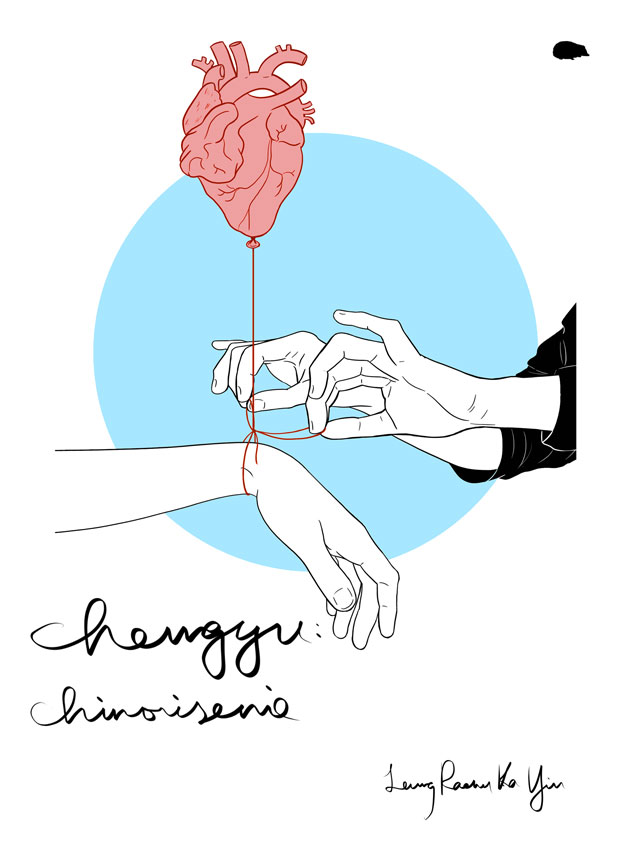
Rachel Ka Yin Leung, chengyu: chinoiserie (Hedgehog Press, 2020)


The chengyu (“idiom” in Mandarin) condenses something meaningful into four characters. In her debut collection, Leung follows a similar pattern, translating Chinese sayings into English and using the resulting amalgamation to carve out her own stories. These stories gain power through their brevity; they are fleetingly endless and endlessly fleeting.

but stirring, i return to the
hum and cry of this brief world, and
bare, and cold

‘sea oath, mountain treaty: till the end of time (海誓山盟)’

The poet looks out over the immensity of the ocean and then looks at herself. Like the seemingly never-ending expanse of water, Leung’s language is a contradiction. Her descriptions are simultaneously incisive and open-ended, vivid and vague.

One highlight is ‘a long night is fraught with many a dream: before morning comes (夜長夢多)’ with its powerful focus on liminality and boundaries. Leung compels a sense of danger and transgression from the start: ‘i am crossing over / in the dark’. Through an array of transcendental images, Leung takes us “beyond”, wherever that may be. Once there, the language used to describe ‘these dream-infested waters’ is exquisite. Leung has a delicate and subtle touch for sound and its limitations. The dreamer is aware of ‘bendy silence’ and of her ‘eyes ticking, ticking like the / black time’.

i am confused.
i think
my blueness is a shade of red
like a baby bleeds

‘drunk on life, dreaming of death: living life as if befuddled (醉生夢死)’

Time and sound are inextricably linked. Both are flexible but suffocating. Similarly, the poems of chengyu: chinoiserie feel confined and freely formed, confused and lucid. Leung skilfully twists our expectations throughout the collection, showcasing the fluidity and stickiness of language. This is perfectly exemplified in Leung’s phrase, ‘syrupy noonlight’ (‘a trickle of water runs long: always (細水長流)’), one of the collection’s many beautiful and sharp observations that will stay with the reader.

Rachel Ka Yin Leung, chengyu: chinoiserie (Hedgehog Press, 2020). Available here.

Knees and never-endings

P.B. Hughes, Girl, falling (Gatehouse Press, 2019)


Girl, falling is a powerful collection of small moments and monumental thoughts. Varied and vivifying, the poems are fresh and innovative. The pamphlet inhabits a fragmentary space, aware of its own limitations but never ceasing to fight. The voice is vulnerable but assured, well-humoured yet urgent.

Hughes writes about writing with great sensitivity. In ‘The Writing Project’, she sets herself a Borgesian task: ‘You resolved to write and write until you’d written every word in the dictionary at least once’. The challenge highlights a desire for completeness which is never quite fulfilled. Indeed, the poet’s exuberance for words breaks down entirely in ‘Distance to the Ground’: ‘on my knee/ at the computer you wrote the letter K over and over’.

The language is at times haunting, at times beautiful, but never static. The poet describes herself and her surroundings with flare and relish: the tree ‘wore apples like smiles’ (‘Tree’) and ‘my arms are the plane’s wings’ (‘things i give my lover’). Sound is navigated with nuance. In ‘Diaspora’ we are encouraged not to take sound for granted: ‘Listening is more than inhabiting sound’. In a poem about refugees, such imagery of domestic instability hits the reader hard.

Like an escalator that goes round and round, the linguistic games repeat and accumulate. Sound is intrusive and hard to block out; similarly, the reader is urged not to ignore the plight of refugees. Loss and isolation recur, but so do knees and water, testament to Hughes’ careful balancing of mind and body, personal and political. Personality crashes into obligation in ‘Falling’, where a girl teeters on the edge of a swimming pool ‘in a body she was required/ to hate’.

The poem is an ever-evolving space, both welcoming and worrying. A balanced and skilful pamphlet, Girl, falling is an agglomeration of language and change. Each poem is confined but dynamic, fixed yet fleeting, like ‘snowflakes shaken in/ a snow globe’ (‘escalator’).


P.B. Hughes, Girl, falling (Gatehouse Press, 2019). Available here.

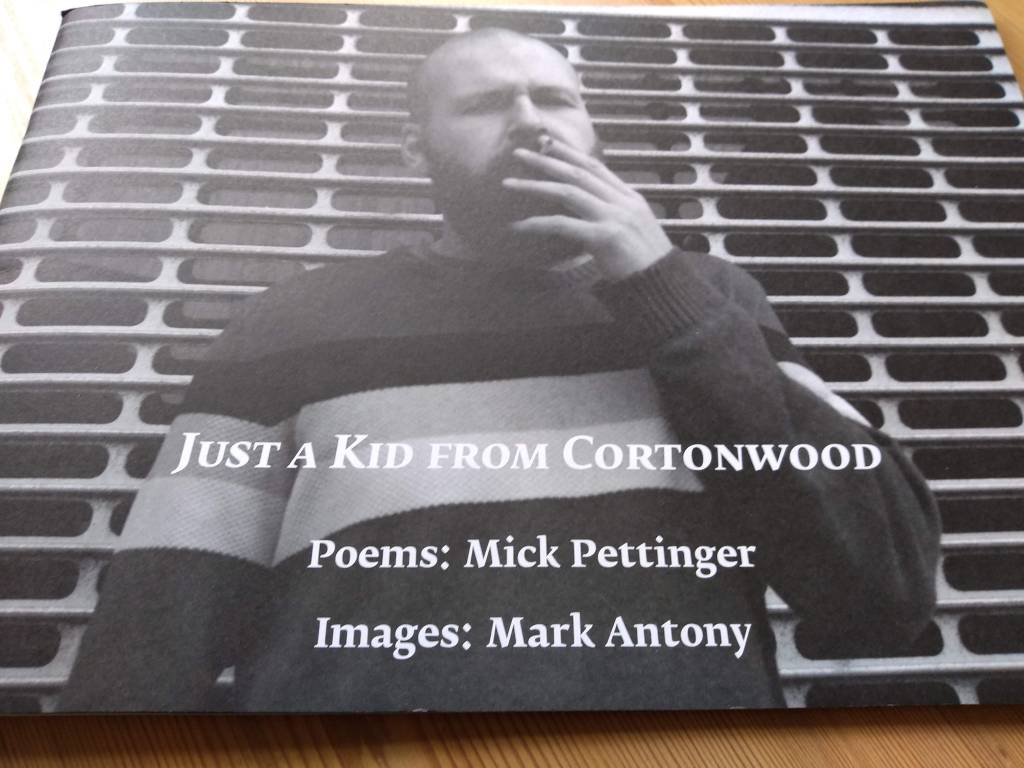
Just a Kid from Cortonwood

Mick Pettinger, Just a Kid from Cortonwood (Wild West Press, 2020)


Mick Pettinger’s debut pamphlet, Just a Kid from Cortonwood, is a raw portrayal of suffering and love. A punch-up between pain and healing, these personal poems are both confessional and vulnerable. Mick leaves nothing in the changing rooms, allowing his varied experiences to crash onto the page. From the death of his brother, to a childhood love of Ninja Turtles, to those people in the ‘photos in our minds and hard drives [which] slowly get wiped’ (‘Essence’), Mick pieces together all the ‘dates and times and dates and times’ (‘Chronology’) that make up a life.

We just wanna be normal
But what we really mean by normal
Is that we wanna cope

‘Finding Normal’

Mick’s authentic voice is heard in every line, swinging from angry to tender, at once bleak and life-affirming. These are poems that demand to be read aloud, narrated with Northern no-nonsense. Between conversation and monologue, the collection doesn’t hold back its punches. Mick knows he might get no reply (the opening poem, ‘Dear Steve’, is poignantly addressed to his dead brother) but this only makes him shout louder.

…without a care in the arse-backwards world!

Because today I am alive…

‘Cost Price’

Produced by Wild West Press, an independent South Yorkshire publisher, the pamphlet is beautifully made. The poems are also accompanied by a powerful and moving series of black and white photos by Mark Antony, featuring Mick and the South Yorkshire landscape.


Mick Pettinger, Just a Kid from Cortonwood (Wild West Press, 2020). Available here.

Fragments and forgetting

LOST FUTURES, vol. 1: ‘in search of lost time’ (January 2021), eds. Kieran Cutting & Christian Kitson


‘Go on a journey with me’ urges Kieran Cutting in the introduction of LOST FUTURES, a compulsion that grabs the reader and pulls them into its strange temporal and spatial worlds. If the first volume is a journey, we embark unsure of our destination, unsure if we will arrive and, by the end, even less confident we will ever make it back safely. We travel through time, space, memory and dreams on a journey ‘from out of the chaos’. The result is both enriching and enjoyable, disorientating and disruptive.

The zine’s vision is set in ‘two ghosts’ with the division (and disruption) of “real v imaginary” and “concrete v abstract”. The present-day “real” woman to whom the poem is addressed is absent for the poet; she is ‘a you’, one of an infinite number of possibilities for who she might now be. In contrast, ‘the you’ is a presence fixed in the past, but also a ghost, a non-existent entity who has ceased to be, and who is therefore painfully real. This rich poem hints at many of the tensions that resurface throughout LOST FUTURES: the rupture of past, present and future into an amorphous mess; the intricate balance between relationships held too long or relinquished too soon, and the search for ‘some shred, some tatter’ which is played out in the volume’s fragmentary multimedia work.

Daniel Bristow-Bailey’s wonderful title, ‘an excerpt from “the wholeness” (a work in progress)’ reflects on the impossibility of completeness. The seemingly autobiographical opening immediately complicates temporal linearity by starting before the author’s birth. The author narrates how his father escaped from a bubbling bar brawl in order to attend his birth, which he admits ‘may or may not be entirely true’. Of course, such a disclaimer could be applied to the past in general — history, myth, legend and fantasy are flexible categories that overlap more often than not. Regardless of how much truth is behind the story, the nascent brawl is a powerful example of a “lost future”: an event that may or may not have taken place, a mystery that doesn’t need solving. What matters for the author is that it became “a brawl” rather than “the brawl” when his father walked away to attend another beginning.

The rest of the story poses the question of parallel universes through the urban myth of Bob Holness’ sax solo on Baker Street. As well as the unreliability of the past — which is brilliantly expressed in the “imperfect perfect” construction ‘he used to have done’ — the introduction of ‘another universe’ raises the question of opposing spatial realities. This idea also forms a key part of Christian Kitson’s ‘parasite’, which contrasts ‘the reality of the moment’ of the reunion of lovers with ‘the simulated world I’d painstakingly built’ during their time apart. When these two ghosts collide, their incompatibility is destructive: ‘you, the stranger, collapsed my dream world’.

It is significant that imagery of orbits recurs throughout the volume. This reminds us that the basis of our existence is mere chance, that our environment (like time) never stands still, and that small bumps in the (orbital) path can set us off in a completely different direction. The collage built around the concept of ‘IF’ — a tiny word with enormous significance — is perhaps the best embodiment of our fractured and changeable existence. The dream of utopia is in fact a partial and messy reality, constantly reimagined and reframed to adapt to present experience. Meanwhile, in ‘new worlds’, language has the power to reinvent and reform our experiences. Do we taste and smell differently if we ‘hear waves of mint’? Can new wor(l)ds — or new combinations of existing ones — create ‘a future/ where we hold each other’s houses’? IF is both a powerful and crushing word: it communicates hope for something better and acceptance that reality is not how we would like it to be.

The collage’s screenshots of tweets and WhatsApp messages add a sense of fragmentation and ephemerality that characterise much of the modern age. This is, however, countered by the seriousness of the messages: imagine ‘if we reinvested in networks of care instead of surveillance’. Technology’s “lost future” had earlier been foreshadowed in references to MSN Messenger and CDs, examples of technologies that shaped (and, perhaps, continue to shape) our lives despite now being largely redundant. Likewise, Duunya’s powerful artwork ‘another day’ satirises both technology and modern jobs in its portrayal of a worker slumped at their desk. The figure has one hand on a keyboard and the other on a mouse, while the computer screen bears down on them from out of shot. As occurs throughout LOST FUTURES, absence makes the computer’s presence even more overpowering. In the background, frames of happier, more human moments dance out of sight, a potent contrast for an age in which many lives have been altered and many futures lost staring into cyber space.

This debut volume is a varied and skilful collection of work by Kieran Cutting, ‘some fantastic friends and some well-timed strangers’. Serendipitous connections are certainly appropriate for LOST FUTURES with its array of moments, missed moments, nearly moments, imagined moments and forgotten moments. The search for lost time — time lost to abusive relationships, believing something that was never true, or ‘holed up in a crumbling castle’ — is as paradoxical as it is imperative. These “lost futures” (‘the world-where-you-never-held-her-hand’, the space between IF and THEN, ‘missed connections, grey days,/ unescapable nights’) are neither real nor imagined, utopic nor dystopic, remembered nor forgotten. They are ‘possibility, nostalgia, regret’ all rolled into one.


LOST FUTURES, vol. 1: ‘in search of lost time’ (January 2021). Available here.