The Piano Tuner

Kris Spencer


Tapping keys,
turning pins for temperament.
Alone and alone. 

The mutes placed to shape silence and set 
a single string to sound, and then against 
another. Wires squeezed and stretched to find 

harmony in difference. No sooner fixed
the strings shift again in air and time, 
and the music played.


Kris Spencer lives in London and has written seven books. Kris is a Fellow of the Royal Geographical Society and works as a Head Teacher. His poems are published internationally. A focus in his work is sense of place.

Reveal

Elizabeth Guilt


Melissa smoothed her silk dress, checked her hair, and rubbed sanitising gel on her hands. Her husband handed her the little plastic device, and she smiled as she pressed firmly on the clicker.

The needle shot round into her thumb, stinging more sharply than expected.

“Ow!”

He took her hand and, pressing gently, guided it so the swelling drop of blood fell into the square well on top of the box.

His arm around her shoulders, they hurried away and waited.

Silence fell. Everyone waited.

Melissa sipped at her lemon soda. It shouldn’t take this long. It hadn’t taken this long when she’d held Aimee’s hand three years ago.

“Did you do it?”

“Yes, Mum!” Melissa snapped, more harshly than she intended.

It had only seemed a few moments before Aimee’s silver rocket had zoomed into the sky. Had Aimee felt the time dragging like this, before the explosion of super-cute pink bears?

She turned to her husband. “Do you think it’s…”

A fizzing crackle interrupted her question, and he squeezed her shoulder.

The rocket didn’t fly directly up as expected. It spiralled, executing wild loops until it hung, spitting sparks, over the summerhouse.

Melissa held her breath.

Showers of green and orange stars rained down in torrents. A purple train flew out to one side, and a noise like the blare of trumpets shone over the uneasy group staring at the sky.

“Mummy, you said it would be…”

Aimee shushed her daughter.

“Melissa, are you sure you did it right?”

“Yes, Mum!”

“But it shouldn’t be all those different colours!”

“It must be a manufacturing error” said her husband, his arms protectively around her.

Everyone looked from Melissa to the box to the space in the sky above. Memories of the vibrant stars shimmered behind their bewildered eyes.

A week later, when she’d had a proper test at the hospital, Melissa had cards made. Beautiful, darling little cards that unfurled into blue vintage racing cars. She sent them to the party guests who’d travelled so far but gone home awkward and confused.

Melissa brought Benjamin Albert home from the hospital, wrapped in a sky-blue blanket, and settled the baby in the nursery they’d painted ready.

It was years. Sixteen years of toys and books whisked out of sight; of reluctant Saturday morning rugby practices and screaming fights over clothes; of awkward conversations with the school. And tears, so many tears, before Melissa accepted that the exploding box had been correct.


Elizabeth Guilt lives in London, UK, where history lurks alongside plate glass office buildings and stories spring out of the street names. She has had fiction published in Luna Station Quarterly, Electric Spec and The Colored Lens. You can find her online or on Twitter (@elizabethguilt).
My Heart After Chernobyl

Louise Mather


Instead of tearing down a tree,
I unravel amnesia into shapes –

I am always finding feathers,
these old leaves were once moths

here, hold out your palms –
nobody mentions acid in the rain anymore,

its invisibility fallen into our bodies’ decay,
gift of heart, uncovered, ancient dust

unpoisoned, a dream,
we spoke about it once,

how a bird takes flight,
lilacs beneath the willow.


Louise Mather is a writer from Northern England and founding editor of Acropolis Journal. Her debut pamphlet ‘The Dredging of Rituals’ is out with Alien Buddha Press, 2021. She writes about ancestry, rituals, endometriosis, fatigue and mental health. Twitter (@lm2020uk).

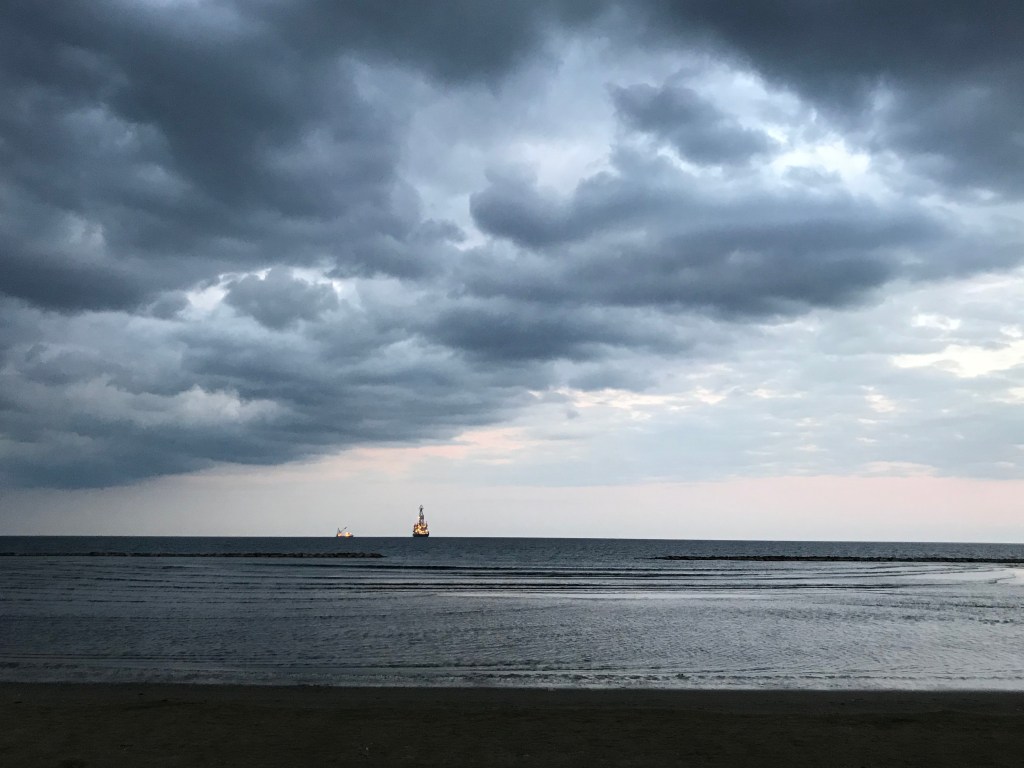
Larnaca Bay, March 2021

Ilias Tsagas


Ilias Tsagas is a Greek poet writing in English and in Greek. His poems have appeared at the Sand Journal, The Shanghai Literary Review, streetcake magazine, Tint Journal, the Away With Words Anthology (Vol 4) and elsewhere. He was also a runner-up at the Briefly Write Poetry Prize 2021.

To a Mentor Never Properly Thanked

Johanna Caton


Years and years have passed. I cannot write a letter to you.
You will wonder perhaps if I have really moved on. Or worse:
you might not remember me.

I know you are alive. The web tells me so. You must have been
much younger than I thought: you seemed so accomplished, mature – 
your words always knowing; your gaze, the tilt of your head gracious,
healing – but it was your ability to name that saved me. 

These years have been extremely on-moving ones. I found 
my vocation. Again and again. I moved to a different land.
I have searched, seen, lost, loved, listened, learned, died, 
revivified.  I have made friends and enemies. I have been myself. 

Mostly. But what would I have been if I had not had you?


Johanna Caton, O.S.B., is a Benedictine nun and lives in England. She has had poems accepted by online and print publications, including Amethyst Review, The Christain Century, The Catholic Poetry Room, The Windhover and The Ekphrastic Review. She was a 2020 Pushcart Prize nominee.  

Not your fault

Mia Lofthouse


You are a child in a room of locked doors with a key that opens none of them.

In the room there are many things, you know one of them can hurt you, you cannot know which. You stand still. Hoping if you scrunch your eyes, count to ten, you’ll wake up somewhere safe, in your mother’s arms as she whispers, ‘It was a dream, only a dream.’ You do this. But the room is the same and you are running out of time.

Ok then, if he wants you to play, you will. So, you must choose, choose and hope you find the way out. You run to the bookshelf, feel rather than see him move behind you, move closer. You take a book, hold it out in trembling hands. This won’t hurt you. But it won’t save you either. You’ve always been bright for your age, bookish, wise, but you are still a child and nothing you have learnt could have prepared you for this.

Something else then; you stumble to the bed. It seems impossibly far away. Your heart flutters, a moth failing to take flight. He is getting closer. You reach for your teddy, the one you have had since you were born. You press it against your chest. It turns to dust and vanishes. No comfort can be found in this.

You move on.

You know where to find the knife, you have had it hidden for weeks, for this exact moment. You point it at him.

He laughs.

You notice how much your hand is trembling. The room should crumble now, you think, but it doesn’t. You let the knife go. Nothing he can do will ever make you stoop that low; after all, you are the child and he is the monster. It was never any other way. 

You’ve lost hope now. You know there is no way you’re leaving this place without being scarred, but then you remember something. You reach into the pocket of your jeans for the chocolate bar you earned at school. You break it in half and offer part to the monster. He takes it and you both eat, looking at each other. Then he tosses the wrapper and reaches for you.

As you shrink in his shadow you realise the truth. It was your kindness that hurt you. Your kindness after all. And as you close your eyes and wait for it to end, you pull your kindness closer. He will not take that from you.


Mia Lofthouse is a 21-year-old writer. She writes both short stories and novels and is currently studying for a Masters degree in Creative Writing. In 2017, she was a finalist in the Wicked Young Writer award and more recently her story, ‘The Road Home’, was published in Personal Bests Journal.

There She Was

Andrew Ray Williams


Dainty arms raised, as morning rays beam. 

Loose locks jouncing, body twirling, 
unbounded, in movement with the melody.

She is a vivid field flourishing with flowers –
fresh mountain air in the warm of Spring, 

In a world of asphalt and pavers, 
fossil fuels and factories. 

An anxious father 
with a carefree child. 


Andrew Ray Williams is a poet living in Pennsylvania, USA. His work has been featured at Red Eft ReviewThe BeZine Quarterly, among others.  

Back Roads of a Country

Mervyn Seivwright


A Georgia red clay dirt path
leads me to a rich black soil field,
scarce cotton plant strands lingering,
fog echoes visions visceral of covered
colored bodies―silhouettes
bobbing fingers around prickled stems
on cotton plants. Blurred bodies
in red clay dust clouds, hiding
pricked drooling blood―fresh dye
blots on white cotton bulbs―
rubbed blood stripes on a national flag.


Mervyn Seivwright writes to bring social consciousness and poetry craft together for humane growth. He is from a Jamaican family born in London and has appeared in AGNI Literary Magazine, The American Journal of Poetry, and 35 other journals while being a 2021 Pushcart Nominee. Mervyn currently lives in Schopp, Germany.

Full Speed Ahead

Andrea Lynn Koohi


Five trains leave the station back-to-back, half-moon magnets connecting them. Their fuel is the force of a little boy’s hand. A green train is chipped where a dog chewed the corner, a blue train faded where fingers hold tight. They’ve cruised these parts before, but they don’t remember: tracks like snakes around the floor. There’s no goal but forward, no purpose but fun. They speed through a tunnel, glide over a bridge, ride too fast around a bend. One derails, dead stop, on its side. The boy doesn’t see it, but my tired eyes do: its painted face still smiling.


Andrea Lynn Koohi‘s writing appears or is forthcoming in Lost Balloon, trampset, Whale Road Review, filling Station, Pithead Chapel, Ellipsis Zine Nine, Sunlight Press and others. She lives with her husband and two sons in Ontario, Canada. Find her on Twitter (@AndreaKoohi).

Enough

Jeff Gallagher


Here is enough.
Take a couple of handfuls of enough and make it more.
Invest your money wisely to buy a few luxuries.
Plant a patio. Harvest a hot tub outside your door.

Now take more than enough.
Use it to purchase all the things you do not need.
Fill your cupboard. Fill your freezer. You must care
For all those eager greedy mouths you have to feed.

Now take too much.
It is yours. But some of it will rot or rust or decay.
And you need to make room for the smartest and the latest.
So the only option with too much is to throw it away.

Here is plenty.
It lies in landfill or swims with the fish in the sea.
It hangs in the air with the dead – who have filled the earth
With everything, while leaving nothing as their legacy.


Jeff Gallagher is from Sussex. His poems have appeared in magazines such as Rialto, One Hand Clapping and The Journal. He has had numerous plays performed in various locations nationwide. He has also appeared in an Oscar-winning movie. He runs an occasional blog called ‘The Poetry Show With Gally G.’