You Haven’t Changed At All

Daniel Addercouth


You arrive home from work one Friday afternoon to discover a surprise party has been thrown in your honour. Dozens of people emerge from the living room into the hallway, holding signs, laughing, greeting you. A woman plays an accordion. It’s the wrong time of year for your birthday, so the party really is a surprise.

As the initial shock subsides, you realise the guests are all people from your past that you’ve lost touch with. Your best friends from primary and secondary school. An English teacher you were fond of. Flatmates from university. The man who owned the pub where you worked. The professor who mentored you. Various colleagues from various jobs. Every woman you dated before your ex-wife.

As they come to chat to you, you struggle to remember names. Everyone has aged. You wonder who arranged this and how they got in touch with all these people when you don’t even have their contact details. But you don’t have time to think about that because people are bringing platters of food from the kitchen, opening bottles of beer, offering you glasses of prosecco.

You might have expected resentment, anger. After all, it was you who dropped many of these people. You who didn’t return a call, didn’t respond to an email, didn’t get in touch when you visited your home town. There were neglected wedding invitations, unattended birthday parties, missed school reunions. But everyone is pleased to see you. They apologise for not being in touch, as if it’s their fault. They sing your praises to other guests, trade anecdotes casting you in a positive light. People embrace you, slap you on the back. Old girlfriends flirt with you.

It’s a great party, but then everyone starts leaving at once, as if they’d pre-arranged an end time. There are more hugs, jokes and stories as people make their farewells. Everyone wants to give you their contact details. Your thumbs get tired from tapping email addresses and telephone numbers into your phone.

The crowd thins out until there are just a handful of people left, then two, then one. Eventually you have said your last goodbye, hugged the last friend. You close the front door, open a final beer, sit down on the sofa and take stock. So many memories, so many emotions. So much affection and, yes, even love.

You take out your phone and scroll through your contact list, which has doubled in size. Then you go through the list again and delete each new entry.


Daniel Addercouth is a Scottish writer and translator based in Berlin. This is his first published story. Follow him on Twitter (@ruralunease).
Retired Park

Abbie


caramel trees stutter on the Japanese proverbs:

swaying in the broken English sunshine before the

massacre of the third season.

A sign hidden in the moss

“Do not climb”


Abbie is a new poet from England who spends her time dreaming of words in the day and bringing them to life in the evening.

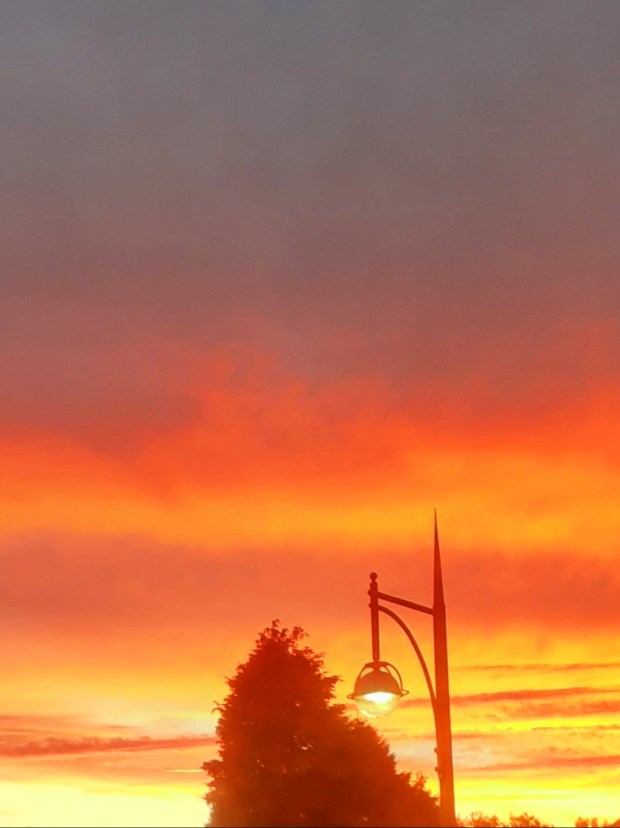
Sunset

cloudassassins


cloudassassins is a Scottish photographer focused mostly on nature and landscape photography in black and white or colour. Find out more on Twitter (@cloudassassins).

Looked Away

John Tustin


When I was a boy
and I saw that man
beating his dog

right on his front steps
under the sun
and its vivid light

I was that dog
when I saw it

and I was that man
the moment
I looked away.


John Tustin’s poetry has appeared in many disparate literary journals in the last dozen years. See his website for links to his published poetry online.

A Song of Rivals

David Harrison Horton


The saddened stalks of cornfields
mid-October
before the burn off
hold tight their death-row reveries.

Think of the universe, says the professor,
as a bad Tupperware container:
all that mess,
but no leaks.

The Tin Man’s arm is in need of oil.
Dorothy isn’t in the mood today.

This buffalo only has three legs,
and would make a good obverse,
sitting in a pocket,
waiting for war.


David Harrison Horton is a Beijing-based artist, curator, editor, and writer.

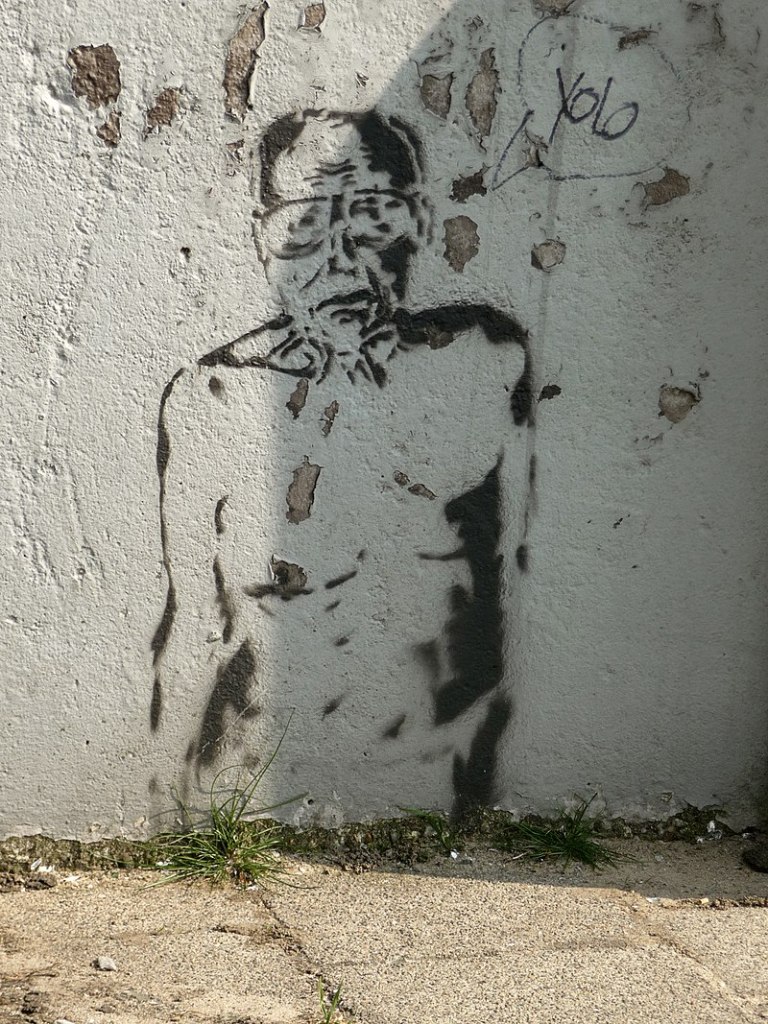
A bilingual tanka in Irish and English in response to street art in Amsterdam

Gabriel Rosenstock


labhrann strainséir liom
bloghanna dá chuid dánta
(focal nó líne)      
     ní bheadsa im’ bhean chabhrach     
     cad a theastaíonn uaidh a rá

strangers speak to me
pathetic fragments of poems
(the first word or line)         
     i’m no midwife for their poems         
     what is it they wish to say


Gabriel Rosenstock is a bilingual poet, tankaist, haikuist, playwright, novelist, essayist, translator and short story writer. His sixth bilingual volume of tanka is Secret of Secrets. See more on his website.

Photo: Wikimedia

Two Oak Trees

Lillian Ramirez


two oak trees
scheduled for removal

first man
then the trees

and somehow
we are still around

but scheduled nonetheless


Lillian Ramirez is first an admirer of language and secondly an educator.

Tourist Trap

Rachel Canwell


One more week and I reckon I’ve cracked it. One more week of digging. Of early mornings and late nights. Of nursing blisters and hiding muddy clothes from Mum.

One more week until I can show Dad. Until I can unveil to him the answer to our prayers. I rest on my spade, close my eyes and imagine it. Me walking into his Amusement Arcade, past the flashing lights and kiddie rides.

Telling him I’ve found the way to keep them here. To keep the good times going through the winter too.

Telling him about our very own tourist trap.


Rachel Canwell is a teacher, blogger and writer, slowly putting her head, story by story, above the parapet. She is falling in love with flash fiction a little bit more every day!

In Search of Gender

Dervla O’Driscoll


I spent my life sitting amidst three walls, each one constructed in decaying stone. I would trace my fingers down the crumbling bricks, caressing their greening edges and allowing their cool surface to lay against my cheek.

As I rubbed each inch of myself against its rough surface, my skin began to dissolve. My eyes watered as they saw the pink grazes stretch around the softness of my belly and reach down between my thighs.

It was years before I felt the cool breeze gently nudge my back, the tenderness of its touch sent a rush of terror down my spine. It was months longer before I drew the courage to even turn. As I spun around, my nails dug deep into my cheeks.

Before me hung a great tapestry, the flag of my freedom. It swayed before me, the sun creeping through its exquisite colours. I knew escape was within reach.

I scrabbled at the floor beneath my feet, pushing the dirt from the ground. The deeper I dug, the softer the mud became. Frantically, I tossed the ground to the side. I would tunnel deeper and find the sun. I would tunnel further and find the sun.

It was the weight of the tapestry that finished me. It was the weight of ambition that finished me. It was the longing for difference that finished me.

I reached up to scratch my way further through the earth. I allowed my fingertips to explore the new land at the crown of my head. My fingernails caught the edge of something soft.

The coloured silk only flashed before my eyes for a second before the darkness engulfed me.

I writhed against the weight of my prison collapsing above me. As the earth stole the breath from my lungs, I craved nothing more than the dull ache those walls inflicted.


Dervla O’Driscoll is currently an undergraduate student at the University of Manchester. She has previously published non-fiction works in The Mancunion and Mouthy Magazine.

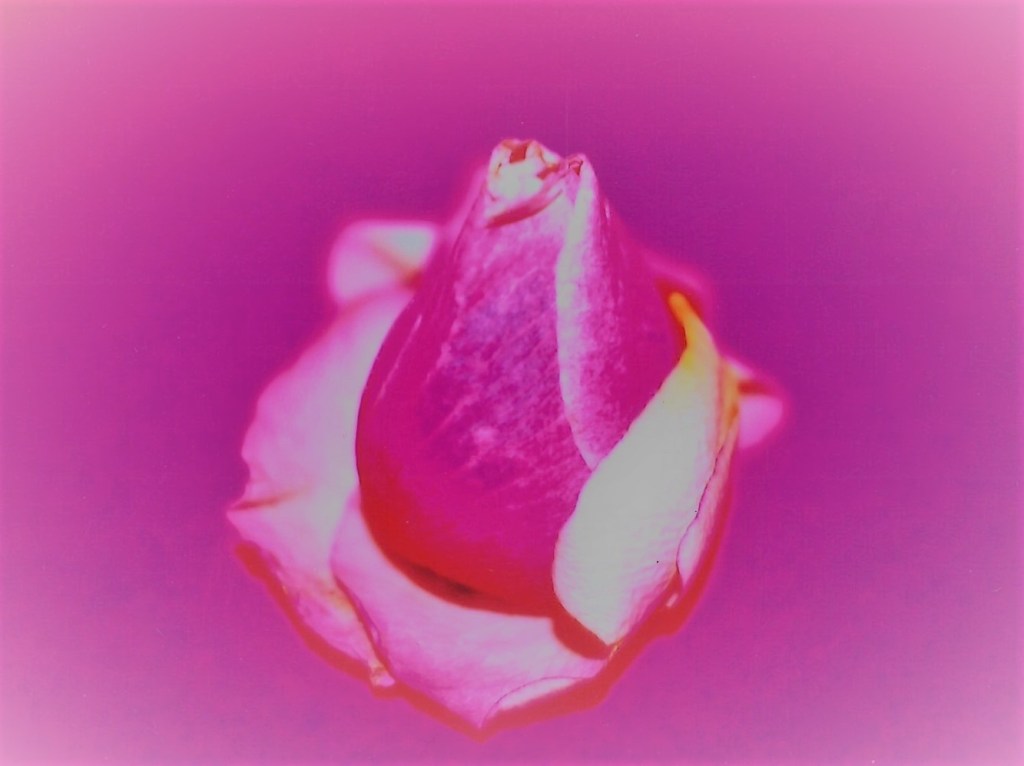
Still Life – In Pink

Kimberly Madura


Kimberly Madura lives and writes from a cabin in the woods of Vermont. Originally from Chicago, she has been a social worker for 21 years. She has been published in multiple anthologies and literary magazines including Mad Swirl, Northwest Indiana Literary Journal, and Brief Wilderness.