The Crossing

Alison Milner


I say, “you are a figment of my imagination.” You say, “I don’t believe you”.

You hunch your shoulders in that belligerent pose I know so well. Your grin reminds me of adolescence, of secrets and small lies.

Your stance is territorial, in the centre of an ancient pack-horse bridge which spans a turbulent river. Stained with peat, carbonated by topography.

A dandelion and burdock Northern English beck.

You are wearing our old, cracked leather jacket, the glazing of our outer selves. Your feet planted firmly in the heavy boots whose soles inhabit ours. Their toughness empowers us. The footprint of who we are, bold and free, before I learn to tread carefully.

It is summer and the air is heavy with a cloying sweetness. The weather is hot and dry, but I see heavy rain, falling like beads from a broken chain.

Sheep graze the sky, drifting wool. White, blobbed with blue paint. Fallowing this field where colour hums yellow and purple hues. I am on the canvas of an impressionist painting and your portrait is drawn incongruously at its centre.

I squint against the searing light, and you fade into the haze. When I open my eyes wide the glare intensifies. You are still guarding the bridge, sketched charcoal-black, figurative.

I walk towards the beck seeding dandelions, the blown wishes of a lifetime. I tread lightly on clover pompoms. I do not want to scatter petals like confetti at a wedding.

 “You can’t ignore me. You can’t cross without me,” you say.

 I do not contradict you, but my legs stride forward. My trousers rustling, my trainers squeaking like mice.

“I wrote to you,” I say, “letters of the mind, tumbling images I couldn’t articulate. Sentences that wouldn’t shape onto paper.”

The flagstone bridge is slippery with spray. I do not slide as I walk through you, cutting your silhouette, onto the other side. Across the water into a field of gold.

I touch the shining silk of buttercups. I glance back at the bridge. It is empty except for a grey heron, fishing for its next catch.

Slender grasses wave in a sea of grey-green brush tips. I caress seed heads furred like kittens’ tails. Run my fingers along plumes which scatter escaping insects.

I stroke the ears of wild grain like a lover, until only I remain. A solitary woman in a wildflower meadow.


Alison Milner lives in Hebden Bridge and is inspired by the colours and contours of the moorland close to her home. Lockdown led Alison to explore internal landscapes; it created blank-page time for her to play with words. She has been published in a literary magazine and two anthologies.
Serendipity

Carl Farrell


“When we let that luckiness in” (Naomi Shihab Nye)

A brief allusion in a novel
Sends me off to seek a poet
While a bookshop’s Facebook page
Sends me out after another
Of similar ethnicity and heritage:
Serendipity falling
Like sudden drops of rain
Out of an open sky.

I join the pitted dots in the dust.


Carl Farrell compulsively writes short poems and occasionally short fiction. He likes to read widely in several languages, but is increasingly drawn to the lyrical and life-affirming, albeit with elements of grit. He grew up in Nottingham, where he now lives, but spent most of his twenties in Greece.

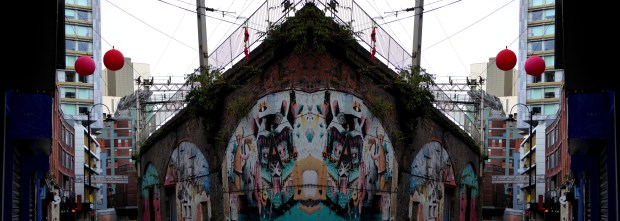
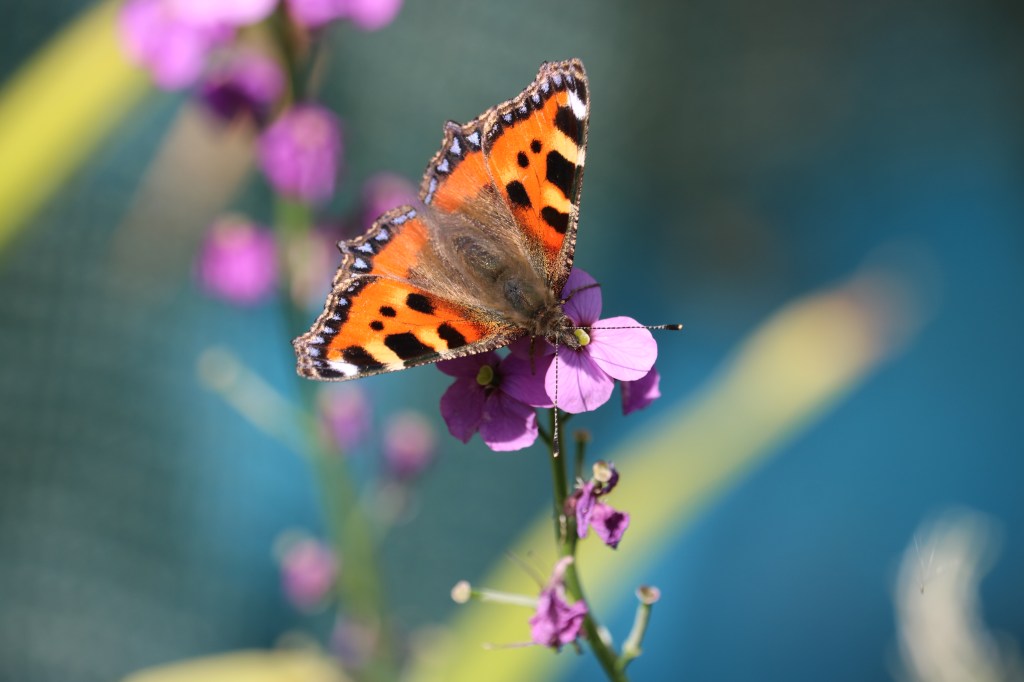
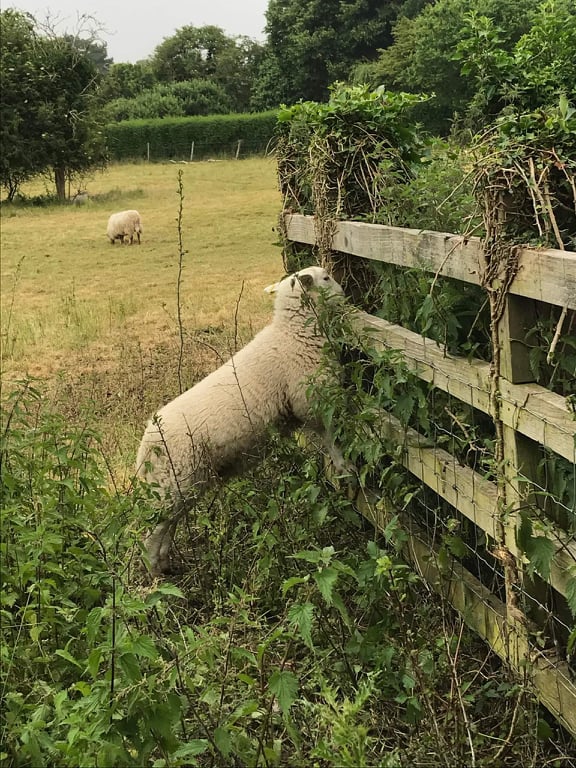
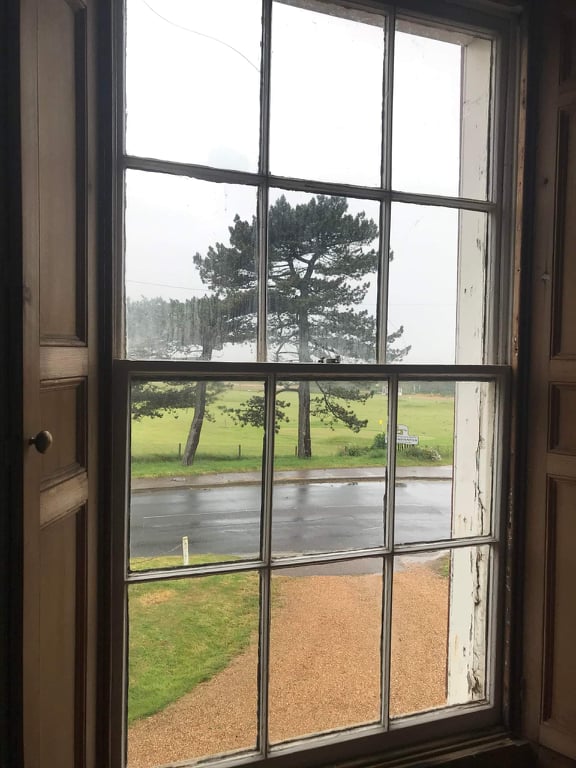
Two Photos

Fabrice Poussin


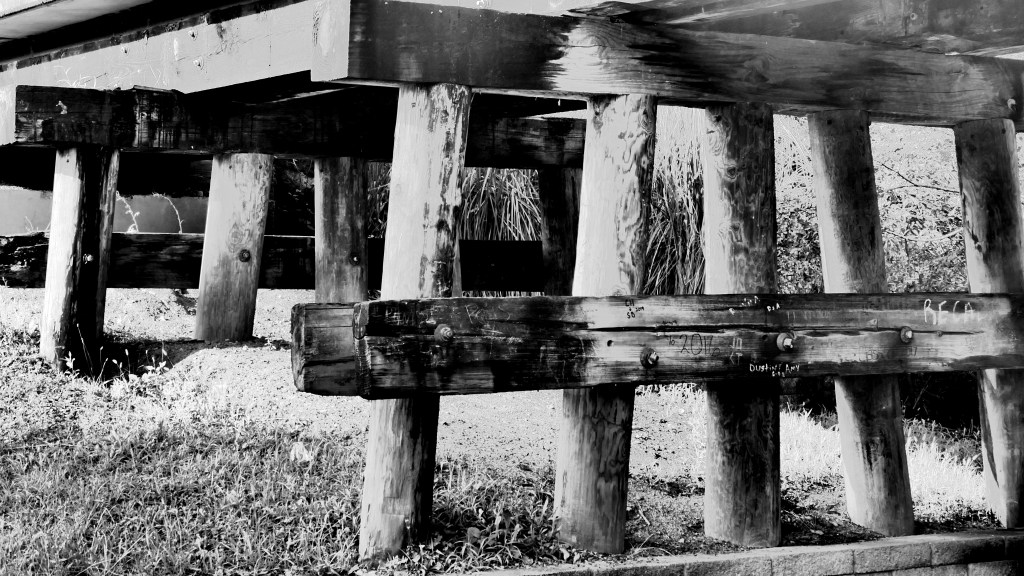
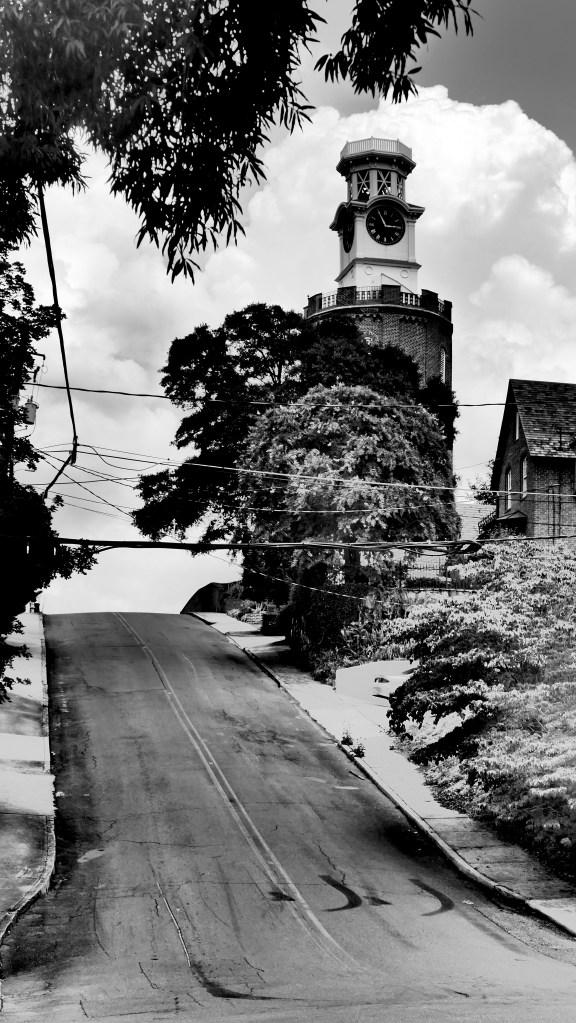
Too Far


Safe


Fabrice Poussin teaches French and English at Shorter University. Author of novels and poetry, his work has appeared in Kestrel, Symposium, The Chimes, and many other magazines. His photography has been published in The Front Porch Review, the San Pedro River Review as well as other publications. 

Arrhythmia

Abi Hennig


Take me through the procedure. One more time. Just so I’m prepared.

Make an 8-inch cut in the chest

We never bought her brand-new toys, sparing the rod does not have to mean spoiling the child. She was happy with our homemade gifts: hand-drawn top-trump cards fashioned from cereal boxes and sticky-back plastic; bottle bowling pins; sock monsters; tin-can robots with sharp edges carefully sanded soft.

Cut through the breastbone to expose the heart

And then she was three-quarters-to-six, a rag-tag mop of curls and an eye for harmless mischief which charmed everyone she met. The playdates came, and went, and came again. Birthday parties exploded in clouds of icing and glitter, knee-deep in wrapping paper, shiny to the touch, and plastic bags with plastic toys and plastic-coated lollipops that glistened sticky in the sun.

I packed her off each time with Tupperware: homemade hummus, hand-moulded pittas, cookies sweetened with honey from the hive. She returned with a crumb-filled box, a giveaway slick shimmer of sugar on her lips, eyes glazed hazy.

Stu told me to let it go.

The nights drew in.

Connect to bypass machine

She wrote to Santa in conscious cursive, looping letters into candy canes, dotting each i with a star. I peeked over her shoulder, swallowed hard, and wondered what to do.

Remove the diseased heart

‘A Barbie’s not so bad,’ he said. But Barbie’s where it starts. Next comes princess shoes and pastel-painted horses and tacky tat that’s all the same, same, same.

He said to leave it in the box, surrounded by the appendages: shoes, handbags, necklace, skateboard, teeny-tiny mobile phone.

I ignore him, focus on recycling: cut the box into playing-card rectangles, carve clear pvc into tiny stars and store them in a craft box, leave just one square spare.

I slice through polymer torso, cut a window, pop out flesh, smooth and cool, place it to one side. 

Replace with healthy heart

With nail scissors, I slice the shape: a human heart: transparent, fragile. I prick my finger and watch blood bubble, print pvc with a piece of me, place it gently in the space, watch it swallowed whole.

Close breastbone with wire, leaving the wire inside the body

Years of sewing has made my stitches neat. She will love her plastic princess and pepper her with kisses and the bumps beneath the breastbone are proof that she is extra special, with a heart that’s made to last.

Stitch up the cut

I wrap the doll in tissue paper, finish it with ribbon and a tag in Santa’s hand.

Seal with a kiss

I tuck the parcel in the present drawer, pack my bag, perch on the edge of the bed. Stu tells me I’ll be back to give it to her myself. I listen to my heart skip its beat in the dark and wonder.


Abi Hennig lives in Brighton and spends her time teaching, writing mini stories and losing gracefully at complicated board games. Her words have popped up in various places – recently in Ellipsis Zine, Molotov Cocktail, and Janus Literary. She tweets (@abihennig).

Grotto life

Martha Lane


Borrowed baubles in his pocket, he shifts uncomfortably. Pride whispers in his ear.

They’ll know it’s you.

The pub crowd jeering with yeasted breath, maybe brickies from the site. Awareness laced into their boots. Talking to his jingle-bell hat while their kids recite impressive lists, breathless and flushed, while he buckles resignation round his fake fat tummy. Desperation the twinkle in his eye, he ho ho hopes it pays enough.

A familiar weight and warmth hits his lap. The boy. On the cusp of not believing. On the cusp of understanding. Wishes for a bike, asks for a beanie.


Martha Lane is a writer by the sea. Her flash has appeared in Free Flash Fiction, Perhappened, Bandit, Reflex fiction, Briefly Zine and Ellipsis, among others. Balancing too many projects is her natural state. She tweets (@poor_and_clean).

Three Photos

Sarah Leavesley


a space as wide as the sky

“Being outside with a sense of space and open sky reminds me that my part in this world may be small but that I am part of it”


city frowns

“It can be easy to vilify cities in environmental terms when they may in fact play some positive roles (reducing long commutes and some transportation pollution). Important questions remain though: are our cities as environmentally friendly as they could be? And are those at the helm paying enough attention to this?”


before whole worlds disappear

“William Blake saw “…a World in a Grain of Sand | And a Heaven in a Wild Flower” (‘Auguries of Innocence’). Each small creature reminds me of how many worlds we could lose through climate damage and species extinction”


Sarah Leavesley is a prize-winning photographer and writer, whose current work draws heavily on nature and environmental concerns. See more on her website.

Hotel Extinction

Julian Bishop


A view to die for from any of our last resorts: whether
remote island or sapphire lagoon, the outlook is
unremittingly the same. We’re frighteningly easy
to travel to, our portfolio global. Another branch
opens daily. Most guests are driven here. Many fly.
All animals welcome. We apologise for the poor air
conditioning. We guarantee a good sleep. Beware
of a sudden proliferation in insects – rest assured
we are committed to total elimination. Everything
in the Ice Breaker Tavern is on the rocks, 24/7.
We don’t do a Happy Hour. Think Hotel California:
check out any time you like but you can never leave.
Daily wake-up calls are free. Sunset at the infinity
pool is unforgettable. Every room always has flowers.

“I’m calling my forthcoming book of eco poems We Saw It All Happen because I’m staggered at how the world can let catastrophe unfold in plain sight. I fret at the edges, cutting out meat and unnecessary travel but I like to think, as a writer, that I have a more important role to play. Auden’s famous (mis)quote that poetry makes nothing happen perhaps needs to be counterbalanced with a lesser-known quote from the master:

But once in a while the odd thing happens,
Once in a while the dream comes true,
And the whole pattern of life is altered,
Once in a while the moon turns blue.

(Once In A While The Odd Thing Happens)

And that’s precisely why I write.”


Julian Bishop is a former television journalist who’s had a lifelong interest in ecology and worked for a time as Environment Reporter for BBC Wales. A former runner-up in the Ginkgo Prize for Eco Poetry, he’s also been shortlisted for the Bridport Poetry Prize and was longlisted in this year’s National Poetry Competition. He is one of four poets featured in a 2020 pamphlet called Poems For The Planet

Project report

Angela van Son


Issue

Trees in danger of extinction

Problem

Nose swaps don’t seem to work

Counter measure

Huge field of facemasks planted

Doubt

Will they mature on time?

Status

Open

“Sometimes I wonder if it’s the planet fighting back, trying to get rid of the current top of the food chain. How to help this greediest of species make themselves extinct? Future aquatic archaeologists may wonder about those two legged creatures who once lived above the water surface. In ancient times, when land covered the seas…”


Angela van Son lives in Utrecht, the Netherlands. She writes poems and very short stories about the strangeness of being human. She likes to put a twist on things, whether it’s dark, humorous, philosophic or playful. As a coach she helps people change their life stories by making things happen.

Three Photos

Chlo


“We are currently living through the greatest mass extinction in history. Air pollution is already the biggest killer we face. I am a burden on the environment, and so are you, and I will never forgive either of us. There will never be an excuse for not doing more, or doing less – less animal products, less flying and less consumption. Don’t let apathy define our species, be the change. Our home is on fire and I refuse to bring a child into the blaze. For your loved ones and the other species who call Earth home, go vegan.”


The Hopeful Captive


But when it rains, it pours


Cows love, love cows


Chlo is a committed environmental activist and has been vegan for nine years.

Embers of all

J.H. Hewitt


Your eyes were steady. I tipped my head and raised a brow. Straight at me, you said it again. A blink. And then, on my face, a small smile broke out, its flames crackling in the space between us. Licking at the chairs on which we sat, setting them ablaze, making embers of all.

The smile – hungry now – glanced at you. Your eyes unflinching. I watched it open the front door, and set out for the town, spreading as it went, razing houses, St Trinity, the Oak. Old style lamps flared then burst. It seared across the land, while you held your gaze. Up went hedgerows, trees, strangle-squawked crows. Billows of grey filled the sky. But the smile scorched on, boiling the oceans, blackening shoals and choking gulls. Soon, the plains were dust, the charred mountains bare, cities pluming final puffs. A whole sphere in cinders.

The smoke clung around us. I could hardly see you now – or breathe. Then, at last, you said, clear, like you’d never needed air anyway: “No, no, no, not like that.” And then: “What have you done?”

The smile fell away. Wordlessly, I searched for something to save. 


“Of course we can change our diet, fly less and drive less, but the single most important thing any one of us can do in the fight to save our planet is to communicate about it – whether that is directly to people in positions of power, through art, or in social conversations with those around us. The aim must not only be to change minds but also to win hearts. We mustn’t just argue using data, but also persuade using empathy. Let’s shine a torchlight on powerful governments and corporations who dodge accountability by trying to gaslight individuals. And let’s reward with loyalty those who show courage in putting the planet and its most vulnerable people first.”


J.H. Hewitt is a parent and writer – but most of her words get someone else’s byline.