‘The House at the End of Hope Street’ by Menna van Praag


Living rent-free in Cambridge for 99 days really would be magical.

Menna van Praag’s debut novel is an easy read: a heart-warming story about three dejected women who find hope in a magical house.

But the plot is far more nuanced than it might first seem. The various narrative strands are intricate and are interwoven effectively through regularly shifting viewpoints. Moreover, the characters are all vivid and complex, which makes their actions and reactions believable.

The fantastical elements are successfully integrated into the story. This is particularly the case with Alba’s ability to see the colours of words, a lovely idea that allows van Praag to paint some beautiful dialogue scenes.

Peggy, the “Fairy Godmother” of Hope Street, is an interesting character. Her personal intrigue highlights how those who devote their lives to others are at times the ones most in need of a helping hand.

The only thing that tempered my enjoyment of the novel was the number of typographical errors it contained. For a book that celebrates the beauty of writing, I found that the style didn’t always live up to these high aspirations. In fairness, this became less of an issue as the story progressed, which is testament to the powerful narratives.

This charming tale is surprisingly compelling. A much-needed distraction in dark times.

Briefly Write Reading Challenge 2020

First published 27/12/19

For better or worse, releasing my first blog post at the end of the year obliges me to talk about New Year’s resolutions. After last year’s disappointment – with hindsight, it was optimistic to think I could set the world record for most fajitas eaten in one minute whilst dressed as a kidney bean – I have decided to go back to basics in 2020 and try to read more. In this post, I will offer a few thoughts on structured reading, then share my 2020 Reading Challenge. Every year, I conclude that my reading is too sporadic.

I read a wide variety of books, both fiction and non-fiction, in various styles, genres and languages. I like the freedom of choosing whatever takes my fancy and more often than not I have multiple books on the go at any one time. I would guess that I finished close to 50 books in 2019, but would struggle to say what percentage were written by women, how many different cultures I explored, and whether I was exposed to more first- or third-person narrators.

Of course, it is not essential to know these stats. But having a greater awareness of our reading preferences is a useful way to understand and tackle our subconscious prejudices. The benefits of reading widely and diversely are well known and the best way to do this is to make a concerted effort to approach styles, cultures or themes that we might (unintentionally) be neglecting.

So my plan for 2020 is to be more structured in my reading, keeping track of every book and making sure to include works that I would ordinarily avoid. There are an overwhelming number of Reading Challenges available online, many of which I liked the look of and considered signing up to. Looking through the different lists, however, I found a lot of them too arbitrary (e.g. ‘a book with the letter W in its title’) or too rigid and specific (e.g. ‘a book about the medical profession’).

I have therefore chosen twelve categories myself, which will provide a rough framework for my reading in 2020. In an increasingly divided world, we should all make an effort to see things through other people’s eyes, hence why there is an emphasis on books that force the reader to acknowledge different perspectives.

Without further ado, here is my 2020 Reading Challenge:

1. A book by an independent author
2. A biography of someone you dislike
3. A “classic” you’ve not read before
4. A book with a second-person narrator
5. A book arguing for something you disagree with
6. A book with a child narrator
7. A book by an indigenous author
8. A book recommended by a friend
9. A book released in 2020
10. A book you’ve owned a long time and never read
11. A book set in a location significant to you
12. A prize-winning book

The only requirement is to complete at least one book from each category. Needless to say, the purpose of the list is to encourage more diverse reading and can be followed as strictly or loosely as desired.

In 2020, I have the following additional aims across all the books I read:

1. More than 50% by female authors
2. At least one book from each continent
3. More than 50% by newly-discovered writers

I can’t wait to get started and would love for you to join me. Get in touch and let me know what your reading plans are for 2020!

‘Quichotte’ by Salman Rushdie


Salman Rushdie, famed for his flamboyant and fantastical style, offers a work of mind-boggling meta-fiction for his fourteenth novel.

Needless to say, Quichotte does not aim to innovate: there have been countless Don Quijotes since Cervantes first penned the character in 1605. True to the original, Rushdie’s take is unashamedly self-reflective, littered with references to popular culture and stinging satire of our degenerated modern society.

If the narrative is at times exuberant and pretentious this is not gratuitous; rather, it is in fitting with the original Don who, lost in his made-up world of medieval honour codes, takes himself far too seriously. Comparing Cervantes’ romance-obsessed hidalgo and Rushdie’s reality-TV addict highlights the staggering advancements made in the past four hundred years, but simultaneously reminds us how little we’ve really changed.

Unsurprisingly, the dual narrative, which combines the life of a struggling crime writer with episodes from his latest creation, quickly unravels to merge fiction and reality into an uncertain muddle. This confusion is augmented by the abundant fantastical elements – a Italian-speaking cricket for starters – that pierce “reality” and threaten our ability to distinguish truth from appearance.

Quichotte is dizzying, dazzling and stunningly profound. An unforgettable journey.

‘How the World Thinks’ by Julian Baggini


Julian Baggini’s exploration of the world’s diverse ways of thinking is insightful, rigorous and highly readable.

By tracing the major lines of thought around the world, Baggini opens his Western reader’s eyes to the plurality of philosophical traditions and in so doing challenges our arrogant conception of what constitutes Philosophy. In revealing the diversity of global thought, Baggini highlights how fundamental concepts, such as harmony and unity, can be conceived in strikingly similar terms across national contexts. Hence, knowledge of our differences paradoxically brings us together more than it pushes us apart.

As emphasised in the book’s title, the fundamental difference between philosophies is in how we think. The world’s numerous traditions try to make sense of the world through different means, but at the core many of their conclusions are a great deal closer than they first appear.

Baggini helpfully reminds us that, ‘Thinking is not to be found solely in rational deduction’. Despite the obvious irony of learning about these other ways of thinking through the filter of a piece of academic writing – a flaw that Baggini himself recognises – the reader is offered the chance to transcend their one-dimensional view of reality and open themselves up to new ways of perceiving their surroundings. This feels like an especially pertinent lesson for our modern society, where so many live entrenched in polarised populist beliefs.

How the World Thinks is a refreshing and informative antidote to narrow-mindedness. An excellent introduction to world philosophy.

‘Surrounded by Idiots’ by Thomas Erikson


A fascinating topic becomes an avalanche of clichés and platitudes in this ridiculously oversimplified book about human behaviour.

The narrative is condescending and exceedingly dull. Through a series of tedious anecdotes, Erikson assures us that people can be divided into four behavioural types, packed neatly into four different coloured boxes with no room for nuance or individuality. He then insists that knowing Kevin is a Green and Lucy’s a Yellow will help us all get along better in the office, backing this theory up with a lot of self-congratulatory stories of workplace larks and precious little science.

After reading this book, I’ve learnt that someone who forces their way boisterously into a room and immediately unleashes their ferocious temper on everyone around them is called a Red (although I think I’ll stick to “obnoxious egotist”). But whether Erikson’s rehashing of a basic concept of human behaviour will help anyone establish and maintain any actual human relations is another question. 

It was difficult to read page after page of generic, totalising statements wrapped up in a prose that is at best childish and at worst condescending. To top it off, the book is littered with typos and editing mishaps – here, at least, the blame does not lie with Erikson. 

This is a money-grabbing pamphlet that neither instructs nor entertains. I feel like the idiot for falling for the marketing.

‘The Last Will and Testament of Senhor da Silva Araújo’ by Germano Almeida


Writing your life takes on new meaning in this intriguing tale by Cape Verdean author, Germano Almeida.

When respected businessman Mr Napumoceno passes away, he leaves behind a will of more than three hundred pages. As required by law, the entire document is read aloud, hinting from the outset at a tension between the written word and oral tradition in a society where the latter is sacred.

Along a meandering journey through the past, the novel’s many narratives become deeply entwined. A plethora of voices compete to be heard, whilst contradictory accounts of episodes of the businessman’s life pose questions about authority and veracity.

Ultimately, when the polyphonic cacophony is stripped back, at the heart there is absence. Maria de Graça, who has just found out she is the daughter of the late Mr Napumoceno, strives to track down another absent character – his former lover, Adélia.

This is a sporadic, unpredictable and enjoyable read.

‘The Solitude of Prime Numbers’ by Paolo Giordano


Paolo Giordano’s The Solitude of Prime Numbers is a striking concept, but a mediocre novel.

Giordano presents two characters, each with a childhood trauma: Mattia, who unwittingly makes a life-changing decision when he abandons his twin sister and she subsequently goes missing; and Alice, pressured into skiing competitively by her pushy father from a young age.

It is not surprising that Mattia should struggle to build human relationships. Although the loner-obsessed-with-maths character that Giordano creates is rather clichéd, his story comes with a real sense of underlying hurt from the debilitating trauma that constantly nags away at him. The reader can quickly sympathise with Mattia, even whilst lamenting the lack of subtlety with which his character is developed.

On the other hand, Alice’s route to solitude is less clear. Throughout the novel, her actions and intentions never seem to have much foundation, which may be an intentional ploy used by Giordano. In this way, he could be shining a light on human turbulence and our tendency to hurt ourselves and others by failing to understand and control our own feelings.

Even so, it is hard to feel anything towards Alice other than mild annoyance. The episodes with school bully Viola – another one-dimensional character – are particularly tiresome, and the fact that Alice’s greatest triumph is spoiling her former bully-turned-friend-returned-bully’s wedding photos epitomises the lack of depth of her character.

Reading The Solitude of Prime Numbers is not a waste of time because reading is never a waste of time. But there are an abundance of stories that deal with emotional trauma in far more subtle and believable ways.

Update: I can’t help drawing a comparison between Giordano’s minimalistic style and that of Amélie Nothomb. Both authors take the reader through a period of their characters’ respective lives, feeding us information directly rather than showing it through expansive description. For me, the main reason Diane is a superior character to Alice or Mattia is the deeper understanding we have of her person, which comes from Nothomb’s unpretentious and subtle narrative flow. In comparison, Giordano is heavy handed, dealing with hugely complex issues through simplifications and worn stereotypes.

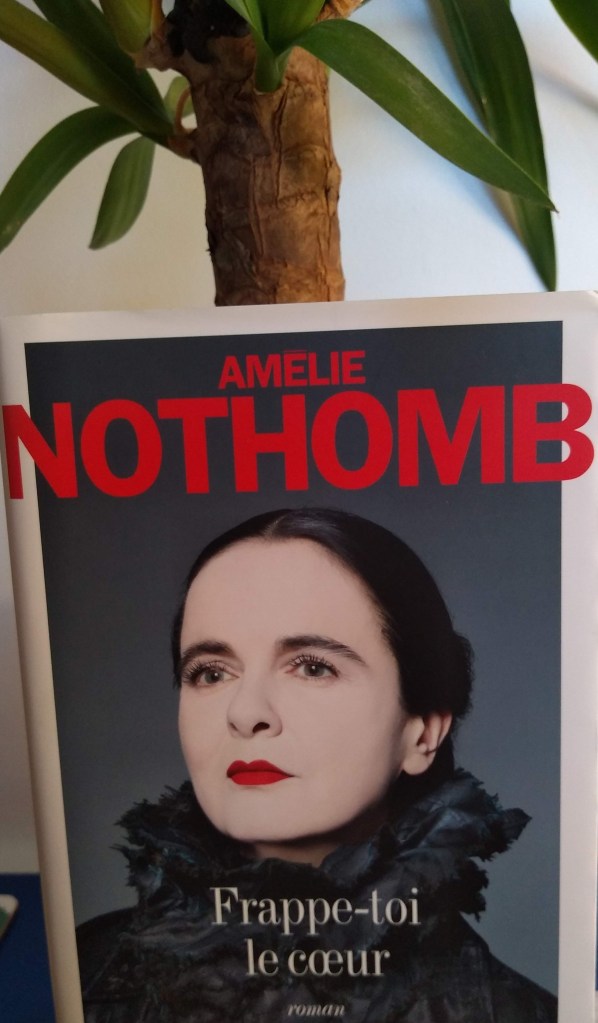
‘Strike Your Heart’ by Amélie Nothomb


Amélie Nothomb’s uncomplicated style is the perfect vehicle for a story that simultaneously draws the reader in and pushes them away.

Although Nothomb’s writing is terse and economical, the narrative is profound and Diane’s life is deceptively gripping. The reader is told more than they are shown, but this works perfectly and creates a story that is intricate and hard-hitting.

Strike Your Heart offers a narrative that will stay with you long after you’ve turned the final page. It is frustratingly short, but the action is so concentrated that it feels well suited to the novella format. Indeed, the constraints of form impose a further stifling effect on Diane.

This is a book I would highly recommend (and appreciate even more after reading The Solitude of Prime Numbers).

‘How to be both’ by Ali Smith


Smith challenges the reader’s expectations, drags us out of our comfort zone and offers a book that is bafflingly brilliant and brilliantly baffling.

The text is composed of two distinct parts that are intimately connected. George’s segment is poignant and melancholic, but is also pierced with moments of genuine laughter. Francesco’s story is harder to get at. It is more abstract and offers an insight into the bizarre workings of Smith’s mind.

Throughout both parts, the prose is waffling, aimless and deliberately provocative. At times it feels like wading through a muddy swamp. There are segments of Francesco’s narrative in particular where you become stuck, virtually unable to pull your heavy feet any further… until the heavens open, a deluge liberates you and before you know it you’re being swept along again.

Ultimately, the characters are powerful and the storyline – when you can follow one – is engaging. It’s worth the slog.

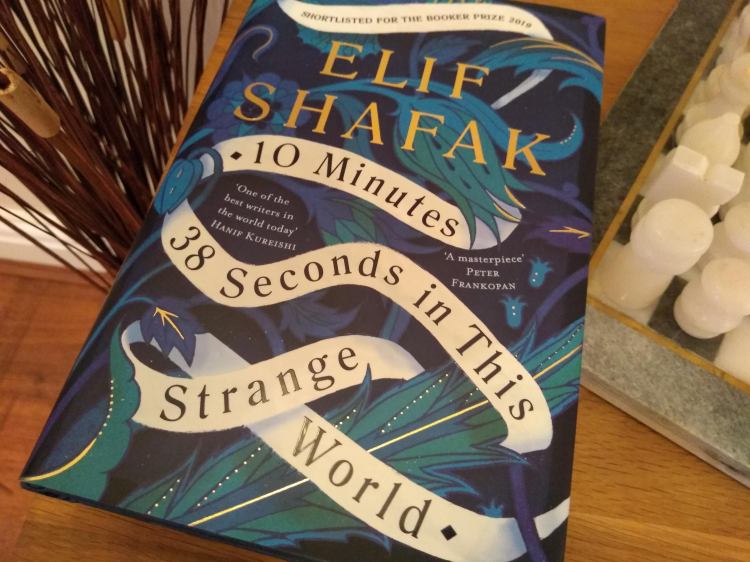
’10 Minutes 38 Seconds in This Strange World’ by Elif Shafak


Shafak’s vivid imagery slides off the page and dances across the reader’s mind with beguiling lucidity.

Tequila Leila’s life feels so real, so full of delightful tastes and desperate tragedies, that it’s easy to forget she’s dying in a bin.

The powerlessness of Istanbul’s oppressed minorities is brought to life touchingly through Tequila Leila’s five fiercely loyal friends. We experience the frustration of this set of “undesirables”, the city’s outcasts and rejects, always forced to live on the periphery.

One of the most interesting aspects of this book is the way it presents the plethora of experiences and perspectives that co-exist within a single city. Depending on the frame through which we are looking, what we see – and what we fail to notice – can vary greatly.

This is a tale of brutal violence, which ultimately will leave the reader with a small glimmer of hope. Shafak is thoroughly deserving of her place on the 2019 Booker shortlist.