Haiku A Day – Day 2

At Briefly Write our mission is to inspire you to write! If you’re in need of some structure for your poetry, our ‘Haiku A Day’ challenge is the perfect way to get creating.

The haiku’s tight form will make you pay close attention to word choice, and focus your attention on the strongest images. Writing a haiku every day will be a great exercise to spark your creativity or rekindle your poetic burnings — before long you will be hooked on this wonderful form!

Each day we’ll post a haiku to lead the way. From time to time, we’ll also offer insights, advice and additional prompts to keep you on track.

We’d love to see what you create: you can tweet your haiku to @BrieflyWrite or reply in the comments to this post!


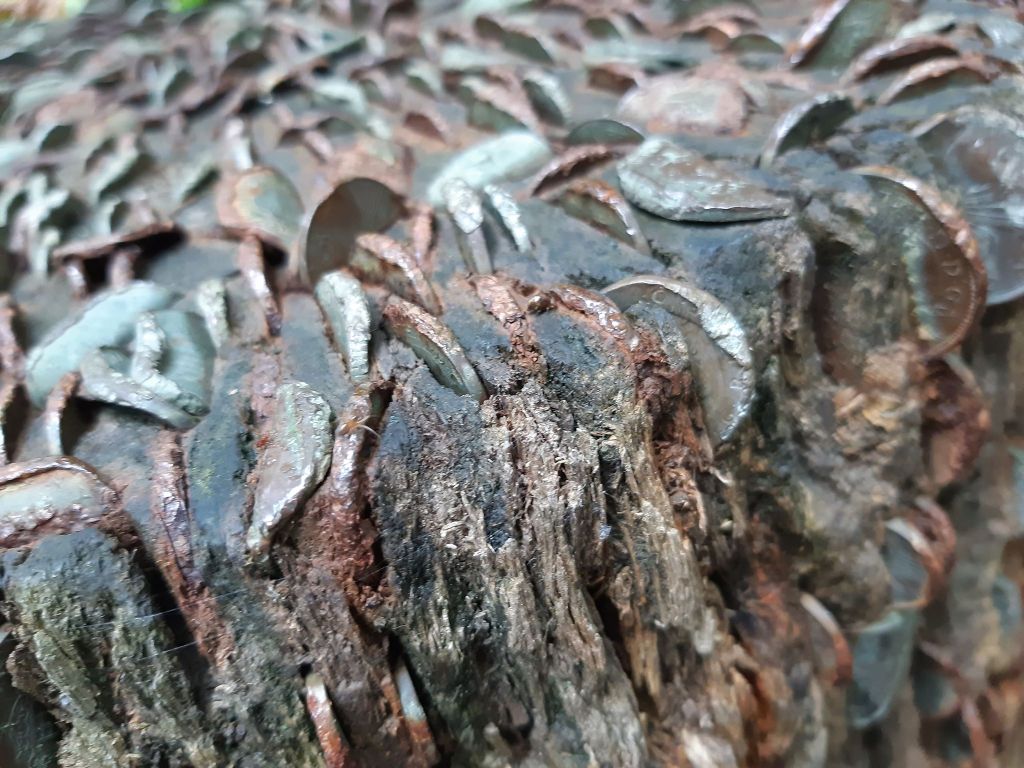
lost in licks of wood
grim realities creep into
flying, buzzing doubts


Our challenge is simple: write one haiku every day. Get inspired & join the fun on Twitter or in the comments!

Haiku A Day – Day 1

At Briefly Write our mission is to inspire you to write! If you’re in need of some structure for your poetry, our ‘Haiku A Day’ challenge is the perfect way to get creating.

The haiku’s tight form will make you pay close attention to word choice, and focus your attention on the strongest images. Writing a haiku every day will be a great exercise to spark your creativity or rekindle your poetic burnings — before long you will be hooked on this wonderful form!

Each day we’ll post a haiku to lead the way. From time to time, we’ll also offer insights, advice and additional prompts to keep you on track.

We’d love to see what you create: you can tweet your haiku to @BrieflyWrite or reply in the comments to this post!


& yet still you keep
broken shards in rusted tins
pain invades metal


Our challenge is simple: write one haiku every day. Get inspired & join the fun on Twitter or in the comments!

Believe in the Writing Process

Photo by Mike Tinnion on Unsplash

Life is about the journey not the destination. This may be one of the most over-used sayings in the English language. But it’s vital for a writer to keep in mind.

Writing is a Process

There doesn’t suddenly come a time when that’s it, we’ve written everything there is to write.

Long after the final ‘i’ has been dotted and the final ‘t’ crossed, the debate rages on. No full stop is ever the definitive end. Seamus Heaney wrote:

“Since when,” he asked,
“Are the first line and last line of any poem
Where the poem begins and ends?”

Writers can find new inspiration every day, in their surroundings and activities, as well as in their own thoughts and feelings.

Keep Moving

To use another cliché: if we stand still, we’re going backwards. In the words of Albert Einstein:

Life is like riding a bicycle. To keep your balance, you must keep moving.

That’s not to say writers should keep churning out words if the time isn’t right. Harper Lee waited 56 years after To Kill a Mockingbird before she published her second novel, Go Set a Watchman.

But one thing is certain: we should never let anyone else put us off writing. Write because you love to write. And write what you love writing.

Enjoy the Journey

Having an end goal towards which we are working helps keep us motivated and focused. However, this shouldn’t be prioritised at the expense of enjoying the journey.

Image for post
Photo by Vlad Bagacian on Unsplash

Make the most of the position you are in now. Find the positives in your current situation. That way, when you’ve achieved your goals and you look back on your journey, you won’t be nostalgic for what you’ve left behind.

And when you turn around, you’ll see that the next path is already calling for you!

The Boy Who Wanted to Be a Camel

David Henson


The boy didn’t remember when he first wanted to be a camel. Maybe when he was learning about animals that start with C in first grade. Maybe sooner. Perhaps the desire had huddled in him since birth. 

The boy felt if he behaved like a camel, he might become one. He began to bellow after he spoke. He grazed in the back yard and asked his parents for a potted cactus so he could toughen the inside of his mouth. He tried to sleep standing up, but realized that would require much practice. 

The boy knew camels could go months without water. Because he wasn’t a camel yet, he decided to start with a week. When his parents realized what the boy was doing, they put a cup to his lips and forced him to sip. The boy spat out the water. He hated to be disrespectful but knew it was a camel’s nature to spit when upset. 

The boy’s parents asked his sister to talk some sense into her brother. 

“It’s really stupid to go without water.” the sister said.

The boy squinted to keep the blowing sand of her words out of his eyes. “You won’t think so when I’m a camel.”

“Whatever.”

The parents took their son to the hospital to be hydrated intravenously. A counselor visited the boy and asked why he wanted to be a camel. 

“Because” the boy said. He was immediately embarrassed by his childish answer so he bellowed. 

The counselor pointed out that just because a camel can go without water, doesn’t mean it will if it doesn’t have to. The boy hadn’t thought of this and agreed to drink water if his parents took him home. 

The mother and father hoped a breakthrough had been achieved but instead the boy’s obsession gripped him even more tightly. He refused to go to school because what use is arithmetic and grammar to a camel? Each time the boy’s parents pressured him to behave normally, he snorted and seemed about to spit.

One morning the mother went to her son’s bedroom. Instead of her son, she found a camel. She screamed the father and sister into the room. 

The father wept and accused the sister of spiriting away the boy and replacing him with the camel. 

“You would’ve heard the beast climbing the creakwood stairs in the night,” the sister said.

The camel bobbed his head, but no one noticed. 

The father ran to the closet, looked under the bed then knelt and buried his head in his hands. The mother and sister continued throwing accusations and denials.

The camel watched the three shout and sob. He was sorry to upset them. Even sorrier for their flat backs and short eyelashes. He felt the tug of the desert thousands of miles away. Beyond the sand were forested mountains. A beautiful place to be a moose, the boy who became a camel imagined.


David Henson and his wife reside in Peoria, Illinois. His work has been nominated for Best of the Net and Best Small Fictions and has appeared in various journals including Pithead Chapel, Moonpark Review, Spelk, and Eunoia Review. Find him at his website and on Twitter (@annalou8).
Untitled

Rae Rozman


I just forgot the word for penguin…

If I have forgotten this,
what’s next?
The taste of coffee burning my throat?
The feel of your name brushing my lips?

To define essential in any language
is to admit
what will be the first to go.
The adjectives?
The memory of stars exploding
into fireworks —
or were they fireflies?
The enormity of us?


Rae Rozman is a middle school counselor in Austin, Texas. Her poetry often explores themes of queer love (romantic and platonic), loss, and education. You can find her on Instagram (@mistress_of_mnemosyne) sharing poems, book reviews, and pictures of her two adorable rescue bunnies.

Flowers for My Daughter

Eva Shelby


“I can’t begin to imagine what you’re going through, Kay.”

That’s my best friend, Sally. And she’s right. She can’t imagine.

I’m using my imagination now: I see Beth, walking down an aisle, her arm threaded through Pete’s, as he leads her to the man of her dreams. This man of her dreams would love her, cherish her and… look after her. Better than I did? No, that’s unfair, I did look after her. It was taken out of my hands.

I imagine my grandchildren playing in my garden, running into their grandmother’s arms. My arms. 

I imagine dying. I imagine dying before Beth. The way it should be.

I look up from the table as Pete enters the kitchen.

“She’s here.” He touches my shoulder: “Come on love. It’s time.”

I sway as I get up from the chair. I put one foot in front of the other. Pete leads me out of the kitchen and towards the front door. I turn to look for Sally. She’s right there, behind me, pressing a tissue to her eyes.

Daylight invades my darkness. I pull sunglasses down from my head, onto my eyes. Black clothes. Black car. Black day. Everything; black as the cancer that brought this day here.

I force my eyes to look into the back of the car. A white coffin. Beautiful lilies, white and pure, pure as my beautiful little girl, who lay inside.


Eva Shelby is the Editor of Secret Attic.

aperture

mercy party


there is a comfort
in slipping unfated
failing to grip the rail
when there is no way
to get away with just covering
a small tear in your sail


mercy party provides no context about the author other than what is within the words

Communicating With Cheese

Steve Lodge


I made my way through the wet car park to the Institute Of Puthing building in Ringstad, the capital of Belzonia. This would be the third time I was to hear Dr Quadrant Ears speak on the subject of “Communicating With Cheese”.

Such opportunities to hear Dr Ears were becoming less frequent since he married the actress, Nola Lovelock, who almost never allowed him out of her sight unless she was filming in the Egyptian desert or Paris.

I forget where Nola was, but the good doctor occupied himself with another of his Cheese Talk tours. The Institute of Puthing was my best option to see him as I don’t need a visa when visiting Belzonia. Some years ago, I had donated a stilt and striathlete motif to the Fledgling Sportsklub of Ringstad and have been treated as something of a minor celebrity/mentor ever since.

I looked down the Boulevard Of Heroes as I stood outside the venue, nibbling camembert and brie blended to my own recipe with wasabi and Otis Atomik Mustard Preparation. I’d had some good times in this desperately shabby city. Famously, ‘Mule’ Edgar’s Silent Band played a gig here in 1972. It was memorable in ways that only jazz gigs can be when they are held in small, smoky clubs with 500 people crammed into a space that looked full with only the bar staff in it. The club was The Coldhead Aubergine, owned by Professor Olaf Flute, a good friend of Dr Ears, who lectured in Advanced Football Statistics at the Ringstad University of Belzonia.

The gig lasted over 3 hours, during which the band only played one song, their haunting “Find The Lady”. There was no encore. “Find The Lady” was later adapted and translated by Belzonian Poet Laureate, Istvan Manuskript-Texte, and is to this day the National Anthem of Belzonia, under the bonkers title, “Music With Belzon”. The original song was, of course, written by ‘Mule’ and long-time band member, Kieron Wolfe. Kieron left the band in 1985, blaming musical differences and a long-running feud over royalties. He later formed a band called ‘Disturbed Rabbits’ and was never heard of again.

My mental meanderings were brought to a rude conclusion when screams were heard coming from the auditorium. Jolted into action, I replaced the camembert and brie blend in my raincoat pocket and ran inside. Dr Ears’ secretary, Ingrid Kaltenbrunner, was sobbing uncontrollably. Then I saw why. Dr Ears lay on the floor surrounded by his notes. His face covered in what looked like Minstralig Veined And Lightly Tickled Triple Matured, his favourite cheese. He would not be the first to have taken too much of this massively powerful vintage Belzon speziale from the Minstralig family dairy in the nearby town of Kontaminatsi.


Steve Lodge is a wandering minstrel from London, now living in Singapore. By day he sells food ingredients and by night he writes short stories, poems/lyrics and plays. Prior to lockdown he has acted on stage, TV and film and done stand up comedy and improv, and played in a band.

I sleep a poem

Lynn Caldwell


after my eyes fill
with words
coming in
an open window
one ear to the pillow
the other to the moon
a sage wand wafting
over my prone body
under a canopy
of my own dark sky


Lynn Caldwell‘s work has been published in Crosswinds Poetry Journal; Dedalus Press’s anthology WRITING HOME; The Irish Times for March 2019’s Hennessy New Irish Writing Award; Cassandra Voices; and The Antigonish Review, and has featured on Irish radio’s Sunday Miscellany. Lynn blogs here.