Untameable

Zahirra Dayal


Sundays smelled like burnt hair because that was when you had your hair tamed. First, your aunt took your wet hair and marshalled it with crocodile-teeth hair grips. Then, she released each small section from the mouth of the crocodile and aimed the Philips blow dryer like a gun at close range.

The stretching and pulling squinted your eyes. You heard the sizzling of your singed curls. The burnt smell floated around the room and into your nose, making your nostrils flare. You sat frozen to the stool for the hour it took to wage battle with Mother Nature. After your hair was blow dried, you studied the flattened version of yourself in the oval mirror of her oak dressing table. You felt the distance widen between you and the girl in the mirror. 

“That’s better,” she said, smoothing down your brown hair with the coconut oil spread like butter on her palms.  

You could feel the edge of your freedom 

“I’m not finished with you yet!” she snapped, sensing you were about to fidget. 

You didn’t move, supressing the raging restlessness that flowed through you. She divided your straightened hair into two, rolled it into four balls which she fixed with triangular pins that dug into your scalp. Last, she put a brown stocking over your head and told you not to take it off to seal in the straightness. She was terrified that rain, humidity or any form of invisible moisture would undo all of her work in an instant; so precarious is the nature of blow-dried hair.  

“Be careful with it or it will turn frizzy and wild again,” she warned before you broke free and ran outside to play.

Now that you own your hair and your Sundays, you wash it and leave it to dry naturally. It grows bigger as the moisture evaporates. A tangled mass of untameable brown curls rises to frame your face. The woman in the oval mirror smiles back.


Zahirra Dayal is a writer and language teacher living in London. She has also lived in Zimbabwe, South Africa and The United Arab Emirates and draws from these diverse experiences. She has stories in Fahmidan Journal, Ayaskala, Small Leaf Press, Opia, Odd Mag and Melbourne Culture Corner. She tweets (@ZahirraD).

Two Stories

Martha Lane


This is a story about making popcorn

I had a silicone contraption for the microwave. But it, or the machine, bust. A kilo of kernels mocks me for surrendering to whiny cries at the shop. He wanted pop-pop, he wanted pop-pop, he wanted, he wanted.

He wants.

I want to stop making it in a pan, bopping belligerent fingers away.

‘Hot,’ I snap.

The golden pebbles burst, bright white clouds. Cumulus climbing, rising. Rolling.

The boy’s hunger is climbing. Howls rising, he’s rolling.

I consider burning his precious treat.

But I want peace.

I offer him the bowl, a ceasefire.

‘Pop-pop drop.’

It’s seconds before white clouds clutter a linoleum sky.


Birds? Here, sir. Bees? Here.

Abigail’s tooth came out in the night. She’d spent all morning waggling her slimy pink tongue through the gap. Showing anyone who couldn’t think of an excuse to get away fast enough. Moving up and down the queue like a flamingo, parading. The teacher blows his whistle, and we bustle into the classroom. Fold ourselves into the seats. Human origami.

Abigail stays standing, thrusts her gums in the teacher’s face.

“Have you been kissing boys, Abigail?”

She flushes. Her giggles ripple through the room. I concentrate on my shoes, look at where I’ve picked the stitching away, so only a shadow flower remains. Elbows dig and lips smack until the teacher calls for quiet.

Abigail flutters to her seat. Even toothless, she is very pretty. In the corner of my workbook a swarm of bees appear, stings glinting. I try not to think about Abigail kissing boys as I dig my pencil deep into the paper, wondering how hard I’ll have to push to make it crumble into dust.


Martha Lane writes in short bursts between wrangling two small children. They are an inspiration and hinderance in equal measure. Her flash has been published by perhappened mag, Bandit and Reflex Fiction, among others. She’s incredibly bored of lockdown. She tweets (@poor_and_clean).

This thread

Elizabeth M Castillo


I weave it round and round my hand. It is fine, and bright, and surprisingly resilient. Its taut lines catch the smallest hint of the day that threatens to break at my bedroom window, and I twine it tighter, lacing it like macramé between my fingers and thumb. I hold it fast, more so than I ever have before. I will not let it slip through my fingers. This time, I will not let it go.

For the past ten years it has been there, crumpled in my pocket, occasionally getting caught on my cuff or wedding band as I rummage about in there, looking for some, very likely unrelated thing. At times I imagined I felt it tugging gently at me, as if to remind me it was still there, waiting patiently to be taken up with force. With purpose. With an end.

But sometimes, life goes quiet, and the strobe lighting and bedlam are gone for an instant, and I am left with nothing but to take stock of myself. In those moments I would remember it there, stuffed unceremoniously away in the recesses of my pocket, in the recesses of my memory, and my heart. Left there, as something that is of little consequence, but persists nonetheless. Without food, nor air, nor light, and yet, somehow, still living.

It is terribly fine, and terribly fragile, and for the best part of these years I feared it ended in emptiness. Nothing there. Nothing on the other side. A memory perhaps, of classes and dresses and hopefully a little laughter, but nothing more. How could there be? There was only ever one side to this thing. I looked, and I looked, but there was no trace of anything, or anyone, at the other end. 

But just like the untamed beast that it is, my heart decided it was time to take things into its own hands. After a short labour it gave birth to a story, and with it, a small flicker of hope and its fraternal twin; a tiny drop of madness. Then I looked. I looked once, I looked again, and I looked one more time for good measure. I traced this soft, silken thing as it stretched perilously across the Pyrenees and the peninsula. It tunneled its way under the ocean, battling through the Amazon brush, braving the Atacama desert, scaling the Andes and plunging fearlessly into the restless city streets until it came to its final destination at the other end of itself.

I pull it tight, tight across my palm, and close my fingers over the dent where it is almost cutting into my skin. I hold fast to it, bringing my closed fist up to my cheek where I rest my face against it, as sleep claims me once again. I have tamed both my hope and my madness, and the threat of emptiness on the other side has left. And at such close quarters, with it so tightly wrapped around my fingers, I am sure to feel the slightest pull, the smallest tug, any movement on the other end of this terribly fine thing. 

It is the thread that anchors me to the end of the earth, to the corner of the world, to where you are.


Elizabeth M Castillo is a British-Mauritian poet, writer and language teacher. She lives in Paris with her family and two cats. When not writing poetry, she can be found working on her podcast or webcomic, pottering about her garden, or writing a variety of different things under a variety of pen names.

I trust you now, can you tell?

David Tay


It’s been 8 years since I was here, here at the barbershop a couple blocks from home. I used to call it the “cut hair shop”.

She cut more than my hair though.

What she wielded wasn’t so much a buzzer as it was a lawnmower. Too loud. Too close to my face. And then the scissors. Snip, snip, snip. What if she cut my ear? Snip, snip, snip. She never did cut me, but I’ve left the shop with my skin red and burning. Mom said that I always left the place in tears.

But how do you cut someone’s hair when they’re kicking and screaming all over the place? When they’re crying before you can even get to work? Like they don’t trust you.

Now I’m here again, eight years after. I hear a familiar chime as I open the door. She hasn’t changed, not a single bit. Silent and strong as I remember. She studies me, gestures to the seat. Does she recognise me still? Is it because of the mask?

“You’re so big already” she says. I smile beneath the mask, and I hope she sees it in my eyes.

How long? Do you want a fade? You want your sides shaved? The usual.

She plugs the buzzer in. BZZZZZ. Good old lawnmower.

I close my eyes. It’s a bit of trepidation. But really, it’s to show you that I can sit still now. I trust you. I trust your hands. I trust your juddering buzzer and your sharp scissors.

I stiffen as the buzzing closes in on my ear.

My eyes are shut.

Hair falls on my shoulder and my feet. The strands that spill in front of my eyes tickle, itches. Not going to scratch it. Not going to interrupt your work. Obediently, I tilt my head as you pin the flap of my ear to get to the sides.

Are you smiling? I can’t tell with my eyes shut. I trust you. I trust your hands. Your cold blade doesn’t frighten me anymore.

That one hurt a little. I wince, twitch, but I’m not kicking and screaming in the chair, am I?

Yes, I’m heading back to Singapore next month. Yeah, my brother’s already working. And yeah, time really does fly, doesn’t it?


David Tay is a Sarawakian studying in Singapore. His writing and photography seek to capture the emotions felt in the unconscious everyday. Find him on Twitter and Instagram (@oidavidah). ‘I trust you now, can you tell?’ is a work of creative nonfiction.

Injuries

Richard LeDue


Mick Foley falling off a sixteen foot steel cage
seems further away now –
the teeth coming through his nostrils
harder to cheer for
because of bruises on my son’s forehead
after headbutting the fridge
again
when his tablet’s battery died
and a conversation about a helmet
I never thought I’d have.


Richard LeDue was born in Sydney, Nova Scotia, Canada, but currently lives and teaches in Norway House, Manitoba. His poems have appeared in various publications throughout 2020, and more work is forthcoming throughout 2021. His chapbook, The Loneliest Age, was released in October 2020 from Kelsay Books.

‘Write 10, Win 10’ 2021

A huge thank you to everyone who submitted to our inaugural micro competition. We received 116 entries and thoroughly enjoyed reading all of them. Entries were read anonymously by a panel of four judges.

We were treated to an inspiring mix of discoveries: everything from witches, treasure hunters, weddings, gods and new books to space, presents, mirrors, moons and murderers.

After many hours of deliberation, we are delighted to reveal that the winner is Rebecca Kinnarney. Rebecca’s story stood out for its humour, clever construction and inventive take on the theme.

The following writers made the shortlist: Laura Besley, Mandira Pattnaik, William Davis, Jessica Klimesh, Ruth Callaghan do Valle, Susy Churchill, Linda Sejung Park, Rita Lazaro and Gunnar De Winter. They all managed to tell a full story in ten words, hiding layers of meaning beneath the surface.

You can read our 10 selected stories below.


WINNER (£10)

10th January. One mince pie left. It must be love.

Rebecca Kinnarney


SHORTLIST

Letters unearthed. “Dad’s dead, you said.” “Sorry, love” Mum whispered.

Laura Besley


Childhood friend. Shared bed, dreams. Got married. Discovered a stranger.

Mandira Pattnaik


we sailed amongst the unnamed latitudes trading words for home

William Davis


Fumble for glasses, lamp. Open door to crickets singing summer.

Jessica Klimesh


Explorar: Explore / Exploit – An isthmus in ink – In Brazil landlessness

Ruth Callaghan do Valle


He emptied drawers, dispatched belongings. Every space revealed her face.

Susy Churchill


In bulging bags of homemade food, I found her heart.

Linda Sejung Park


Blue Light. Human gone. Empty bowl. Cat affronted. Now alone.

Rita Lazaro


“Look,” said grandfather, “endless worlds await.” He opened the book.

Gunnar De Winter


Judges’ notes:

  • The quality was exceptionally high. From our longlist of 30, we had a hard time getting down to a shortlist of 10.
  • The winner and shortlisted entries all told a story. It didn’t matter whether this was a grand tale of adventure or a tiny snapshot of a moment; each one narrated a full story in 10 words.
  • The best stories adhered closely to the theme, but perhaps approached ‘discovery’ from a less obvious angle.
  • It was important not to waste any words. Some promising stories that made the longlist were dropped on the basis of a single word that felt forced or out of place.
  • Clever use of punctuation made some stories stand out. Breaking up the 10 words allowed them to go further.

Absence, nostalgia and memory

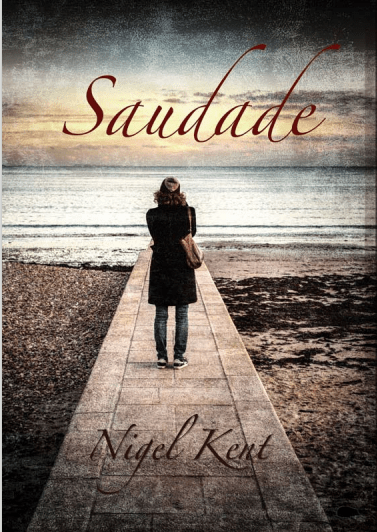
Nigel Kent, Saudade (Hedgehog Poetry Press, 2019)


In Saudade, Nigel Kent traces lives and their losses, carefully threading themes of love, death and legacy to reflect on how we record and remember our existence. Art, poetry and the body’s demise all serve as frameworks, yet it is absence and nostalgia that dominate Kent’s debut collection.

Five poems are written after well-known artists, including ‘The Maids’, inspired by a 1987 painting by Portuguese-born Paula Rego. In this poem, hands are a powerful and ambivalent force, creating and destroying in equal measure. In ‘Lipstick Smile’, art itself is ambivalent: a father cruelly uses an artistic metaphor (‘like painting/ over flakes of rust;/ the past carries on/ corroding unseen beneath’) to warn his son about his choice of wife. The harshness of this message, as well as the father’s ability (or curse) to look beyond beauty to see what lies beneath, characterises the stark and poignant tone of Saudade.

In ‘Clearing Out’, a woman agonises over the objects that have shaped her life, unable to throw away such distinctive memories. Her insistent refusal, ‘Not yet! Not yet! Not yet!’, will later find an echo in the collection’s powerful non-ending (‘linger, linger, linger’). It is not possessions, however, but poetry that serves as the most pertinent evidence of having lived. The collection opens and closes with performances, which frame the sequence as a poetic memory. The speaker in ‘7.30 p.m. at the Art’s Workshop’ is inextricably bound to her creation: she has ‘iambs/ beating loudly/ in her chest’. Poetry is not the words she voices, but the marks they make on her body.

If poetry is necessary, it is also corruptible. Indeed, the innocence of ‘those naked words/ [that] shivered/ on the page’ will later be twisted into ‘oily opalescence’ by the smooth-talking speaker in ‘The Urban Shaman’. Here, the body (and our abuse of it) reveals the truth: ‘a city of a thousand/ cuts laid bare/ her sleeves ripped back/ to show the weeping wounds/ that she conceals’.

Diverse bodies populate Kent’s poetic landscape, many of which are in decline. In ‘Dignitas’, the subject is naked again, requiring assistance to carry out one of the most basic human necessities, his dignity washed away ‘like the dirt swirling and gurgling/ down the drain beneath his feet’. Another potent symbol for this degeneration comes in ‘Sweet and Sour’, where ‘frayed bags for life/ filled with Kilner jars/ of pickled strawberries’ reveal the layers of our existence. The poet contemplates how long this drawn-out life can last, the heart still beating while the body decays.

iambs
beating loudly
in her chest

‘7.30 p.m. at the Art’s Workshop’

Kent is arguably at his most poignant in the prose poem, ‘Bleak, dark, and piercing cold…’, which takes its title from Oliver Twist. Through a deceptively profound analogy between a homeless man and discarded piece of chewing gum, he shows how bodies can be turned into unwanted stains on a landscape: ‘They spit you out like gum that’s lost its taste, yet they complain it’s you who litters the city’s streets’. The problem won’t go away however much we try to ignore it: the politician ends up ‘irked by the sticky glob embedded in the tread of handmade shoes’.

A tension also exists with technology, which is brought out prominently in ‘Faraway’. In this poem, a worried father checks his phone in the hope that his daughter will have texted. The wait for this elusive message tests his patience, a virtue that continues to dwindle in the modern world. Although technology seems to offer an immediate solution to saudade, in the end it merely reaffirms the absence. This is reflected in ‘Saudade II’ where technology cannot resolve the poet’s longing: ‘I try once more/ to cut and paste you/ by my side’.

Ultimately, reading Saudade is an enriching experience. The reader will share characters’ frustration at an inaccessible past or evasive present/presence, as well as sadness at the body’s inevitable decline. But, more importantly, she will feel quietly invigorated. For Saudade is full of small moments of pleasure and beauty which give us something for which to yearn.


Nigel Kent, Saudade (Hedgehog Poetry Press, 2019). Available here.

Reading Challenge 2021

Photo by Polina Zimmerman

A new year beckons and bookworms around the world will be eagerly planning their 2021 reading, scribbling new additions to sprawling lists, and stacking piles onto piles onto piles…

We’ve got an additional offering to help structure your New Year reading: the annual Briefly Reading Challenge. There are 12 categories which we hope will extend and enrich your 2021 page-turning. The aim is to open you up to new opportunities, genres, styles and themes; these aren’t the sorts of prompts that will restrict and limit you to specific or arbitrary selections.

Use this list as you wish: read one book from each category, in order, reverse order, or no order at all; read two, three, four or more books from one category that really takes your fancy; or skip straight to the bonus prompts if you’re feeling rebellious!

Whatever you choose to do, good luck and happy reading in 2021!


The Briefly Reading Challenge 2021

  1. A book made into a film (if you’ve seen the film and not read the book!)
  2. A book to heal the generational divide
  3. An epistolary novel
  4. A book about mental health
  5. A book you can read in one day
  6. A book about cooperation
  7. A book you’ve owned a long time and (still) never read
  8. A book written in or about prison
  9. A book that was banned
  10. A book that teaches lessons from history
  11. An author from your hometown
  12. A book set somewhere you want to travel

BONUS:

  1. A book about a dystopian future
  2. A book that offers hope

Don’t forget, you can follow @BrieflyWrite on Twitter to stay up to date with all things Briefly!

My Girl and Little Princess

Marcy Dilworth


“Go get ‘em, Little Princess,” yells the helmet-haired woman from her monogrammed camp chair on the soccer field sideline, and go Little Princess does, dribbling downfield around My Girl’s teammates, weaving through them like a slalom skier until she attacks My Girl, my solid fullback, and Little Princess jukes left and My Girl falls for it; Little Princess swings her heavy blond braid thwack into My Girl’s eye socket then elbows her right in the ribs as she completes her sortie and thumps the ball into the net and punches her fist in the air and sticks out her tongue at the goalie, but the tongue disappears in a flash and by the time she turns around she’s morphed into her junior beauty queen simper and girly squeal and like a My Little Goddamned Pony with her plaited horse’s mane and equine prance she permits her teammates to cheer and high five her as long as they step back so Mommy Helmet-Hair can snap photos of Little Princess, victorious, again.

The whistle blows. Little Princess’s kickoff bounces straight at My Girl who passes it forward, a perfect arc, but Little Princess steals the prize and steamrolls along the sideline, taunts My Girl’s teammates as they flail and fail to reclaim it. My red-faced, tight-fisted Girl runs, a calculating assassin, driving in for the kill, carrying her team on her back, flying fueled by the fury of her nine years on this planet, she runs at Little Princess – only at Little Princess – and digs her toe in the dirt, pretends she’s tripping, but My Girl’s aiming the missile that is her sturdy body and levels Mommy Helmet-Hair’s Little Princess, belly flopping, chest thudding, an earthy thump resounding when her dense braid bounces off the pebble-littered turf. The world stops for a collective inhale. Then coaches and players and parents flood the field, step over My Girl to examine and pat and fuss over Little Princess; My Girl pushes herself up, covered in dust and dirt, scuffed from cleat to cow-licked brown bob, and trots off the field sporting a serene smile and plops herself down for a breather until the drama subsides and My Girl and Little Princess meet on the field once more.


Marcy Dilworth is a recovering finance professional pursuing her love of writing. Her stories have appeared in FlashFlood, Writer’s Resist, and Literary Mama. She lives in Virginia with her husband where they serve their precocious rescue pup, Kirby. Oh, and she has a couple wonderful kids. Find her on Twitter (@MCDHoo41).

Pray with Dirty Fingers

Leah Sackett


He’s got his self-righteous fingers in your pocket, just now. He brokers the towering, stony-faced edifice of concrete and stone spirituality. He is steadfast with a hand out at the threshold of faith. This man strokes his masculine show of a robust goatee, a little too Saturday night. In his other hand he is charging fees to climb the stairway to heaven. With the slight-of-hand of a sweaty palm he opens the coffers of token-based religiosity; he delivers dogma bent on cleaving you into the fold with the absolution of your mind.

There is another way to spend your money. The spirituality that hangs out in incensed-burning storefronts selling smells and crystals. A “natural” way to include capitalism in the skein of meditation bowls and tarot cards. You exchange community and a weekly congregation for the “shaman salesmen,” leaning against the Mystic Shoppe wall. He looks familiar to you as he overcharges for the paraphernalia he sells. You dig in your pocket feeling for bill and coin. Your rummaging rains down a feeling of cardboard faith in exchange for the spending of self-respect.


Leah Sackett is a short story writer. Her debut book, Swimming Middle River, was published with REaD Lips Press in 2020. Her short story, The Family Blend, was nominated for a Pushcart Prize with Crack the Spine. Her work has won various awards such as the Gold Award in Art Ascent, Two Sisters Publishing Contest the Institute for Women and Gender Studies’ Creative Writing Award. Over 50 of her stories have appeared in literary journals. In addition, she is an adjunct lecturer in the English department and the Communication & Media department at the University of Missouri, St. Louis, where she earned her MFA. Her short stories explore journeys toward autonomy and the boundaries placed on the individual by society, family, and self. Learn more about Leah’s published fiction here.