Briefly Write Prompt Game (2.3)

The Briefly Write Prompt Game aims to inspire bold, succinct micro fiction and poetry. 

Every Wednesday, we will provide a brief prompt to inspire your boldest prose or verse. The prompts will be released on Twitter (via @BrieflyWrite) and right here on the website.

Your creation can take any form and any style. The prompts can (and should) be interpreted loosely.


This week’s prompt ~

Let fate decide your prompt. Optional prompt word ~ FATE.

Briefly Write Prompt Game (2.2)

The Briefly Write Prompt Game aims to inspire bold, succinct micro fiction and poetry. 

Every Wednesday, we will provide a brief prompt to inspire your boldest prose or verse. The prompts will be released on Twitter (via @BrieflyWrite) and right here on the website.

Your creation can take any form and any style. The prompts can (and should) be interpreted loosely.


This week’s prompt ~

Write a story or poem about JEALOUSY. Optional prompt word ~ CAKE.

Dreams and beyond

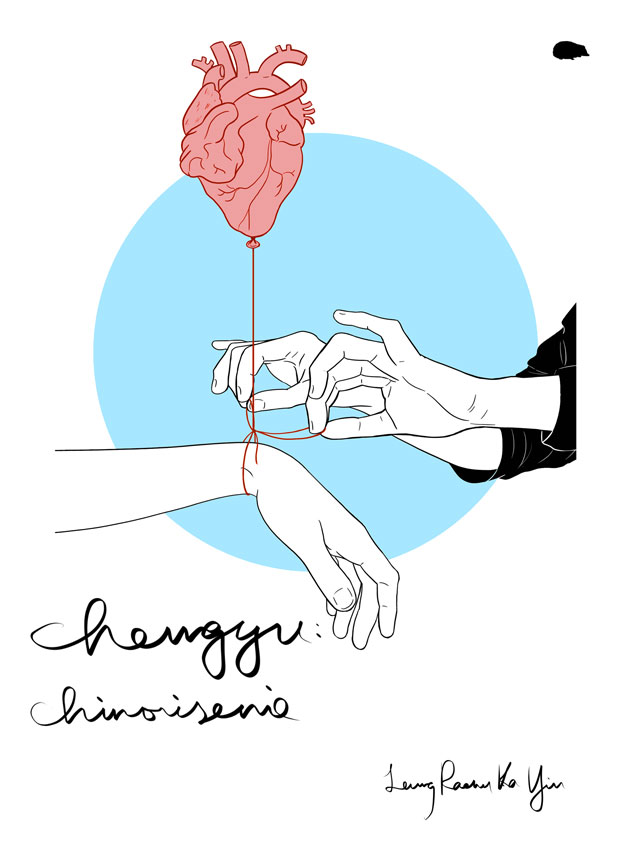
Rachel Ka Yin Leung, chengyu: chinoiserie (Hedgehog Press, 2020)


The chengyu (“idiom” in Mandarin) condenses something meaningful into four characters. In her debut collection, Leung follows a similar pattern, translating Chinese sayings into English and using the resulting amalgamation to carve out her own stories. These stories gain power through their brevity; they are fleetingly endless and endlessly fleeting.

but stirring, i return to the
hum and cry of this brief world, and
bare, and cold

‘sea oath, mountain treaty: till the end of time (海誓山盟)’

The poet looks out over the immensity of the ocean and then looks at herself. Like the seemingly never-ending expanse of water, Leung’s language is a contradiction. Her descriptions are simultaneously incisive and open-ended, vivid and vague.

One highlight is ‘a long night is fraught with many a dream: before morning comes (夜長夢多)’ with its powerful focus on liminality and boundaries. Leung compels a sense of danger and transgression from the start: ‘i am crossing over / in the dark’. Through an array of transcendental images, Leung takes us “beyond”, wherever that may be. Once there, the language used to describe ‘these dream-infested waters’ is exquisite. Leung has a delicate and subtle touch for sound and its limitations. The dreamer is aware of ‘bendy silence’ and of her ‘eyes ticking, ticking like the / black time’.

i am confused.
i think
my blueness is a shade of red
like a baby bleeds

‘drunk on life, dreaming of death: living life as if befuddled (醉生夢死)’

Time and sound are inextricably linked. Both are flexible but suffocating. Similarly, the poems of chengyu: chinoiserie feel confined and freely formed, confused and lucid. Leung skilfully twists our expectations throughout the collection, showcasing the fluidity and stickiness of language. This is perfectly exemplified in Leung’s phrase, ‘syrupy noonlight’ (‘a trickle of water runs long: always (細水長流)’), one of the collection’s many beautiful and sharp observations that will stay with the reader.

Rachel Ka Yin Leung, chengyu: chinoiserie (Hedgehog Press, 2020). Available here.

Briefly Write Prompt Game (2.1)

The Briefly Write Prompt Game aims to inspire bold, succinct micro fiction and poetry. 

Every Wednesday, we will provide a brief prompt to inspire your boldest prose or verse. The prompts will be released on Twitter (via @BrieflyWrite) and right here on the website.

Your creation can take any form and any style. The prompts can (and should) be interpreted loosely.


This week’s prompt ~

Write a micro story or poem based on the picture. Optional prompt word = SLEEP

Briefly Write Prompt Game

Time flies…. we’ve been running the #BrieflyWrite Prompt Game for a full year! It has been a joy to read all the amazing creations our prompts have inspired.

See our first year of prompts here:

New year, new page… and a lot more inspiration to come!

Every Wednesday, we will continue to provide a brief prompt to inspire your boldest micro fiction and poetry. The prompts will be released on Twitter (via @BrieflyWrite) and right here on the website.

Your creation can take any form and any style. The prompts can (and should) be interpreted loosely.

Photo by Pixabay

Check back on Wednesday 19th May for the first prompt of the second series.

Knees and never-endings

P.B. Hughes, Girl, falling (Gatehouse Press, 2019)


Girl, falling is a powerful collection of small moments and monumental thoughts. Varied and vivifying, the poems are fresh and innovative. The pamphlet inhabits a fragmentary space, aware of its own limitations but never ceasing to fight. The voice is vulnerable but assured, well-humoured yet urgent.

Hughes writes about writing with great sensitivity. In ‘The Writing Project’, she sets herself a Borgesian task: ‘You resolved to write and write until you’d written every word in the dictionary at least once’. The challenge highlights a desire for completeness which is never quite fulfilled. Indeed, the poet’s exuberance for words breaks down entirely in ‘Distance to the Ground’: ‘on my knee/ at the computer you wrote the letter K over and over’.

The language is at times haunting, at times beautiful, but never static. The poet describes herself and her surroundings with flare and relish: the tree ‘wore apples like smiles’ (‘Tree’) and ‘my arms are the plane’s wings’ (‘things i give my lover’). Sound is navigated with nuance. In ‘Diaspora’ we are encouraged not to take sound for granted: ‘Listening is more than inhabiting sound’. In a poem about refugees, such imagery of domestic instability hits the reader hard.

Like an escalator that goes round and round, the linguistic games repeat and accumulate. Sound is intrusive and hard to block out; similarly, the reader is urged not to ignore the plight of refugees. Loss and isolation recur, but so do knees and water, testament to Hughes’ careful balancing of mind and body, personal and political. Personality crashes into obligation in ‘Falling’, where a girl teeters on the edge of a swimming pool ‘in a body she was required/ to hate’.

The poem is an ever-evolving space, both welcoming and worrying. A balanced and skilful pamphlet, Girl, falling is an agglomeration of language and change. Each poem is confined but dynamic, fixed yet fleeting, like ‘snowflakes shaken in/ a snow globe’ (‘escalator’).


P.B. Hughes, Girl, falling (Gatehouse Press, 2019). Available here.

Just a Kid from Cortonwood

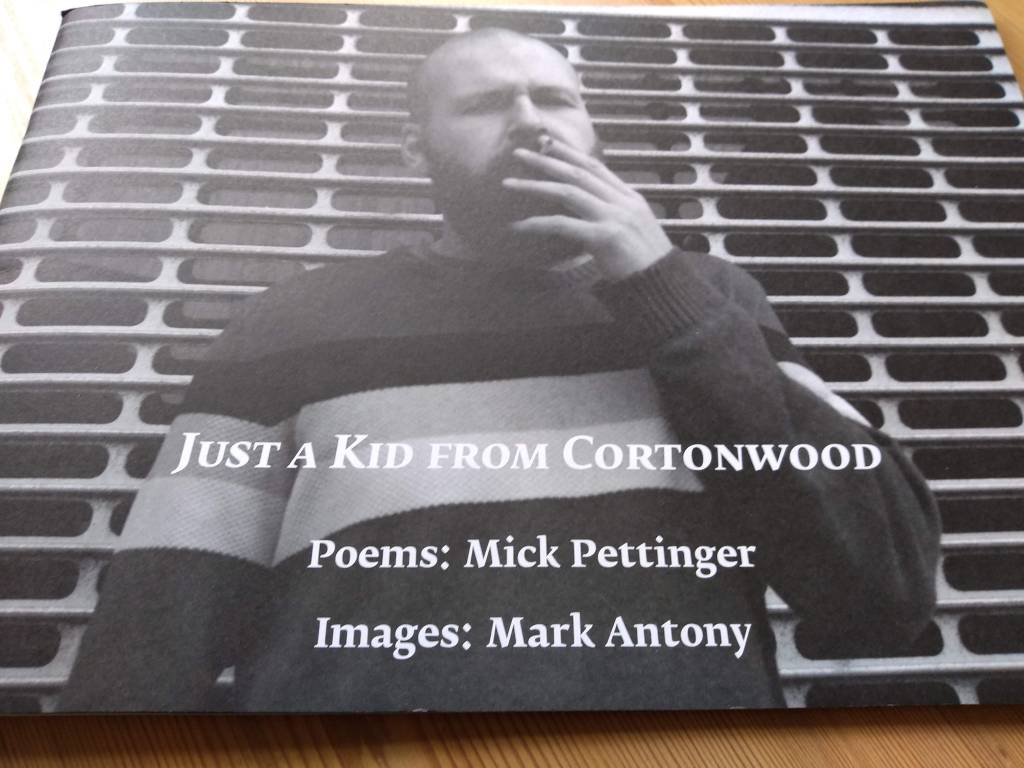
Mick Pettinger, Just a Kid from Cortonwood (Wild West Press, 2020)


Mick Pettinger’s debut pamphlet, Just a Kid from Cortonwood, is a raw portrayal of suffering and love. A punch-up between pain and healing, these personal poems are both confessional and vulnerable. Mick leaves nothing in the changing rooms, allowing his varied experiences to crash onto the page. From the death of his brother, to a childhood love of Ninja Turtles, to those people in the ‘photos in our minds and hard drives [which] slowly get wiped’ (‘Essence’), Mick pieces together all the ‘dates and times and dates and times’ (‘Chronology’) that make up a life.

We just wanna be normal
But what we really mean by normal
Is that we wanna cope

‘Finding Normal’

Mick’s authentic voice is heard in every line, swinging from angry to tender, at once bleak and life-affirming. These are poems that demand to be read aloud, narrated with Northern no-nonsense. Between conversation and monologue, the collection doesn’t hold back its punches. Mick knows he might get no reply (the opening poem, ‘Dear Steve’, is poignantly addressed to his dead brother) but this only makes him shout louder.

…without a care in the arse-backwards world!

Because today I am alive…

‘Cost Price’

Produced by Wild West Press, an independent South Yorkshire publisher, the pamphlet is beautifully made. The poems are also accompanied by a powerful and moving series of black and white photos by Mark Antony, featuring Mick and the South Yorkshire landscape.


Mick Pettinger, Just a Kid from Cortonwood (Wild West Press, 2020). Available here.

Photography Submissions


Please submit up to 3 images (attached as JPEG files) via the online form.

All work must be your own. We are looking for original and unpublished photographs only.

We want creative, thoughtful and thought-provoking images. Photos of people or pets are unlikely to be accepted. Any images that discriminate against a particular group will not be considered.

In the body of your email, please include a short third-person bio. You can also add links to your website/social media, which we would be happy to promote.

We respond to photography submissions within one month, probably sooner. If you haven’t heard back after this time, please contact us to check your email hasn’t gone astray.

Unfortunately, we cannot pay contributors at this time. We will, however, promote you and your work through social media.

You retain the rights to your image(s).

Photo by Marcelo Moreira

Fragments and forgetting

LOST FUTURES, vol. 1: ‘in search of lost time’ (January 2021), eds. Kieran Cutting & Christian Kitson


‘Go on a journey with me’ urges Kieran Cutting in the introduction of LOST FUTURES, a compulsion that grabs the reader and pulls them into its strange temporal and spatial worlds. If the first volume is a journey, we embark unsure of our destination, unsure if we will arrive and, by the end, even less confident we will ever make it back safely. We travel through time, space, memory and dreams on a journey ‘from out of the chaos’. The result is both enriching and enjoyable, disorientating and disruptive.

The zine’s vision is set in ‘two ghosts’ with the division (and disruption) of “real v imaginary” and “concrete v abstract”. The present-day “real” woman to whom the poem is addressed is absent for the poet; she is ‘a you’, one of an infinite number of possibilities for who she might now be. In contrast, ‘the you’ is a presence fixed in the past, but also a ghost, a non-existent entity who has ceased to be, and who is therefore painfully real. This rich poem hints at many of the tensions that resurface throughout LOST FUTURES: the rupture of past, present and future into an amorphous mess; the intricate balance between relationships held too long or relinquished too soon, and the search for ‘some shred, some tatter’ which is played out in the volume’s fragmentary multimedia work.

Daniel Bristow-Bailey’s wonderful title, ‘an excerpt from “the wholeness” (a work in progress)’ reflects on the impossibility of completeness. The seemingly autobiographical opening immediately complicates temporal linearity by starting before the author’s birth. The author narrates how his father escaped from a bubbling bar brawl in order to attend his birth, which he admits ‘may or may not be entirely true’. Of course, such a disclaimer could be applied to the past in general — history, myth, legend and fantasy are flexible categories that overlap more often than not. Regardless of how much truth is behind the story, the nascent brawl is a powerful example of a “lost future”: an event that may or may not have taken place, a mystery that doesn’t need solving. What matters for the author is that it became “a brawl” rather than “the brawl” when his father walked away to attend another beginning.

The rest of the story poses the question of parallel universes through the urban myth of Bob Holness’ sax solo on Baker Street. As well as the unreliability of the past — which is brilliantly expressed in the “imperfect perfect” construction ‘he used to have done’ — the introduction of ‘another universe’ raises the question of opposing spatial realities. This idea also forms a key part of Christian Kitson’s ‘parasite’, which contrasts ‘the reality of the moment’ of the reunion of lovers with ‘the simulated world I’d painstakingly built’ during their time apart. When these two ghosts collide, their incompatibility is destructive: ‘you, the stranger, collapsed my dream world’.

It is significant that imagery of orbits recurs throughout the volume. This reminds us that the basis of our existence is mere chance, that our environment (like time) never stands still, and that small bumps in the (orbital) path can set us off in a completely different direction. The collage built around the concept of ‘IF’ — a tiny word with enormous significance — is perhaps the best embodiment of our fractured and changeable existence. The dream of utopia is in fact a partial and messy reality, constantly reimagined and reframed to adapt to present experience. Meanwhile, in ‘new worlds’, language has the power to reinvent and reform our experiences. Do we taste and smell differently if we ‘hear waves of mint’? Can new wor(l)ds — or new combinations of existing ones — create ‘a future/ where we hold each other’s houses’? IF is both a powerful and crushing word: it communicates hope for something better and acceptance that reality is not how we would like it to be.

The collage’s screenshots of tweets and WhatsApp messages add a sense of fragmentation and ephemerality that characterise much of the modern age. This is, however, countered by the seriousness of the messages: imagine ‘if we reinvested in networks of care instead of surveillance’. Technology’s “lost future” had earlier been foreshadowed in references to MSN Messenger and CDs, examples of technologies that shaped (and, perhaps, continue to shape) our lives despite now being largely redundant. Likewise, Duunya’s powerful artwork ‘another day’ satirises both technology and modern jobs in its portrayal of a worker slumped at their desk. The figure has one hand on a keyboard and the other on a mouse, while the computer screen bears down on them from out of shot. As occurs throughout LOST FUTURES, absence makes the computer’s presence even more overpowering. In the background, frames of happier, more human moments dance out of sight, a potent contrast for an age in which many lives have been altered and many futures lost staring into cyber space.

This debut volume is a varied and skilful collection of work by Kieran Cutting, ‘some fantastic friends and some well-timed strangers’. Serendipitous connections are certainly appropriate for LOST FUTURES with its array of moments, missed moments, nearly moments, imagined moments and forgotten moments. The search for lost time — time lost to abusive relationships, believing something that was never true, or ‘holed up in a crumbling castle’ — is as paradoxical as it is imperative. These “lost futures” (‘the world-where-you-never-held-her-hand’, the space between IF and THEN, ‘missed connections, grey days,/ unescapable nights’) are neither real nor imagined, utopic nor dystopic, remembered nor forgotten. They are ‘possibility, nostalgia, regret’ all rolled into one.


LOST FUTURES, vol. 1: ‘in search of lost time’ (January 2021). Available here.
lightning bolts

Heather Sager


the ghosts of my mind
abandoned me

I can never
unite
with the drifters

while the sun is shining
and blue daisies sing
I bear castles of ruin
on my shoulders


Heather Sager is an Illinois poet and short-fiction author whose recent works appear in Words & Whispersdreams walkingDoor Is a JarBluepepperSein und WerdenThe Fabulist Words & ArtSlippage Lit, and elsewhere.