Only You

Lori Cramer


Only you could say a thing like that at a time like this. I fix my gaze on the frayed brim of your baseball cap, avoiding your expectant eyes as I ruminate on my response. But truth demands expression, so I blurt it out: “I love you too.”


Lori Cramer’s short prose has appeared in The Cabinet of Heed, The Drabble, Flash Fiction Magazine, MoonPark Review, Truffle Magazine, and elsewhere. Her work has been nominated for Best Microfiction. Links to her writing can be found on her website. She tweets (@LCramer29). 

Black Swift

Sean Cunningham


You asked me what bird I would be if I were a bird and I told you I would be a Black Swift, living on the wing. I told you I would take the highest crag behind the waterfall and furnish it with the mossiest nest anyone had ever seen – even you would be in awe. And if anybody, bird or beast or man, ever saw my acrobatics in the fine morning spray, they couldn’t help but to believe in something higher, something more. At this point, you tried to tell me what bird you would be if you were a bird, but instead I told you that if I were a Black Swift, I would pepper the afternoon sky with shooting stars of charcoal grey, or hover on the current, in love with the Earth below. You told me that you would be a parakeet with green and gold – I told you that I would tell nobody of my secrets. You said that you don’t understand me anymore. I told you I would die on the wing.


Sean Cunningham is a writer of very short prose and poetry, from Liverpool. His work has appeared in publications such as Fugue, Ellipsis Zine, Bending Genres, and Breadcrumbs, among others. He can be found on Twitter (@sssseanjc).

What Went Wrong

Sean Cunningham


What went wrong was that, many years prior to my birth, the planets were situated in such a way that – with hindsight – was perfect for me. As it stands, I was born wrong.

What went wrong was that, when I was younger, I believed too much in everything and too little in myself. I would tell people my name and they would correct me: No, your name is Scooby, or, No, your name is Spud. And it’s true, I was and I am Scooby, I was and I am Spud.

What went wrong was that, when I was younger still, I shared my jam tart – unprompted – with Human Jenny, and the both us began to expect this.

What went wrong was that, at some point, I started reading about how China was like the universe in the way that its borders were always expanding. This was due to large-scale dredging of the seafloor in order to attain material resources for the manufacture of artificial land. By 2045 it will be the largest nation on Earth.

What went wrong was that, long before any of this happened, I dreamt it all up whilst asleep on my cloud, and I have been in a constant battle between remembering and forgetting ever since.

What went wrong was that we began to establish rituals and traditions that we would participate in on certain days of the year for the purpose of celebrating arbitrary milestones and events.

What went wrong was that – if you will, please, turn your attention to exhibit A – as you can see, the instructions were utter nonsense.

[Exhibit A appears to be a nonsense arrangement of cut-up, handwritten words, titled Instructions]

What went wrong was that, after some good, hard thinking, I came to the conclusion that Jenny had been right all along.

What went wrong was that I added too much salt and too much sugar.

What went wrong was that I gave up on you – you never gave up on anyone, anyone at all. All I had to do was pay attention for five fucking minutes – minutes that I need now.

What went wrong was that I overheard things that I should have, about people I will never know.

What went wrong was that – if you will now regard exhibit B – there was never any way in or out. And it could be said that this was the main thing.

[Exhibit B is a seemingly slapdash drawing of a maze. There are entrances and exits, but there are no entrances or exits]

What went wrong was that it all came down to a choice between now and forever, and still I’m not sure it could even be called a choice.

What went wrong was that I said to myself, You can do this, but couldn’t hear a word.

What went wrong was that, as predicted, the ice caps melted. They flooded everything but China’s artificial coast, making it the largest nation on Earth.

What went wrong was that you asked me to be succinct.

What went wrong was that we insisted that everything was happening in slow motion – but we can’t live in slow motion.

What went wrong was that – please ignore exhibit C – we were led to believe our default position was being in the right.

[Exhibit C is a photograph of a photograph of an apparently nuclear family of ‘crash test dummies’]

What went wrong was that I stopped sharing my jam tarts.


Sean Cunningham is a writer of very short prose and poetry, from Liverpool. His work has appeared in publications such as Fugue, Ellipsis Zine, Bending Genres, and Breadcrumbs, among others. He can be found on Twitter (@sssseanjc).

Flamingos in Plastic Heels

Sarah Leavesley


Since having children, I often feel like my brain has turned into a Jabberwocky nonsense and déjâ-vu machine. But there’s no way I can ever have seen a pink flamingo crossing the road before. I mean, what the… I bleep the swear word out of my thoughts, as Tilly tugs my hand.

“Come on, Mummy, we’re going to be late again!” Tilly skips on ahead, then turns to look back, her too-big school jumper drifting off her left shoulder.

I sigh. What I wouldn’t give not to rely on cheap chain stores and others’ cast-offs! Still, second-hands are environmentally friendly, while my kids are bright, respectful and reasonably tidy. That’s what counts, right?

“The others will be playing without me,” Oscar chimes. “They’ll have gone in by the time we get there!”

That’s when it comes to me, the déjâ-vu of my flamingo – the six mothers that gather at the school gate every morning, all feathers and flounce with their long-legged elegance, plastic heels and expensive Radley handbags. Every morning, I shuffle around their flamboyance, flustered by the way they eye up the other mums from the looped-necked height of their immaculate grooming.

But not this morning. I let determination power me as I glide towards them. They’ve kissed their beautiful angels goodbye and are preening their perfection.

“Oh, look,” I say, bending down suddenly while they’re busy beaking away to each other. “I think you dropped this Primark receipt.”

I hand the crumpled scrap of paper to the snootiest, then turn away to watch Tilly and Oscar half-skip, half-fly, to their classroom like chirpy robins. For the first time that week, I smile a smile that doesn’t feel tired.


Sarah Leavesley is a fiction writer, poet, journalist and photographer, with flash published by journals including Fictive DreamEllipsisJellyfish ReviewLitroSpelkReflex FictionFlash Frontier and Bending Genres. She also runs V. Press poetry and flash fiction imprint. See more on her wesbite.

When Water Returns to the Salt Edged Shore

Jenny Wong


Lungs sputter, barter water for air. 

Pupils cringe at their re-introduction to morning sun.

The swimming instructor watches my struggles, tinted in the orange-dawn glow. When I gasp back onto soft sand, he picks away at my body with his words. The weak bend of my joints. The shallow shelf of my breath. His arms stroke skyward to demonstrate how his swimming prowess overshadows mine. 

His body will wash up three days later, spine bent, a breached reminder that finless, warm-boned curiosities are no match for the underneathness of unsettled sea.


Jenny Wong is a writer, traveler, and occasional business analyst. Lately, her writings have been more about indoor things, but she still dreams about evening wanderings around Tokyo alleys, Singapore hawker centres, and Parisian cemeteries. Recent publications include Truffle Magazine, Second Chance Lit, and Flash Frog. She resides in the foothills of Alberta, Canada and tweets (@jenwithwords).

Timimoun

Linda McMullen


“…like a retreat,” you insist, gesticulating, as we land at a naked airport kissing the Saharan rim.  

I conclude that you’d meant for us to go to Tunisia. To deconstruct my failings. Reconstruct five years.

Then/or failing that, to take refuge in touring Star Wars locations.  

You’ve taken us a little to the left. Not for the first time.

The Algerian villa owners offer sweet mint tea. They ask no questions.

We drive wordlessly into the dunes. We tiptoe amid ancient cities smothered in ochre dust. Perfection – once.  

You offer me a sand rose.  

It crumbles in my hand.


Linda McMullen is a wife, mother, diplomat, and homesick Wisconsinite. Her short stories and the occasional poem have appeared in over ninety literary magazines. She received Pushcart and Best of the Net nominations in 2020. She may be found on Twitter (@LindaCMcMullen).

Cycles, signs and silence

Laura Besley, 100neHundred (Arachne Press, 2021)


In her second micro collection, Laura Besley weaves together one hundred stories of one hundred words to create one neatly jumbled narrative web. Arranged into four equal sections (to represent the seasons of a year), she uses a clear framework to complicate the seeming simplicity of the cycles that underpin our lives. Under Besley’s masterful control, the seasons are simultaneously signs and silence, fundamental but inadequate.

A sense of absence haunts many of these micro narratives. The narrator draws our attention to words in the margins, to an unrecorded note, a discarded notebook and words left unspoken. Voids can appear in busy settings and absence is shown to be liberating. In ‘Empty Nest’, a woman delights in the opportunity to be (by) herself: ‘For a couple of hours, I’m not a wife, not a mother. I’m just me.’ Motherhood is a recurring theme, whether individual or collective, and Besley presents the joys and challenges of being (or not being) a mother in a sensitive and balanced way.

The most poignant season is “Spring” in which Besley portrays a menagerie of missed opportunities. The section chronicles a series of countdowns and failed cycles that culminate, fittingly, in a warning from Mother Earth: ‘I tried to warn them, and/ they grumbled about the clouds of ash which/ grounded their planes…’ (‘Early Warning’). In this story, Besley makes use of poetic shape to contrast the signs available with human inaction. After reading the chilling final lines, the reader feels obliged to flick back through the whole section with a more attentive eye.

I only needed to post a letter, but managed to make the errand last all morning

‘Invisible’

An important aspect of 100neHundred‘s composition is the combination of past, present and future. Futuristic scenes of robots taking over homes share the stage with blasts from the past (Blockbuster makes an appearance in ‘Five Digit Pin’). These conflicting temporalities meet head-on in a complicated present that can’t leave the past behind despite being aware of the need to move on. In this context, Besley plays an interesting temporal game in ‘Don’t Look Ahead’ where the present-day character supports the future self. The story subverts the traditional carpe diem message by infusing it with a more subtle and responsible quality. A new (less succinct) mantra could be: don’t obsess about the future and make sure you enjoy the journey, but don’t forget that today’s decisions create tomorrow’s world.

Besley writes with sensitivity and an acute awareness of what to include in the frame and what to omit. In ‘How the camera lies’, she stages the limitations of the snapshot to remind her reader to look beyond surface appearances. Every story in 100neHundred is worthy of a re-read; the entire collection deserves many more. The careful reader will be rewarded with new connections each time: the dynamic, shifting images feed off one another to deepen meaning and trouble our superficial interpretations. Besley’s mini cycle is a huge success.


Laura Besley, 100neHundred (Arachne Press, 2021). Available here.

A (blue) light at the end of the tunnel

Michelle Marie Jacquot, Deteriorate (Michelle Marie Jacquot, 2021)


I hope you enjoy this e-book
about hating anything “e”

Michelle Marie Jacquot’s second book of poems (her first pamphlet) is rooted in contradiction. In Deteriorate, the poet is nostalgic for a pre-internet age, for the simplicity of skipping rope and playing ping pong. She laments the ever-falling modern attention span and the pressures of social media. Yet, ultimately, she accepts that technology has come to dominate our everyday lives, and that it’s now up to us to learn to live with it.

Jacquot’s style is intuitive and unpretentious. The verse is sparse and free of decorative adornment, which allows her words to cut through the noise of modern living. An actress and songwriter, Jacquot has a knack for rhythm and musicality; she writes lines that will stay with the reader like a catchy song lyric stuck on repeat.

I wonder what they teach in schools these days
and what kinds of robots
these robots
will breed

‘Future Libraries’

Jacquot writes with wit and humour, which gives the pamphlet its characteristic balance of exasperation and acceptance. She is attentive to the arbitrariness of life, its injustices and shortcomings. Her poetry focuses on many pressing themes: body image, addiction, the effects of celebrity culture, fake appearances. One such consequence of technology that interests Jacquot is the impermanence of creation. This can have a sad but liberating impact, a contradiction the poet picks up in ‘Sing Along’. In this poem, she wryly acknowledges the rapid changes we have lived through, whilst warning of the dangers this can pose: ‘If you get enough numb people mumbling/ they will repeat anything you want’.

In ‘The Blue Light’ Jacquot raises an interesting paradox about the measures we take to protect ourselves from technology. Bemused by adverts for blue light glasses, she asks ‘Would you poison yourself on purpose/ in any other circumstance?’ Reading this poem onscreen reinforces the doubly ironic message. Our agency in the digital age is subtly questioned in the phrase ‘on purpose’: technology addiction robs many of this control.

Do we think the kids will be alright
If we leave them nothing to lose?

‘Sparknotes’

At times, the poet’s frustration bursts forth in an uncontrollable wave: ‘I’d like to rip my hair out/ one by one and count them all’ (‘Spears’). The self-destruction of the body is a painful consequence of an age where virtual connections replace physical contact and body image is determined by airbrushed appearances. The tenderness with which we treat our devices (‘Your cell phone is dying’) is too often absent from our own self-care. The solution lies in moderation and a healthy attitude that neither immortalises nor vilifies the body. Jacquot sums it up neatly in ‘Personal Best’: ‘My body may not be a temple/ but of it I’ve grown quietly fond’.

In the end, these seedlings of hope push through the negativity. The balance between self-representation and spectatorship is a recurring theme throughout the collection. The poet offers a liberating take on a classic mantra: ‘dance/ as if they’re not watching/ because, simply, they aren’t’ (‘Your Advantage’). This poem embodies the two-step positivity needed in the modern age: it is from deterioration that the capacity for celebration grows.


Michelle Marie Jacquot, Deteriorate (Michelle Marie Jacquot, 2021). Out July 7th. Available to pre-order here.

Briefly Write Prompt Game (2.5)

The Briefly Write Prompt Game aims to inspire bold, succinct micro fiction and poetry. 

Every Wednesday, we will provide a brief prompt to inspire your boldest prose or verse. The prompts will be released on Twitter (via @BrieflyWrite) and right here on the website.

Your creation can take any form and any style. The prompts can (and should) be interpreted loosely.


This week’s prompt ~

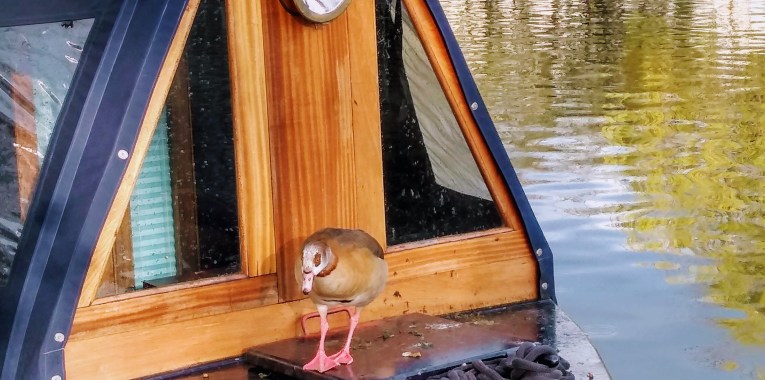
Write a micro story or poem inspired by the photo. Optional prompt word = EXPLORE

Briefly Write Prompt Game (2.4)

The Briefly Write Prompt Game aims to inspire bold, succinct micro fiction and poetry. 

Every Wednesday, we will provide a brief prompt to inspire your boldest prose or verse. The prompts will be released on Twitter (via @BrieflyWrite) and right here on the website.

Your creation can take any form and any style. The prompts can (and should) be interpreted loosely.


This week’s prompt ~

Be inspired by the phrase IT DIDN’T STOP THERE