Myth and micro fiction

Michelle Christophorou, Kipris (AdHoc Fiction, 2021)


Kipris is an individual’s journey from Cyprus to Liverpool mapped onto a nation’s path from foreign occupation to independence. The result is a moving and engaging novella, which brings to life the political and personal impacts of transformative historical events.

The plot focuses on Alexandros, an entrepreneurial Cypriot boy born into the British Crown Colony, who yearns to fight against the injustices of his colonial rulers. Alexandros grows up through a series of micro stories, vivid snapshots that chronicle the struggles and oppression of British Cyprus. As the injustices accumulate and his childhood innocence unravels, Alexandros’s understanding of his country’s fate is consolidated and his political views harden.

Christophorou’s prose is lyrical and energetic, compelling the reader to hurry through the pages. Her descriptions of Cyprus are sumptuous and place the reader directly into the orange groves and musky earth she describes. Yet the micro form also invites slow reading and re-reading to fill the gaps between words. Like the sea, her stories roll in and out reliably – but there is always a sense that a big wave is coming to catch you unaware.

As the woman stands and imagines the pull of the currents claiming her, a figure rises from the foamy surf.

‘Bedtime Story’

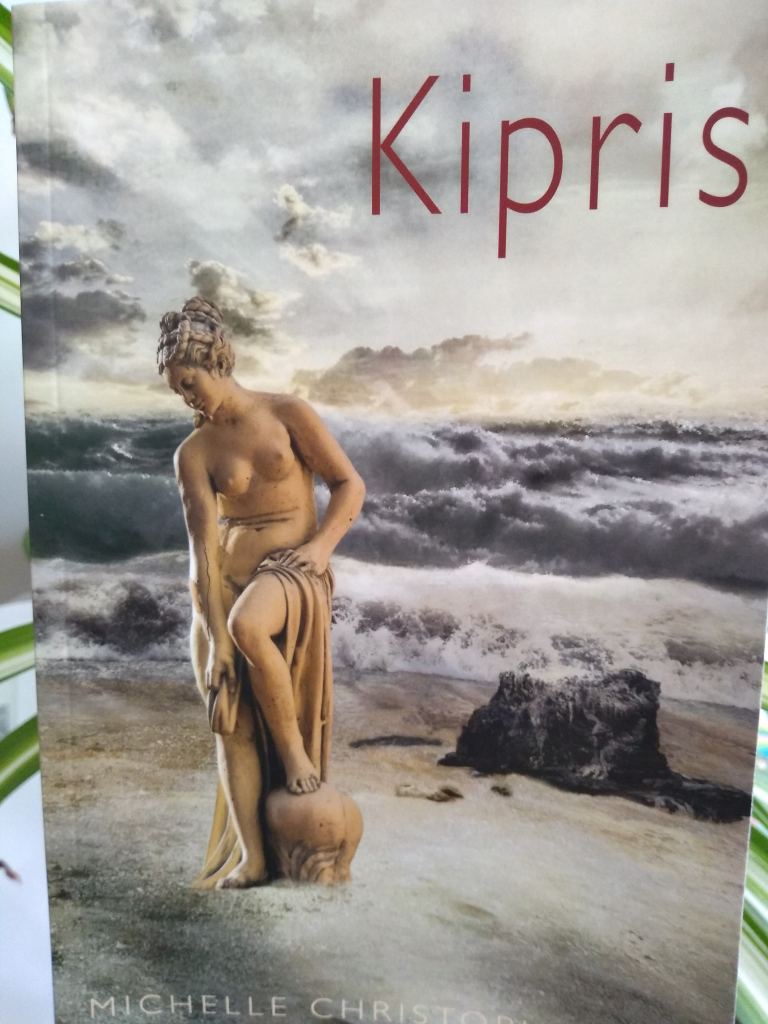
‘Bedtime Story’ is a highlight, richly mythical and highly evocative. It is the story of a woman’s self-sacrifice for her child, a divine interaction that infuses Alexandros’s tale with mythical status. This encounter with Kipris at Aphrodite’s Rock is aptly illustrated by Janice Leagra’s stunning cover design.

Alexandros is not, however, ‘mysteriously handcuffed to history’ in the same way as Saleem Sinai in Salman Rushdie’s Midnight Children. Indeed, Christophorou brilliantly subverts the reader’s expectations, denying Alexandros the heroic denouement his name anticipates. His eventual exile in ‘Goodbye Is Not Farewell’ is a tenderly human conclusion to a novella that expertly intertwines myth and history.

The human touch is also at the forefront of ‘An Old Friend’, one of the novella’s more poignant moments. The story’s deceptively reassuring narration slowly gathers momentum as it builds up to the sucker punch at the end. This thoughtful, rhythmic control is where Christophorou excels.

“It’s funny” I say. “Now that I do have tales to tell there’s no one in the village to share them with.”

‘An Old Friend’

Throughout the novella, the narrative voice flip flops from third-person omniscient to the first-person narration of Alexandros. This patchwork of perspectives contributes to Christophorou’s blend of personal and public, while enriching the overall reading experience.

Gaps between (and within) stories allow the reader to indulge their imagination, while imploring them to discover more about the historical reality of Cyprus. As the action accelerates and the absences widen, it is hard not to crave more details. That is the beauty of the micro form: a whole picture is not presented all at once but as a jigsaw puzzle that must be carefully reconstructed. Kipris is a hugely enjoyable novella that the reader will piece together again and again.


Michelle Christophorou, Kipris (AdHoc Fiction, 2021). Available here.
Reading Challenge 2022

This year’s Reading Challenge is our biggest and best yet!

Photo by Kaboompics.com

We have two challenges this year; a total of 24 categories.

The first challenge is for BACK BURNERS, books you’ve had on your TBR pile (or a physical pile on your bookshelf / desk / wardrobe / garden shed) for years and never got round to starting (or finishing).

The second list is for FRONT RUNNERS, new discoveries to extend and expand your reading in directions you wouldn’t normally go.

Complete the challenges as you wish: read one book from each category, in order, reverse order, or no order at all; or try to read as many books as possible from a category that really takes your fancy.

If you follow both challenges, this could help you structure a routine of two books per month.

However you use the lists, good luck and happy reading in 2022!


BACK BURNERS

  1. A book you’ve started but not finished for whatever reason, it didn’t float your boat the first time… but this is the year of second chances!
  2. A lesser-known book by a well-known author
  3. A poetry collection – modern or traditional… or somewhere in between
  4. A story about reflection interpret in whatever way you want
  5. A book set in a country you want to learn more about
  6. A book about finding something or someone
  7. A book that looks good on your bedside table a cover so beautiful it looks better closed!
  8. A first-person narrator of a different gender to you read a different experience to your own
  9. A lit mag (or many!) so many online and print mags to choose from!
  10. A book about technology – fiction or non-fiction, this might make you think differently about the future (and present)
  11. An “underdog” story – on the side of the little guy
  12. A book about an alternative reality – a parallel universe or a different experience to your own

FRONT RUNNERS

  1. A book with a yellow spine – start 2022 with a splash of colour
  2. A book with an emotion in the title – are you feeling angry, happy, scared or bemused?
  3. Whichever you see first: WIN or LOSE – search a second-hand bookshop or library for a book with WIN or LOSE in the title; buy the first you find (within your budget)
  4. The smallest book you can find – track down the tiniest book
  5. A genre you don’t normally read – push outside your comfort zone
  6. Whichever you see first: STAY or GO – same as above… should you stay or should you go?
  7. An “ugly duckling” – the sort of book design that doesn’t normally entice you; the cover might be unappealing, but it’s what inside that counts!
  8. A book with a cardinal point in the title – will you choose to head north, east, south or west?
  9. A “random pick” – enter a second-hand bookshop, take three steps forward and pick the first book you see (try not to walk into any shelves or shoppers if you can help it!)
  10. A book with a river on the cover – where will it take you?
  11. An author with the same initials as you – the same… but different
  12. A book with an alliterative title – and an alliterative author for bonus points!

We hope you enjoy and benefit from this year’s challenges. Get in touch via contact@brieflywrite.com or on Twitter (@BrieflyWrite) to let us know what you think!

Someone Else’s Dream

Silk~


earth losing its shine the moon so uninspired

his thoughts a pool of mist in the sunken valley

whispered wishes where there are no wells

hills no longer rolling they simmer

tides don’t just rise they sigh and swell

horsetail fall into someone else’s dream


Silk~ is a poet.

Beyond Unbinds the Dragonfly

Kristina T. Saccone


My daughters dart in the dreg, still wingless nymphs fresh from the egg. They feed from a school of tadpoles — a feast — then molt in the algae bloom. I stretch my wings to test for an escape.

Before he visited my silted lake, I knew nothing of the beyond. He beckoned in turquoise, glistening veins vibrating in the spring shade of the pond. We coupled, his wings across my abdomen like a veil at rest, whispering about clear streambeds and unsullied waters.

In tandem, we dropped our eggs into the mire. Then, in a moment, his cobalt and sapphire vanished, gone to a far-off somewhere. The ovae, an anchor, held me here. 

But now my nymphs need blood, larvae, and the worm, not a mother who yearns for other shores. So when the kayak floats by, I drift onto its prow. I tremble with the lull of the boat before the oars dip. Together, we launch into the beyond.


Kristina T. Saccone crafts flash fiction and creative nonfiction. Her work has appeared in Six Sentences, The Bangor Literary Journal, Emerge Literary Journal, and Unearthed, and she curates Flash Roundup, featuring the latest releases in flash fiction. Find her on Twitter (@kristinasaccone) or haunting small independent bookstores in the Washington, D.C. area.

sunday afternoon

Isabel de Andreis


coffee is almost too
hot for my tongue the
blue of the cup too
invasive but nice I tuck
my feet under while
arching one instep
your rocking chair
rocks and rocks


Isabel de Andreis grew up in the US and Germany, and went to university in the UK. She is currently writing her first poetry pamphlet.

The Group

Jeff Skinner


We come back each week
strangers to ourselves

going round in circles
of what if, if only –

taking turns to cry
white tissues the flags

of surrender, of solidarity.
Someone to do nothing with, that’s what I miss.

I say something new happening
is worse: the return

of the rose, flourishing careers
assiduous love prepared the ground for

that letting yourself one spring morning
into the house you cannot share.


Jeff Skinner, longlisted in this year’s Briefly Write Poetry Prize, has been published in a number of journals with poems to come in the Fenland Poetry Journal and Poetry Salzburg in 2022. Third in the 2021 Poetry Space competition, he has also been published in several competition anthologies.

Re: Action

Alisa Golden


Plum tree
cut to the quick
swarming with termites

I regret
complaining about
sticky sidewalks


Alisa Golden writes and makes art in a one-square-mile, California city. She is editor of Star 82 Review, author of Making Handmade Books, and her stories and poems have been published in Blink-Ink, Nanoism, and Litro, among others. www.neverbook.com

The Crossing

Alison Milner


I say, “you are a figment of my imagination.” You say, “I don’t believe you”.

You hunch your shoulders in that belligerent pose I know so well. Your grin reminds me of adolescence, of secrets and small lies.

Your stance is territorial, in the centre of an ancient pack-horse bridge which spans a turbulent river. Stained with peat, carbonated by topography.

A dandelion and burdock Northern English beck.

You are wearing our old, cracked leather jacket, the glazing of our outer selves. Your feet planted firmly in the heavy boots whose soles inhabit ours. Their toughness empowers us. The footprint of who we are, bold and free, before I learn to tread carefully.

It is summer and the air is heavy with a cloying sweetness. The weather is hot and dry, but I see heavy rain, falling like beads from a broken chain.

Sheep graze the sky, drifting wool. White, blobbed with blue paint. Fallowing this field where colour hums yellow and purple hues. I am on the canvas of an impressionist painting and your portrait is drawn incongruously at its centre.

I squint against the searing light, and you fade into the haze. When I open my eyes wide the glare intensifies. You are still guarding the bridge, sketched charcoal-black, figurative.

I walk towards the beck seeding dandelions, the blown wishes of a lifetime. I tread lightly on clover pompoms. I do not want to scatter petals like confetti at a wedding.

 “You can’t ignore me. You can’t cross without me,” you say.

 I do not contradict you, but my legs stride forward. My trousers rustling, my trainers squeaking like mice.

“I wrote to you,” I say, “letters of the mind, tumbling images I couldn’t articulate. Sentences that wouldn’t shape onto paper.”

The flagstone bridge is slippery with spray. I do not slide as I walk through you, cutting your silhouette, onto the other side. Across the water into a field of gold.

I touch the shining silk of buttercups. I glance back at the bridge. It is empty except for a grey heron, fishing for its next catch.

Slender grasses wave in a sea of grey-green brush tips. I caress seed heads furred like kittens’ tails. Run my fingers along plumes which scatter escaping insects.

I stroke the ears of wild grain like a lover, until only I remain. A solitary woman in a wildflower meadow.


Alison Milner lives in Hebden Bridge and is inspired by the colours and contours of the moorland close to her home. Lockdown led Alison to explore internal landscapes; it created blank-page time for her to play with words. She has been published in a literary magazine and two anthologies.

Serendipity

Carl Farrell


“When we let that luckiness in” (Naomi Shihab Nye)

A brief allusion in a novel
Sends me off to seek a poet
While a bookshop’s Facebook page
Sends me out after another
Of similar ethnicity and heritage:
Serendipity falling
Like sudden drops of rain
Out of an open sky.

I join the pitted dots in the dust.


Carl Farrell compulsively writes short poems and occasionally short fiction. He likes to read widely in several languages, but is increasingly drawn to the lyrical and life-affirming, albeit with elements of grit. He grew up in Nottingham, where he now lives, but spent most of his twenties in Greece.

Two Photos

Fabrice Poussin


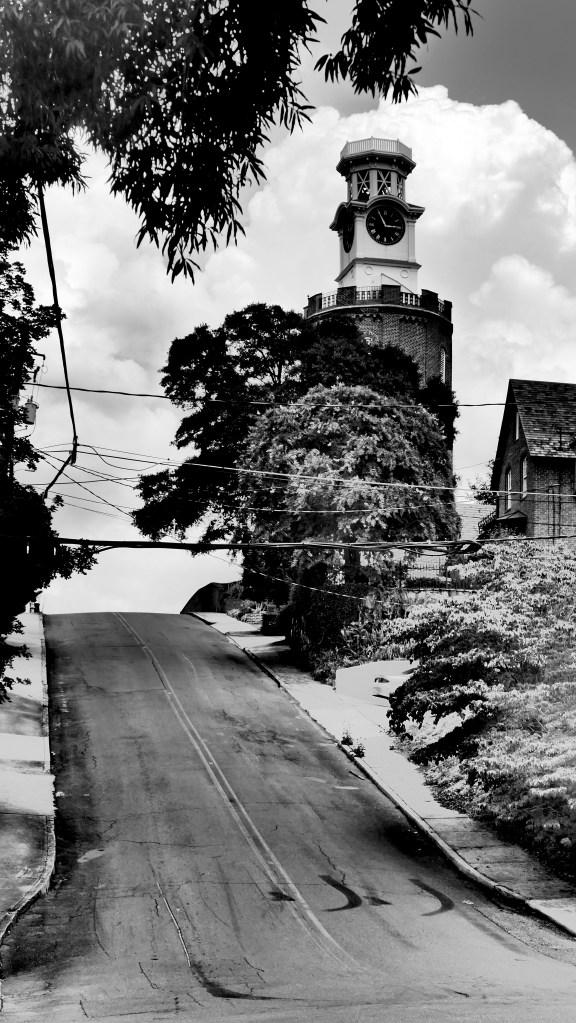
Too Far


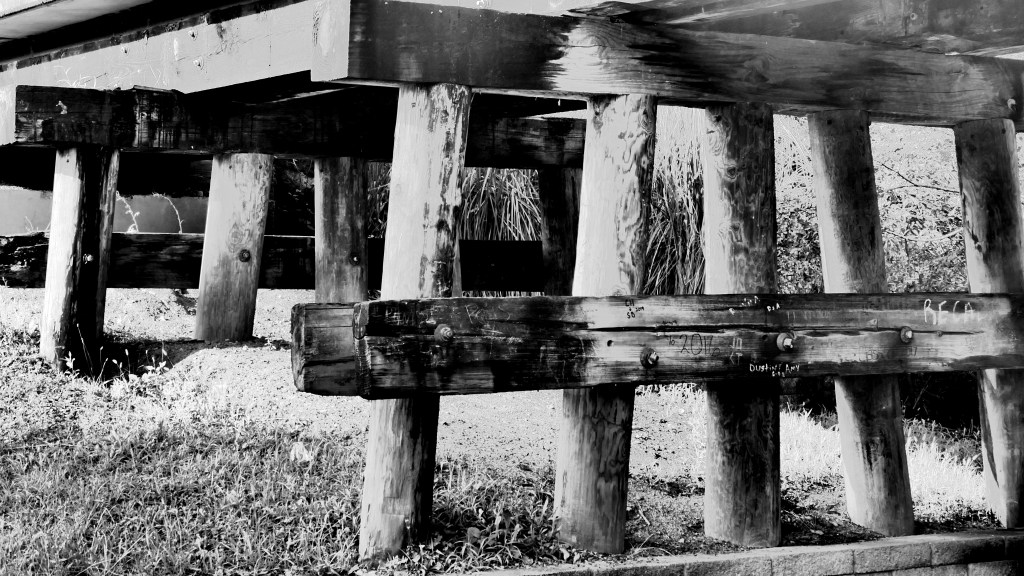
Safe


Fabrice Poussin teaches French and English at Shorter University. Author of novels and poetry, his work has appeared in Kestrel, Symposium, The Chimes, and many other magazines. His photography has been published in The Front Porch Review, the San Pedro River Review as well as other publications.